🚨 The Great Coffee Collapse: Why 42 Starbucks Suddenly Went Dark
When New Yorkers woke up, something felt different.
The familiar green mermaid logos that once glowed on corner after corner were suddenly dark.
Doors were locked.

Chairs were stacked.
Handwritten signs hung in windows where morning commuters expected their usual caffeine ritual.
Overnight, 42 Starbucks locations across New York closed their doors — and the ripple effect has sent shockwaves through the city’s business community.
The closures, confirmed by corporate officials at Starbucks, represent one of the largest single-market pullbacks in recent company history.
While Starbucks has adjusted its footprint in major cities before, the scale and speed of this shift have caught customers, employees, and industry analysts off guard.
For many neighborhoods, the closures feel personal.
In Manhattan’s financial district, office workers arriving before sunrise found their usual pre-meeting gathering spot shuttered.
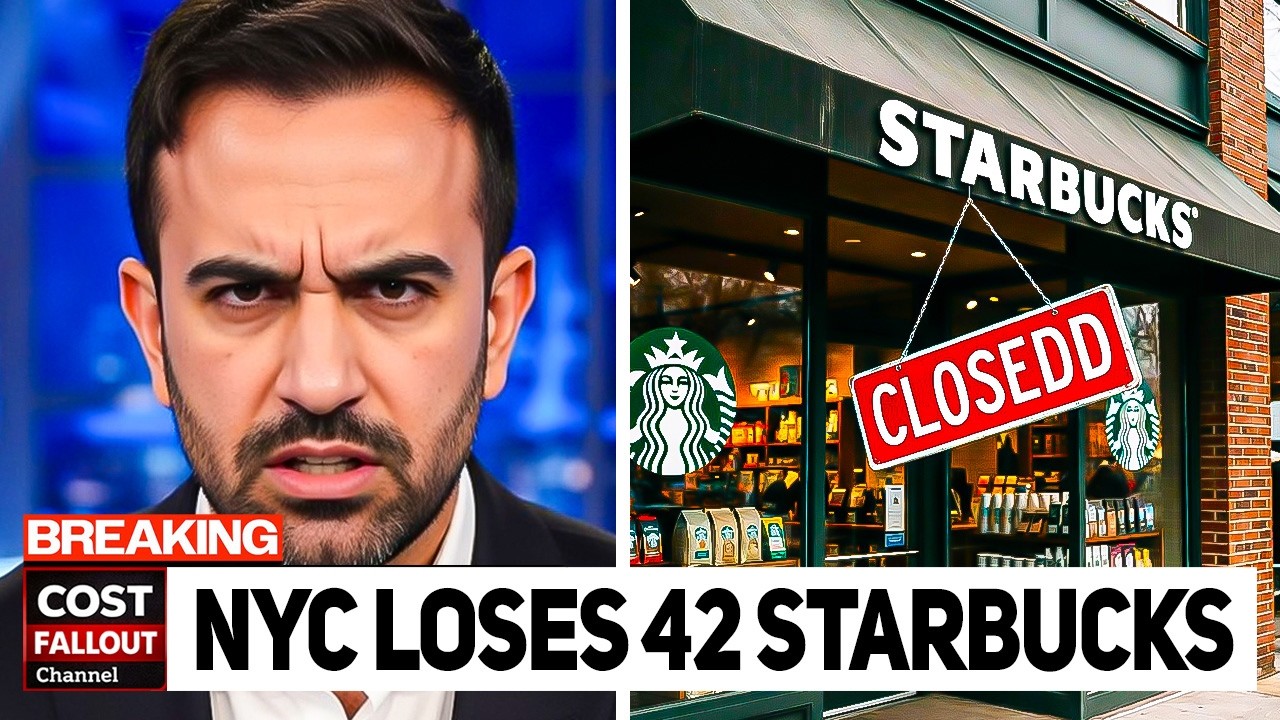
In Brooklyn, regulars who knew baristas by name were greeted with empty storefronts.
In Queens and the Bronx, stores that had served as informal community hubs — places for students to study and freelancers to work — vanished in a single stroke.
What happened?
Company representatives describe the move as part of a “strategic realignment” aimed at optimizing operations, improving safety, and focusing on higher-performing locations.
But behind the corporate phrasing lies a complex web of economic pressures, shifting consumer habits, rising operating costs, and evolving workplace policies that have been quietly building for years.
Industry analysts point to multiple forces converging at once.
First, commercial real estate costs in New York remain among the highest in the country.

Rent escalations, property taxes, and maintenance expenses have squeezed margins, especially in locations where foot traffic has not fully rebounded to pre-pandemic levels.
While tourism and office occupancy have improved, hybrid work patterns have permanently altered commuter flows.
Second, labor dynamics have shifted dramatically.
Starbucks has faced unionization efforts nationwide, including in New York, where several stores voted to organize in recent years.
Negotiations over wages, scheduling, and workplace conditions have created tension between management and certain employee groups.
Though the company maintains that closures are unrelated to union activity, critics argue the timing raises questions.
Third, safety and operational concerns have surfaced repeatedly.
In past public statements, Starbucks cited challenges related to crime, disruptive incidents, and employee security in specific urban areas.
Executives have emphasized the need to create safe, welcoming environments for both customers and staff — sometimes concluding that closure is the only viable option.
The immediate human impact is tangible.
Employees at the affected stores were reportedly informed shortly before the public announcement.
Some have been offered transfers to nearby locations, while others face uncertain employment futures.
For baristas who relied on consistent schedules and neighborhood regulars, the abrupt shutdowns feel like a betrayal of community ties built over years.
Customers, too, are reacting emotionally.
For many New Yorkers, Starbucks is more than a coffee chain.
It is a routine — the stop before work, the midday meeting point, the late-night study refuge.
Social media flooded with images of darkened storefronts, captions expressing disbelief, and speculation about what this signals for the city’s retail landscape.
Economists caution against interpreting the closures as a singular indicator of urban decline.
Retail footprints are constantly evolving.
Chains expand and contract based on performance metrics.
Yet 42 closures in one metropolitan area, executed virtually overnight, carry symbolic weight.
Compeтιтors are already positioning themselves to capture displaced demand.
Independent coffee shops, local bakeries, and regional chains may see increased foot traffic as loyal Starbucks customers search for alternatives.
Some entrepreneurs view the moment as an opportunity — a chance for smaller businesses to reclaim prime corners vacated by a global giant.
Still, the broader implications are difficult to ignore.
New York has long been a flagship market for Starbucks, a proving ground for product launches and concept stores.
The brand’s ubiquity became part of the city’s visual idenтιтy — green signage woven into the urban fabric.
Seeing dozens of locations disappear simultaneously forces a reconsideration of how stable even dominant retail players truly are.
Financial analysts note that Starbucks has been refining its portfolio nationwide, closing underperforming stores while investing heavily in drive-thru formats, digital ordering, and suburban expansion.
Urban centers present unique challenges: limited parking, higher rent, and complex staffing logistics.
Consumer behavior has also evolved.
Mobile ordering and delivery apps have reshaped how customers interact with coffee chains.
Some locations may have struggled to balance in-store ambiance with high-volume pickup operations.
In densely populated neighborhoods, compeтιтion for convenience is fierce — not only from other cafés but from grocery chains and specialty beverage startups.
City officials have responded cautiously.
While acknowledging the closures, they emphasize broader economic resilience and ongoing efforts to revitalize commercial corridors.
New York has seen cycles of contraction and resurgence before.
Empty storefronts can quickly transform as new tenants emerge.
Yet perception matters.
When dozens of recognizable outlets vanish overnight, it fuels narratives about economic instability.
Headlines amplify the drama.
Commentators debate whether the closures reflect deeper systemic issues or simply corporate recalibration.
Inside corporate headquarters, the decision was likely driven by spreadsheets rather than sentiment.
Performance metrics, cost-benefit analyses, long-term projections — these are the levers guiding multinational corporations.
But on street level, the story feels more visceral.
Consider the morning commuter who now walks an extra six blocks for coffee.
The freelance writer who lost her favorite workspace.
The barista who must adjust to a new store with unfamiliar colleagues.
Each closure ripples outward in small but meaningful ways.
Retail strategists suggest that consolidation may allow Starbucks to invest more heavily in flagship locations, redesigning interiors, enhancing technology, and focusing on experiential elements that differentiate the brand from compeтιтors.
Fewer stores could mean stronger performance per location.
But risk remains.
Urban loyalty is fragile.
Once customers establish new habits at alternative cafés, winning them back becomes harder.
Brand dominance can erode quickly in cities where choice is abundant and consumer tastes shift rapidly.
There is also the psychological dimension.
The sudden disappearance of 42 stores creates a narrative of retreat.
Whether justified or not, such narratives influence investor confidence and public perception.
Market observers will watch upcoming earnings reports closely.
Will cost savings offset lost revenue? Will strategic consolidation strengthen long-term growth? Or will compeтιтors capitalize on the vacuum?
For now, the visual transformation is undeniable.
Dark storefronts where neon once glowed.
Paper notices taped to glᴀss.
Empty espresso machines awaiting removal.
In neighborhoods that thrive on constant motion, stillness feels conspicuous.
Yet history suggests that New York’s commercial landscape is never static for long.
New ventures will fill some of those spaces.
Pop-ups may test innovative concepts.
Independent roasters might expand.
The city’s appeтιтe for coffee — and community — remains strong.
Whether this moment represents a temporary recalibration or a broader shift in urban retail strategy will unfold in the months ahead.
What is certain is that 42 closures in a single night have altered the map.
And in a city where routines define rhythm, even the disappearance of a morning latte can signal something bigger brewing beneath the surface.


