$38.9 Million Shockwave 💥 Strikes, Closures, and the Battle for Worker Power
New York City’s retail landscape is shifting in dramatic fashion, and at the center of the storm stands a political gamble that may have spiraled far beyond its original intent.
Mayor Mamdani is facing mounting pressure after his vocal support for a Starbucks boycott collided with a stunning corporate retreat: 42 Starbucks locations across the city have closed, and as many as 1,000 jobs are now hanging in the balance.

What began as a political statement has morphed into a high-stakes showdown involving labor unrest, corporate accountability, and the fragile balance of power between City Hall and global business.
The closures did not come quietly.
Over recent months, customers began noticing shortened hours, abrupt shutdown notices taped to storefront windows, and once-bustling cafes sitting dark during peak morning rush.
Then came the confirmation.
Starbucks was consolidating operations, citing safety concerns, operational challenges, and shifting economic realities.
For workers and residents, the impact was immediate.
Baristas, shift supervisors, maintenance staff, delivery partners—entire teams suddenly found themselves uncertain about their futures.
Behind the scenes, tensions had been building for years.
Worker organizing efforts within Starbucks stores nationwide intensified, with employees demanding better wages, improved scheduling practices, and stronger labor protections.
In New York City, one of the most union-active regions in the country, strikes and walkouts began drawing national attention.
The company faced growing scrutiny over allegations of labor law violations.
That scrutiny culminated in a historic $38.
9 million settlement tied to disputes involving worker rights and organizing practices.
The settlement sent a powerful message across corporate America: labor battles were no longer isolated disputes but headline-making events capable of reshaping brand reputations.
Mayor Mamdani had positioned himself as a vocal supporter of workers’ rights, aligning with activists who accused Starbucks of unfair labor practices.
His endorsement of boycott calls was framed as a moral stance—a stand with baristas seeking dignity and stronger protections.
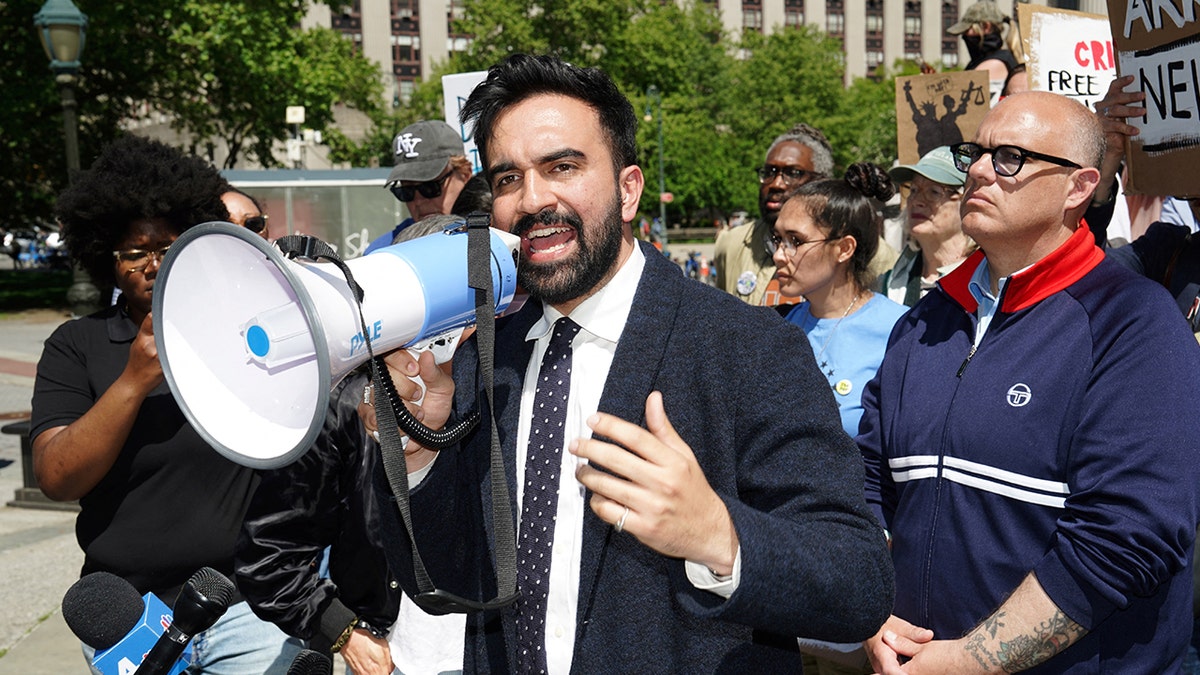
But critics now argue that the political messaging may have accelerated a corporate pullback that ultimately hurt the very workers it aimed to defend.
The optics are stark.
Forty-two locations shuttered in a city where coffee culture is woven into daily life.
Entire neighborhoods suddenly without their familiar green-logo storefronts.
Commuters scrambling to adjust routines.
Small businesses near those stores losing foot traffic generated by morning coffee crowds.
The closures represent more than lost caffeine stops; they symbolize a broader tension between activism and economic stability.
Starbucks insists its decisions were rooted in business realities.
Company executives have pointed to changing consumer patterns, rising operating costs, and safety concerns in certain areas.
Like many urban retailers, Starbucks has faced theft, vandalism, and shifting commuter patterns since the pandemic transformed work habits.
With fewer office workers returning full-time, sales in some urban centers have lagged behind pre-pandemic highs.
Consolidation, the company argues, is a necessary adaptation.
Yet the timing has fueled speculation.
Worker strikes intensified.
Political rhetoric escalated.
Global boycotts erupted over unrelated international controversies, further straining the brand’s public image.
The $38.9 million settlement underscored that labor tensions were not hypothetical—they carried tangible financial consequences.
When 42 locations disappear within that broader storm, observers inevitably connect the dots.
For the workers affected, the debate is not theoretical.
Up to 1,000 jobs are potentially impacted.
While some employees may be offered transfers, others face layoffs in an already compeтιтive labor market.
Many relied on the flexibility Starbucks once promised—healthcare benefits for part-time employees, tuition ᴀssistance programs, and career mobility within the company.
The sudden contraction threatens that stability.
Labor organizers argue that corporate restructuring cannot be blamed on activism alone.
They maintain that organizing drives have exposed systemic problems long overdue for correction.
From their perspective, the settlement validates claims that workers faced obstacles in union efforts.
They insist that meaningful change requires confrontation and that short-term disruption may pave the way for long-term fairness.
Opponents counter that political boycotts risk unintended fallout.
When elected officials amplify calls to shun major employers, they may inadvertently destabilize local economies.
Critics question whether public pressure campaigns truly influence multinational corporations or simply encourage them to redirect investments elsewhere.
In a city as economically complex as New York, even minor shifts can reverberate widely.
The broader retail environment adds another layer of complexity.
Urban storefronts have struggled nationwide as e-commerce continues to expand.
Landlords face rising vacancy rates.
Retailers evaluate each square foot for profitability with unforgiving precision.
Starbucks, once a symbol of relentless urban expansion, is now demonstrating that even global giants recalibrate aggressively when margins тιԍнтen.
The $38.
9 million settlement looms large in the narrative.
It represents one of the most significant financial penalties tied to labor disputes in the company’s history.
While Starbucks did not admit wrongdoing as part of the resolution, the figure alone underscores the scale of the conflict.
Investors monitor such signals closely.
Reputational damage can translate into stock volatility, shareholder activism, and strategic shifts.
Global boycotts have compounded the pressure.
In various markets, activists have targeted Starbucks over political controversies unrelated to local labor issues.
Social media campaigns have amplified calls to avoid the brand, blending international geopolitics with domestic labor disputes.
For a company operating thousands of locations worldwide, reputational challenges in one region can cascade rapidly across others.
Mayor Mamdani now finds himself navigating a precarious landscape.
Supporters praise his unwavering stance with workers, arguing that moral clarity sometimes carries economic cost.
Critics accuse him of political grandstanding that failed to anticipate corporate countermeasures.
The question echoing across City Hall is whether the boycott strategy achieved its intended leverage or inadvertently strengthened the company’s resolve to scale back.
Urban economists warn that the situation reflects a broader recalibration in city life.
Retail is evolving.
Worker activism is rising.
Political leaders are more openly aligning with labor movements.
Corporations are increasingly calculating not only profits but also political climates.
When these forces collide, outcomes are rarely simple.
The symbolism of 42 vanished storefronts cannot be ignored.
Each closure represents more than a lease termination; it signals a negotiation of power between corporate headquarters and local governance.
New York City has long prided itself on resilience and economic dynamism.
Yet resilience is tested when iconic brands shrink their footprint so dramatically.
For customers, the changes are visible.
Neighborhood routines shift.
Local coffee alternatives may see surges in demand.
Independent cafes could benefit from reduced compeтιтion.
But for displaced employees, the transition is fraught with uncertainty.
Some have spoken publicly about scrambling to secure new positions or awaiting clarity on transfer opportunities.
Investor sentiment will likely play a decisive role in what happens next.
If Starbucks stabilizes financially and rebuilds consumer trust, the closures may be remembered as a strategic pivot.
If labor tensions escalate further, the company could face renewed scrutiny and additional concessions.
Meanwhile, other corporations are watching closely, evaluating how activism and political pressure intersect with operational decisions.
The retail contraction raises a sobering question about the future of urban economies.
Are cities entering an era where worker activism reshapes corporate footprints? Or will corporations leverage mobility to sidestep political friction? The balance between social accountability and economic pragmatism grows more delicate by the day.
Mayor Mamdani’s political future may hinge in part on how this episode is interpreted.
If voters view him as a champion of fairness standing up to a multinational giant, the narrative could bolster his standing.
If closures and job losses dominate headlines, critics may seize the moment to question his approach.
Political capital is as volatile as financial capital, and both are being tested simultaneously.
As New York absorbs the shock, one reality is clear: the Starbucks saga represents more than a coffee chain retrenchment.
It encapsulates debates about labor rights, corporate responsibility, public safety, and the power of local leadership.
Forty-two stores gone.
Up to 1,000 livelihoods disrupted.
A $38.
9 million settlement marking a pivotal chapter in labor relations.
And a mayor confronting the unpredictable consequences of high-profile activism.
Whether this marks a turning point in worker power or a cautionary tale about political brinkmanship remains to be seen.
What is certain is that New York City’s retail map has changed, and the reverberations are far from over.
In the city that never sleeps, even a cup of coffee can ignite a battle with national implications.


