The $285 Billion Exit: Why Philip Morris Abandoned New York for Good
In a shocking turn of events, Philip Morris International, a corporate giant with a staggering market value of $285 billion, has made the decision to abandon New York.
This move, seemingly inconceivable for such a well-established company, sends a clear message about the deteriorating economic climate in the Empire State.
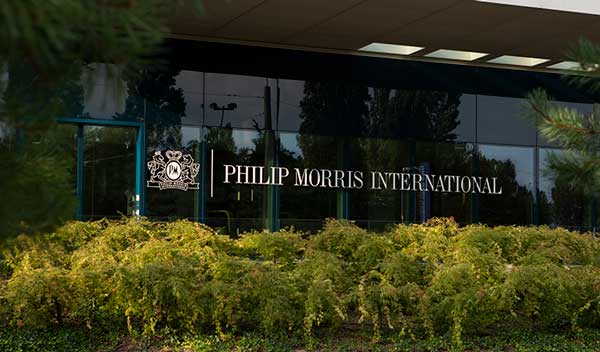
The company’s departure from its long-time headquarters at 120 Park Avenue in Midtown Manhattan to Stamford, Connecticut, is not just a corporate relocation; it represents a significant shift in the business landscape of New York.
The reasons behind this monumental decision are rooted in the increasingly hostile business environment fostered by New York’s leadership.
With suffocating tax rates and a complex regulatory framework, New York has become a challenging place for corporations to thrive.
Philip Morris’s decision to relocate to Connecticut, a state not typically known for its lenient tax policies, underscores the severity of the situation in New York.
The reality is that even moving to a state like Connecticut, with its own fiscal challenges, felt like a breath of fresh air compared to the economic stranglehold imposed by New York.
This isn’t a small business shuttering its doors; this is a Fortune 500 powerhouse that has operated in New York for decades.
The silence from New York’s political leadership following this announcement speaks volumes.
There was no urgent press conference, no immediate reforms proposed to retain businesses, and no acknowledgment of the significant loss to the state’s economy.
Instead, New York has become so accustomed to corporate departures that losing a major player like Philip Morris has become just another day in the economic wasteland created by progressive policies.
The tax nightmare that drove Philip Morris out of New York cannot be overstated.
In 2021, New York raised its corporate tax rate from 6.5% to 7.25%, reinstated the capital base tax, and increased the top personal income tax rate to 10.9% for high earners.
For businesses operating in Manhattan, the combined corporate tax rate skyrocketed to an eye-watering 18.27%.
This is the highest corporate tax rate in the entire country, a punitive measure that discourages businesses from operating within the state.
For executives and employees, the situation is equally dire.
The combined state and local tax rate for high earners in New York City approaches 15%.
Such high taxation means that individuals are handing over a significant portion of their earnings to the government before even paying federal taxes.
This environment is not conducive to attracting or retaining talent, as many executives are opting to relocate to states with more favorable tax structures.

Philip Morris faced a stark choice: remain in Manhattan and endure crippling taxes or relocate to Stamford, Connecticut, where the corporate tax rate drops to 7.5% and the top personal income tax rate is 6.99%.
For a company generating billions in revenue, this translates into tens of millions of dollars in annual savings.
The decision to leave was not just about financial considerations; it was a straightforward equation that any business leader would understand instantly.
However, Philip Morris is far from the only company to flee New York.
Their departure is part of a broader trend of businesses leaving the state due to its unfavorable economic conditions.
Between July 2021 and July 2022, New York experienced a net population loss of 300,000 people, the largest decline of any state in the country.
This loss translates to a significant reduction in political power, as the state lost a congressional seat due to the exodus of residents.
The financial industry, which has historically been the backbone of New York’s economy, is also shrinking.
Major firms such as Elliott Management and Charles Schwab have relocated to states like Florida and Texas, taking with them not just businesses but also high-paying jobs and substantial tax revenue.
The implications of this migration are profound, as New York’s status as a financial capital is increasingly threatened by states offering more favorable conditions for businesses.
Connecticut’s approach to attracting businesses stands in stark contrast to New York’s.
Governor Ned Lamont recognized the need for compeтιтiveness and understood that companies wanted access to the Northeast Corridor without the burden of New York’s high taxes.
Stamford, with its proximity to Manhattan and improved tax structure, became an attractive option for companies looking to escape New York’s punitive environment.
Philip Morris’s decision to sign a 12-year lease in Stamford was not incentivized by taxpayer money; it was simply a rational economic choice.
Moreover, Philip Morris is undergoing a significant transformation in its business model, investing over $14 billion in developing smoke-free products.
This innovation is not only vital for the company’s future but also represents a significant loss for New York, as the state should want to attract companies that are pushing technological boundaries and creating high-value jobs.
Instead, New York’s political climate has driven away a company that is reinventing itself and investing in the future.
The silence from New York’s leadership regarding Philip Morris’s departure is telling.
The lack of a response indicates a troubling acceptance of corporate losses as the new normal.
In a state where one party has maintained control for so long, the absence of accountability or concern for economic decline is alarming.

New York’s politicians are insulated from the consequences of their policies, allowing them to continue raising taxes and driving businesses away without fear of electoral repercussions.
The departure of Philip Morris is emblematic of a larger trend in which high taxes and heavy regulation are causing businesses and individuals to flee blue states for more favorable environments.
As productive people leave, states like New York become increasingly dependent on federal bailouts and high taxes on the remaining population, creating a vicious cycle of decline.
The implications of this trend are far-reaching.
States that embrace lower taxes and pro-growth policies are attracting the most innovative and productive individuals, leading to economic expansion and a growing tax base.
Conversely, states like New York face a grim future as they continue to drive away businesses and talent, ultimately leading to their own economic collapse.
In conclusion, the decision by Philip Morris International to leave New York is a wake-up call for politicians and citizens alike.
The company’s move to Connecticut, driven by a desire for a more favorable business environment, highlights the urgent need for reform in New York.
As the state continues to lose its compeтιтive edge, the question remains: when will voters demand leadership that understands the importance of fostering a business-friendly environment?
The time for change is now, as the consequences of inaction are becoming increasingly dire.


