Santorini Is Moving Again — 25,000 Quakes and Rising Magma Beneath the Caldera
Beneath the idyllic landscape of Santorini, a volcanic island famed for its stunning views and vibrant sunsets, a geological drama is unfolding.
A mᴀssive reservoir of molten rock, with a volume equivalent to 200,000 Olympic swimming pools, is shifting beneath the surface, causing the ground to tremble violently.
In early 2025, Santorini experienced a seismic storm that registered over 25,000 earthquakes in just eight weeks, prompting panic among residents and tourists alike.
The situation escalated to such a degree that 11,000 people were forced to evacuate, schools were shuttered, and a state of emergency was declared across the Aegean region.
But what lies beneath this beautiful island, and why are two volcanoes seemingly awakening from their long slumber?
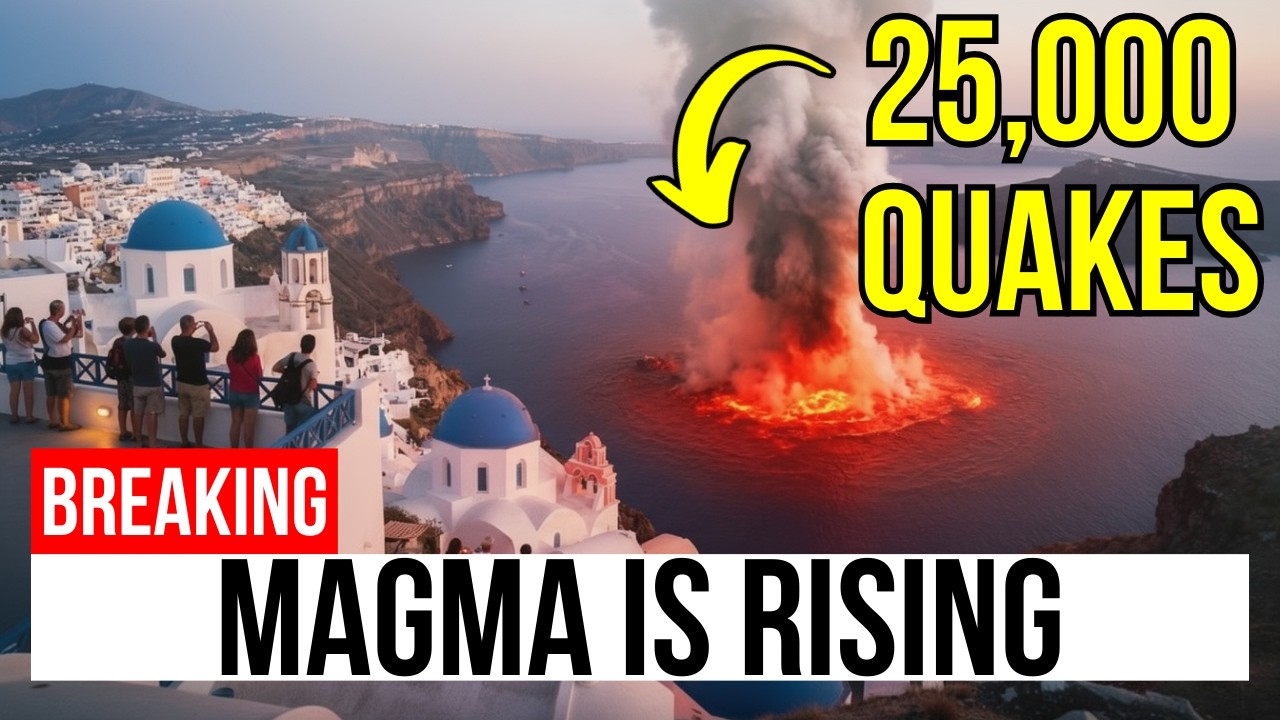
The island of Santorini is not just a picturesque getaway; it is the remnant of a colossal volcanic eruption that occurred approximately 3,600 years ago.
This cataclysmic event, known as the Minoan eruption, is considered one of the largest in human history.
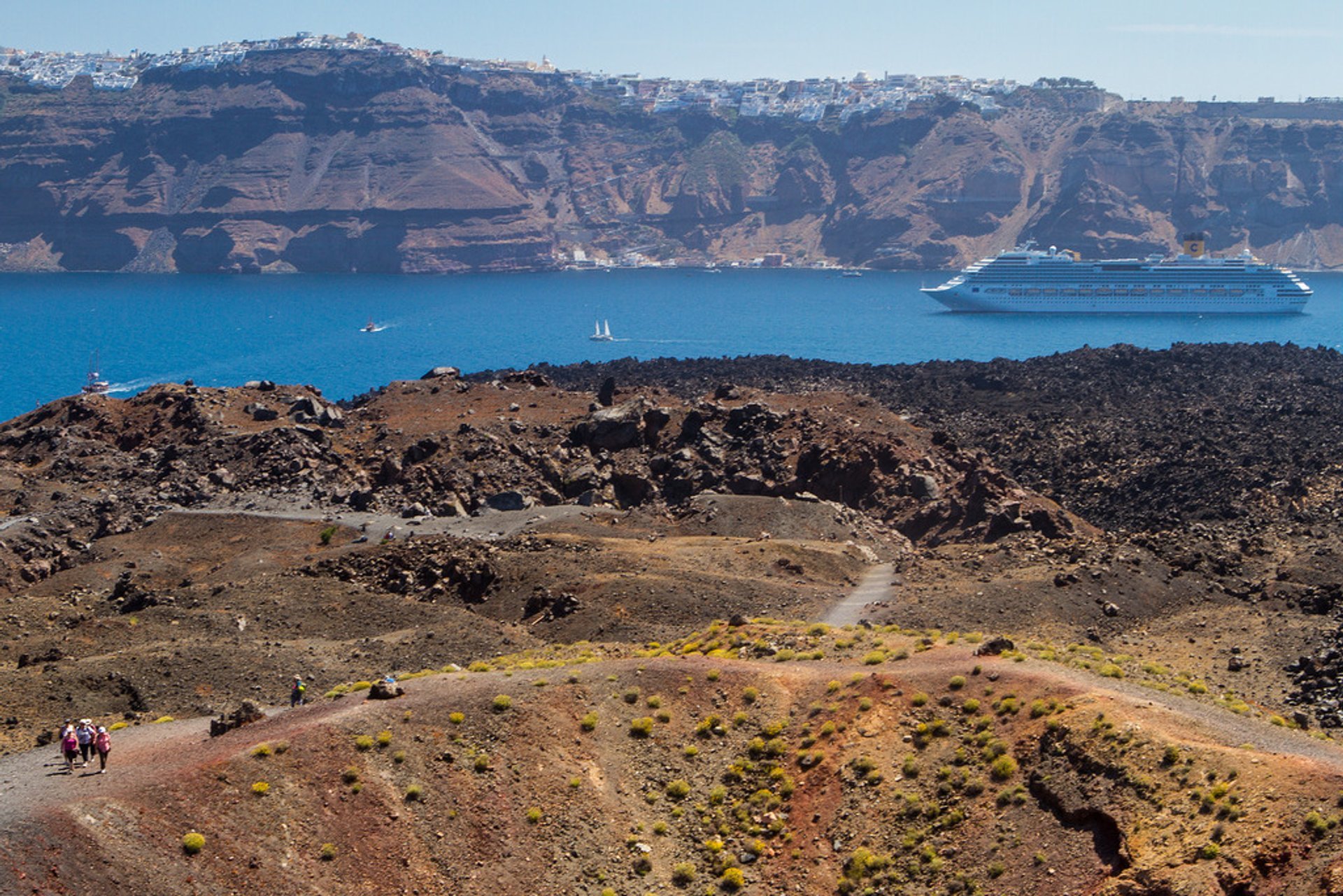
It resulted in the destruction of the island’s central landmᴀss, leaving behind a crescent-shaped caldera filled by the Aegean Sea, with two volcanic islands, Nea Kameni and Palea Kameni, sitting within it.
The eruption ejected vast amounts of ash and rock into the atmosphere, altering the landscape and impacting civilizations across the region.
Despite the devastation, Santorini has continued to erupt periodically since then, with the last significant eruption occurring in 1950.
However, recent geological studies have revealed that the volcanic activity beneath Santorini is more complex than previously understood.
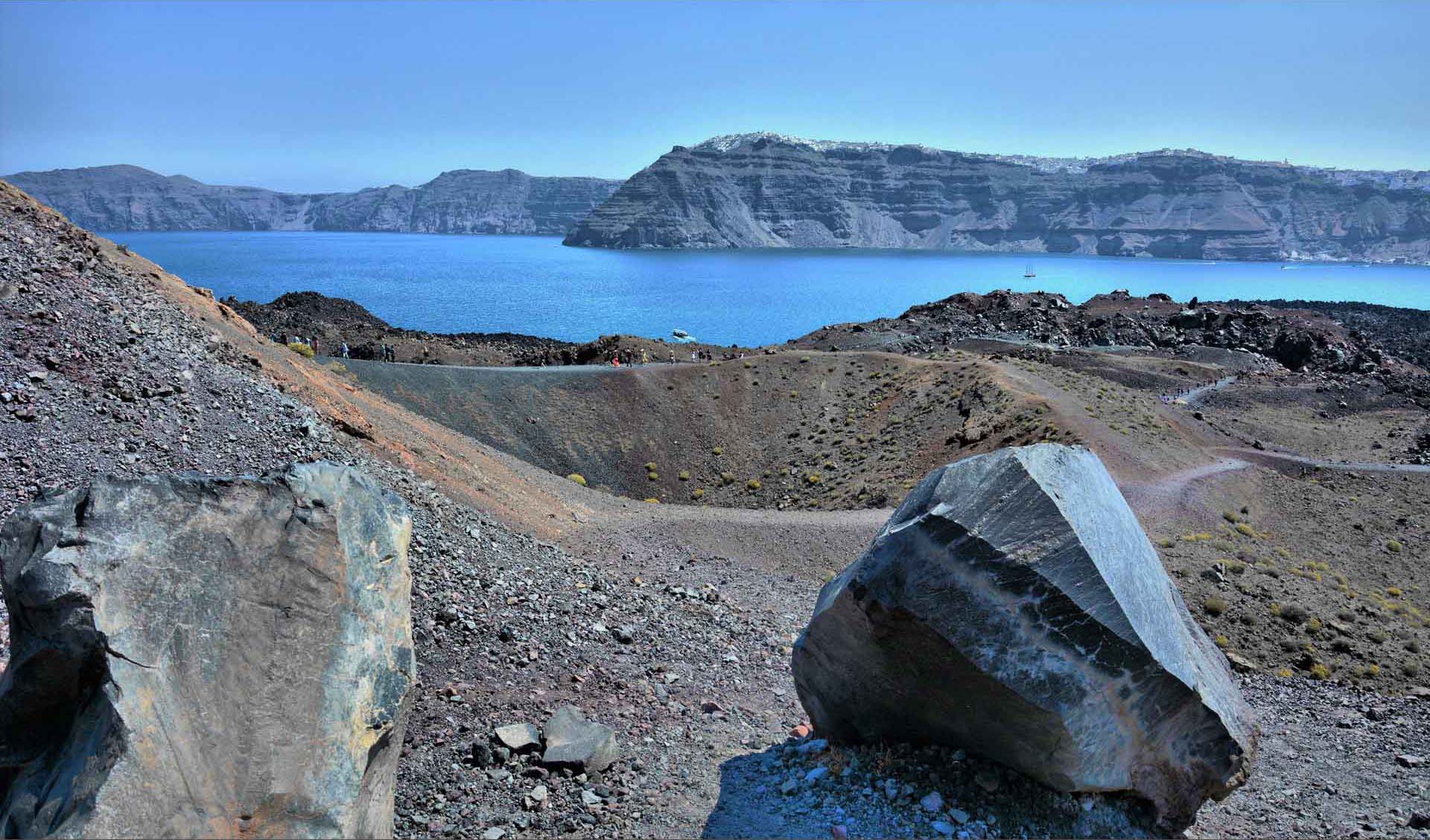
Just seven kilometers northeast of Santorini lies the submerged Columbbo volcano, which has its own history of explosive eruptions.
In 1650, Columbbo erupted violently, sending pyroclastic flows across the sea and causing significant destruction on Santorini.
This eruption also released toxic gases that claimed numerous lives, showcasing the potential dangers posed by the region’s volcanic activity.
In recent years, scientists have made alarming discoveries about both Santorini and Columbbo.
Using advanced techniques, researchers detected a magma chamber beneath Columbbo, which has been growing at an alarming rate since the 1650 eruption.
This chamber is now estimated to hold around 1.4 cubic kilometers of molten rock, a volume that could lead to a significant eruption if pressure continues to build.

In addition, instruments began detecting subtle uplift across Santorini’s caldera floor in mid-2024, indicating that fresh magma was accumulating beneath the island.
By January 27, 2025, the situation escalated dramatically, with a swarm of earthquakes erupting between Santorini and the nearby island of Amorgos.
The tremors intensified, with over 1,200 quakes recorded in just two weeks, including several that exceeded magnitude 4.
The Greek government responded by declaring a state of emergency, evacuating thousands of residents, and closing schools across four islands.
Emergency crews were deployed, and H๏τels were instructed to drain their swimming pools to mitigate the risk of structural damage from seismic activity.
As the earthquakes continued, scientists grappled with the uncertainty of whether the tremors were caused by tectonic movements or the rise of magma towards the surface.
The fear of a catastrophic event loomed large, reminiscent of the devastating earthquake that struck the region in 1956, which had ᴅᴇᴀᴅly consequences and caused significant damage.
In contrast to past events, modern technology has allowed researchers to analyze the seismic activity with unprecedented precision.
An international team used machine learning algorithms to detect and locate over 25,000 individual earthquakes during the 2025 swarm, revealing that magma was intruding horizontally through the crust.
This intrusion linked the Santorini caldera with the Columbbo volcano, suggesting that the two systems are interconnected in ways previously unrecognized.
The sheer volume of magma involved was staggering, but crucially, it lacked the pressure to breach the surface, preventing an immediate eruption.
However, the underground energy released during this period reshaped the stress field across the entire region, leaving scientists uncertain about what would happen next.
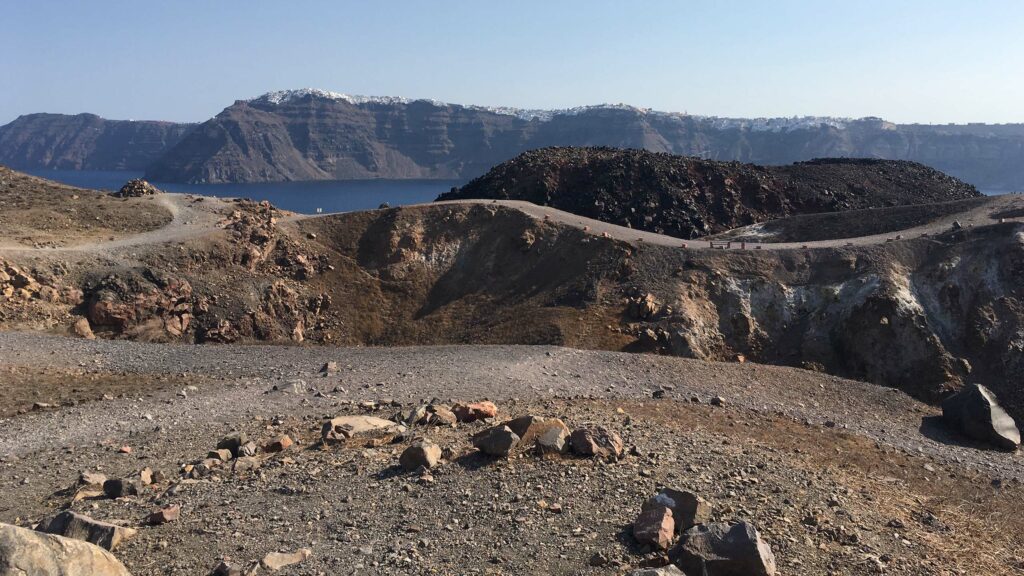
In the village of Oia, located on the caldera rim, the atmosphere was tense as residents faced the possibility of losing their homes and livelihoods.
Local business owners reported a dramatic drop in bookings, with guests canceling their trips amid fears of an impending eruption.
The uncertainty weighed heavily on the community, as the beauty of the island now seemed overshadowed by the threat of geological upheaval.
As scientists continue to monitor the situation, they are faced with several possible scenarios.
One scenario suggests that seismic activity may return to normal levels, with the magma stalling and stabilizing for years to come.
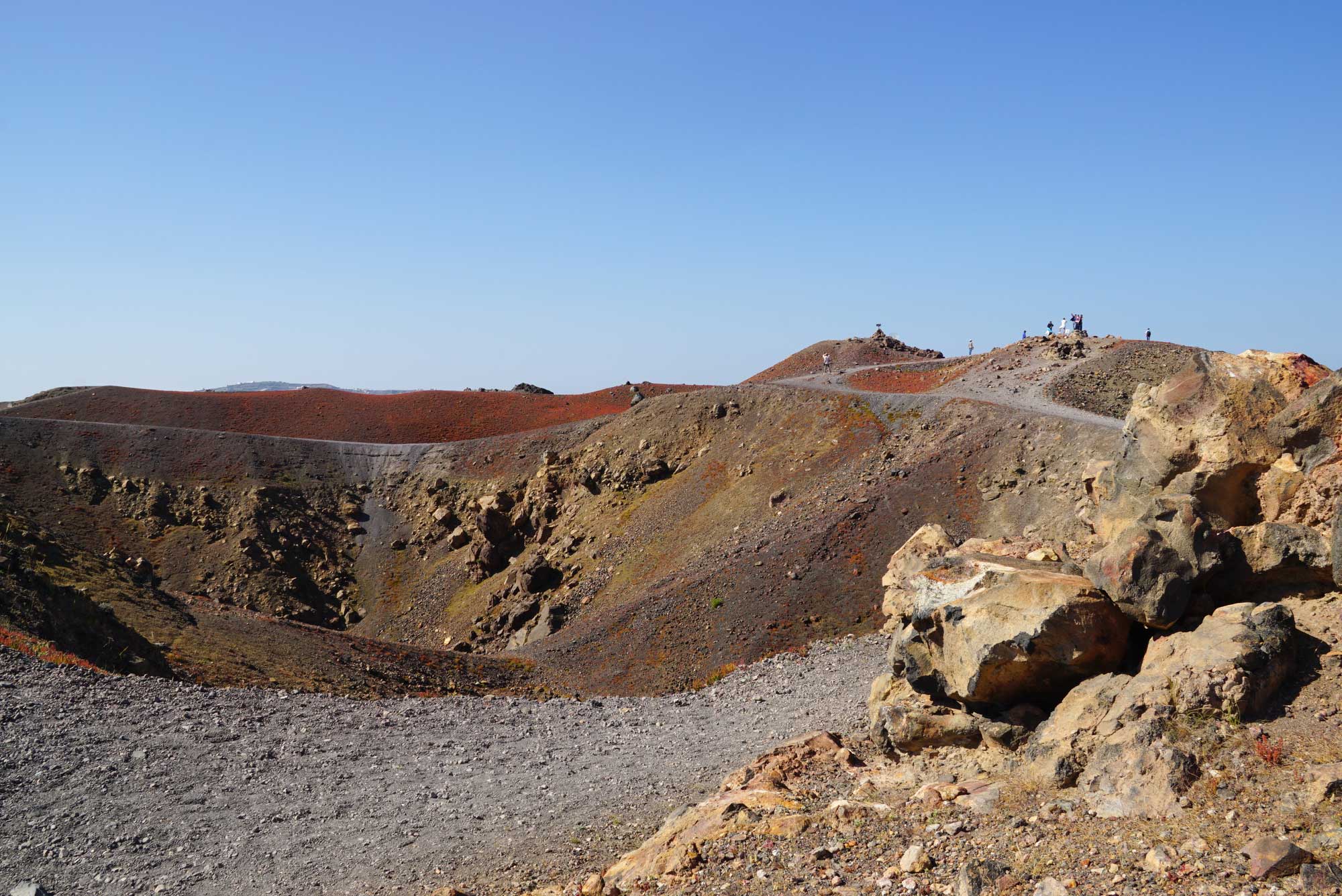
Alternatively, the magma could continue to accumulate slowly, leading to ongoing earthquake swarms and gradual infrastructure erosion.
The most alarming scenario involves the potential for a dual eruption from both Santorini and Columbbo if the magma chambers reach critical pressure.
Such an event could trigger widespread devastation, including tsunamis and ash clouds that disrupt air travel across the region.
While no immediate eruption is predicted, the interconnectedness of the two volcanoes raises concerns about the potential for rapid changes in volcanic activity.
The scientific community remains divided on the interpretation of recent events, with some experts attributing the quakes to tectonic movements while others insist on the volcanic nature of the signals.
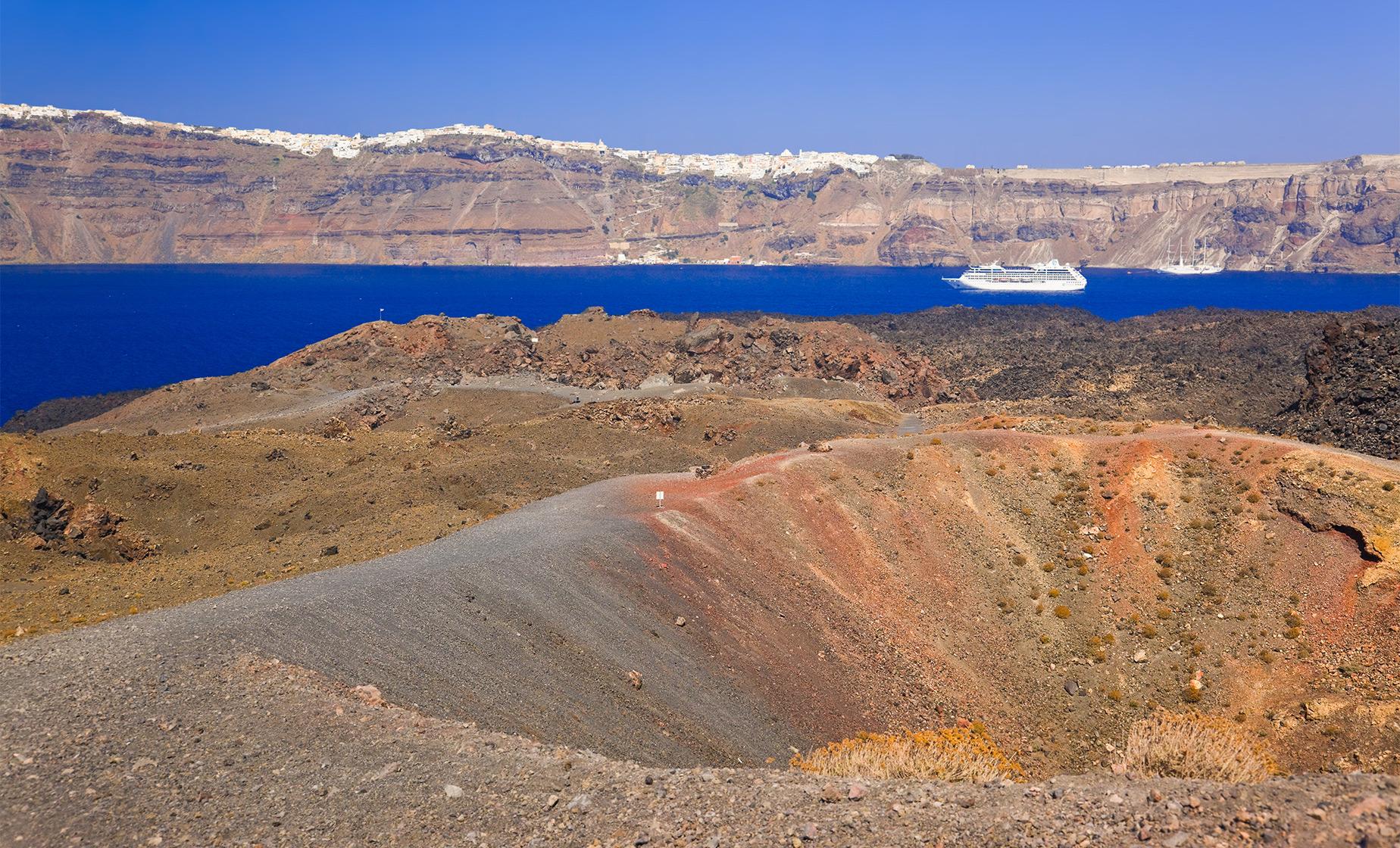
Ongoing monitoring efforts, including the deployment of advanced instruments, aim to provide real-time data on pressure, temperature, and seismicity in the region.
The Mediterranean is home to numerous active volcanoes, and Santorini is just one part of a complex web of geological systems that could pose risks to nearby populations.
As the world watches, the island’s future remains uncertain, caught between its breathtaking beauty and the lurking dangers beneath the surface.
The silence over Santorini is not an indication of peace; it is a reminder that pressure is building in the dark, waiting for the moment it can break free.
With monitoring instruments still recording, the question remains: when will the next signal arrive, and what will it bring?


