The Real Life of the Pharisees in the Time of Jesus: A Closer Look at Hypocrisy and Righteousness
In the landscape of biblical history, few groups have been as scrutinized and vilified as the Pharisees.
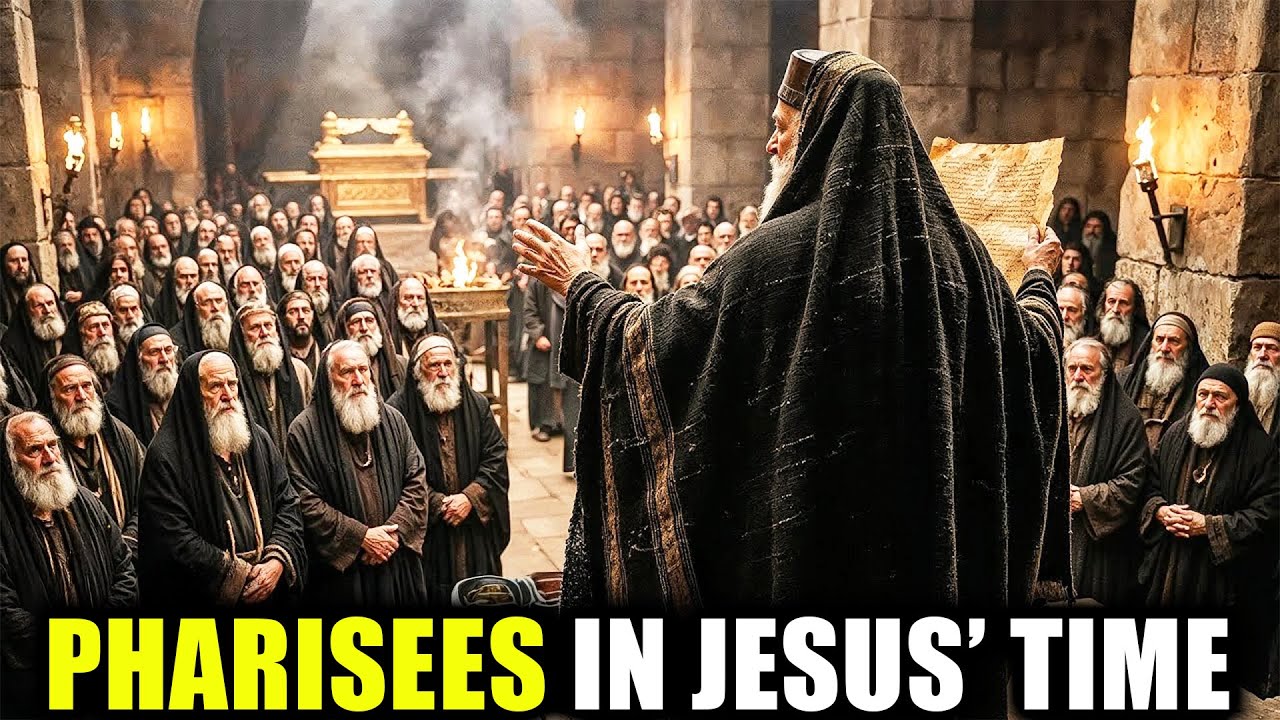
Often perceived as hypocritical religious leaders, they were known for their strict adherence to the law and their meticulous observance of rituals.
However, understanding the Pharisees requires delving deeper into their historical origins, daily practices, and the societal context in which they operated.
This article aims to unravel the complexities of the Pharisaic life during the time of Jesus, shedding light on their beliefs, practices, and the eventual confrontation with the figure of Jesus Christ himself.
To comprehend the Pharisees, we must first explore their roots.
Emerging from a tumultuous historical backdrop, the Pharisees were not a spontaneous sect but rather a group shaped over centuries of crisis, foreign domination, and spiritual restoration.
Their story begins in 586 BC, when Jerusalem fell to King Nebuchadnezzar II of Babylon, leading to the destruction of the temple and the exile of the Jewish people.
This catastrophic event was interpreted as divine judgment for Israel’s transgressions against the law, a belief that would significantly influence their future theological outlook.
Following the fall of Babylon in 539 BC, the Persian king Cyrus the Great permitted the Jews to return to their homeland, where they rebuilt the temple and dedicated it in 516 BC.
However, the mindset of the returning exiles had shifted dramatically.
Determined never to repeat the sins of the past, the Israelites began to emphasize the importance of the Torah, with figures like Ezra playing a pivotal role in establishing the centrality of the law in their spiritual lives.
By the fifth century BC, the public reading and practical application of the Torah became foundational to Jewish idenтιтy, marking a significant transition from a temple-centric faith to one that permeated daily life.
Yet, it wasn’t until the second century BC, under Greek rule, that the Pharisaic movement began to form.
The conquests of Alexander the Great and the subsequent influence of Hellenistic culture posed a direct threat to Jewish traditions and practices, prompting a strong reaction among the faithful.
During the reign of Antiochus IV Epiphanes (175-164 BC), the situation escalated when he banned essential practices such as circumcision and Sabbath observance.
This persecution ignited the Maccabean revolt, leading to the emergence of a group known as the hᴀssidim, or the “pious ones.”
These individuals were zealous for the law and fought not only for political freedom but for spiritual fidelity.
From this fervent core, the Pharisaic movement gradually took shape.
The term “Pharisee” derives from the Hebrew word “perushim,” meaning “separated ones.”
This separation was not based on ethnicity but on spiritual and behavioral distinctions, as they sought to live apart from sin and impurity, upholding God’s law with utmost seriousness.
By 150-130 BC, the Pharisees became a recognized organized group during the Hasmonean period, gaining authority as interpreters of the law and influencing the religious conscience of the Jewish people.
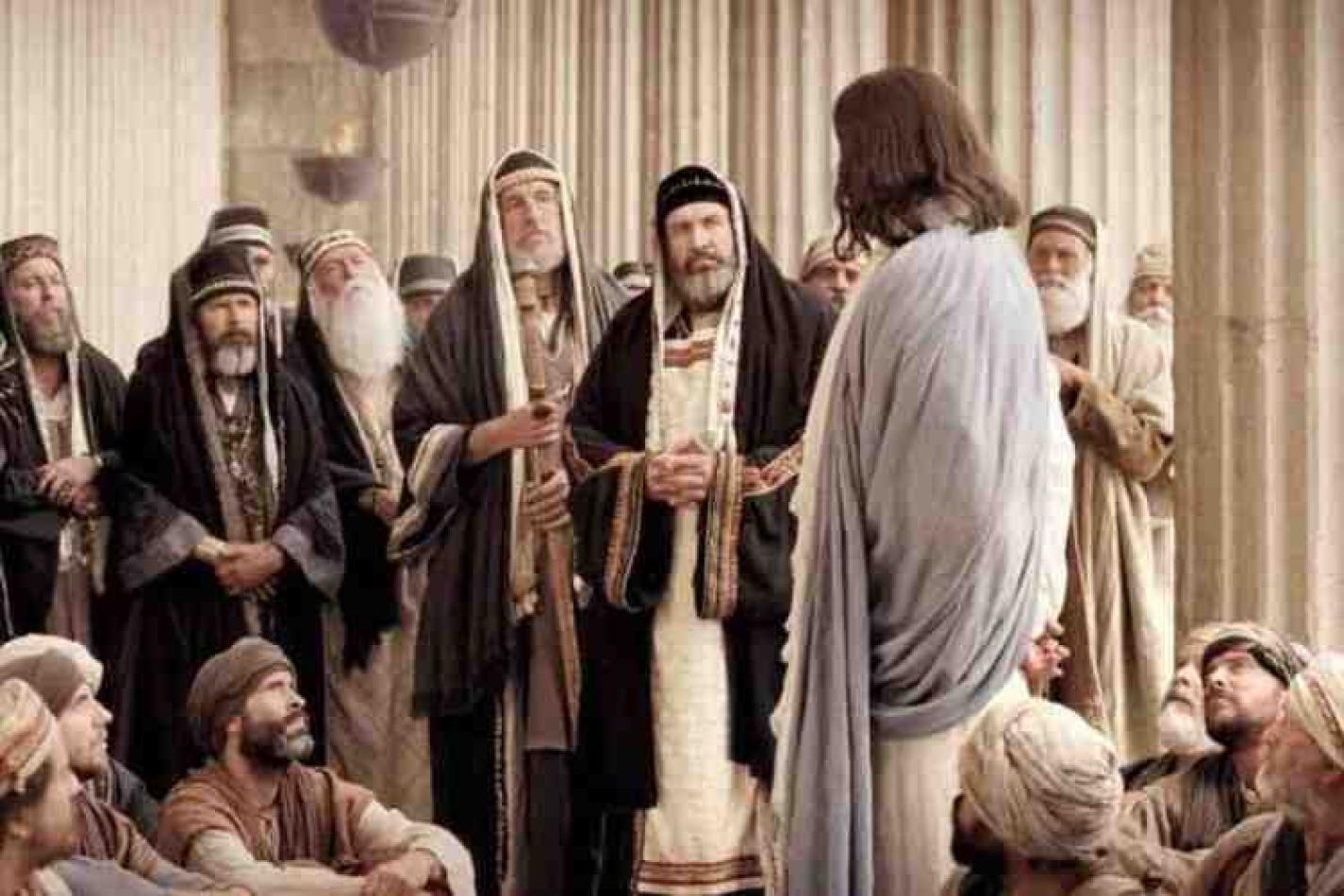
Unlike the temple priests, their authority stemmed from knowledge and strict adherence to the law rather than lineage.
Their power was exercised through teaching and interpretation, primarily in synagogues and everyday life, which set them apart from other religious factions of the time.
Within Pharisaic Judaism, various interpretive schools emerged, notably the schools of Hillel and Shammai, which debated the application of the law in daily life.
Hillel advocated for a more flexible and compᴀssionate approach, while Shammai emphasized strict observance and separation.
Despite their differences, both schools remained part of the same Pharisaic movement, illustrating the dynamic nature of their religious discourse.
As the Roman Empire conquered Jerusalem in 63 BC, the Pharisees were already a formidable spiritual force, governing the religious conscience of the people without holding political power.
By the time Jesus began his ministry around AD 27, the Pharisees were entrenched in the socio-religious fabric of Jewish life, respected yet often feared for their influence.
With this historical context established, we can now examine the daily life of a Pharisee during Jesus’ time.
The formation of a Pharisee began in childhood, with religious training commencing around the age of five or six and continuing for decades.
From an early age, children learned the Torah through memorization and repeтιтion, instilling faith into their very being.
By the age of twelve or thirteen, they ᴀssumed personal responsibility for their adherence to the law, marking a significant transition in their spiritual journey.
As they progressed into adolescence, their studies intensified, focusing on interpreting the law and applying it to everyday situations.
Phariseeism was not merely a belief system; it was a comprehensive way of life that shaped individuals from childhood to adulthood.

Obedience was not sporadic; it was ingrained into their very existence, creating a structure that defined their spiritual idenтιтy.
After years of rigorous training, a Pharisee reached spiritual maturity, ready to navigate the complexities of daily life.
A typical day for a Pharisee began with prayer, emphasizing the importance of presenting oneself before God before engaging in any other activity.
At dawn, they recited the Shema, the central affirmation of Jewish faith, a prayer memorized and repeated since childhood.
The timing of this prayer was as crucial as the words themselves, reflecting the Pharisee’s commitment to obedience.
Throughout the day, they organized their schedules around fixed hours of prayer, often praying publicly in synagogues or on the streets, which served as a visible testament to their faithfulness.
This public display of piety, however, created a dicH๏τomy.
While many admired the Pharisees for their devotion, others felt judged by their visible displays of spirituality.
The ritual washing of hands before meals became another hallmark of Pharisaic life, not for hygiene but as a means of maintaining spiritual purity.
This ritual, though seemingly innocuous, became a point of contention when Jesus’ disciples were accused of eating with unwashed hands, a breach of tradition that the Pharisees deemed unacceptable.
For them, failing to observe such rituals was not merely a lapse in hygiene but a serious spiritual infraction that threatened the religious order.
Historian Flavius Josephus noted that the Pharisees wielded significant influence as they defined piety through their practices, effectively creating insiders and outsiders based on adherence to their rules.
Jesus, however, challenged this notion.

He redirected the focus from external rituals to the condition of the heart, emphasizing that true defilement stemmed from within rather than from external practices.
After the rituals of prayer and washing, a Pharisee would partake in meals that were laden with spiritual significance.
They adhered strictly to kosher dietary laws, ensuring that every aspect of their meals reflected obedience to God.
The act of sharing a table was significant; it denoted spiritual communion and delineated who was considered pure.
Consequently, dining with tax collectors or Gentiles was seen as a grave offense, as it risked ritual contamination.
Jesus’ practice of dining with such individuals scandalized the Pharisees, who perceived it as a direct affront to their religious sensibilities.
His actions revealed a profound contrast between the heart of God and the rigid structures of religious law.
Work for the Pharisee was not separate from their spiritual life; every daily activity was viewed as service to God.
Many Pharisees engaged in trades, ensuring that their livelihoods were earned through integrity and hard work.
In business dealings, they were meticulous about honesty, as cheating or exploiting others was viewed as a sin against God.
Despite the challenges posed by Roman currency, which bore pagan images, Pharisees navigated these realities while striving to maintain their spiritual purity.
Throughout their day, they practiced self-examination, constantly evaluating their thoughts and actions to ensure alignment with the law.

As the day drew to a close, a Pharisee would reflect on their conduct, ᴀssessing whether they had upheld justice and maintained purity.
Spirituality was a continuous cycle of examination and correction, deeply interwoven into the fabric of family life.
In the home, the Pharisee played a vital role in shaping the spiritual idenтιтy of their family.
Every interaction was seen as an opportunity for teaching and reinforcing the law, ensuring that children learned through example and correction.
Discipline was viewed as an act of faithfulness, and failure to provide rigorous spiritual formation was considered a grave danger to the child’s soul.
Marriage, too, was governed by strict laws, with the Pharisee adhering to ritual purity even in intimate relationships.
The home was viewed as an extension of the community’s holiness, where every detail—from the cleanliness of the table to the observance of dietary laws—was meticulously regulated.
As the Sabbath approached, preparations intensified.
The Pharisee ensured that all work was completed beforehand, as the Sabbath was not merely a day of rest but a highly structured observance filled with specific rules.
Traditions dictated what consтιтuted work, even regulating actions as simple as walking distances or carrying objects.
Healing on the Sabbath was restricted, leading to further conflict when Jesus performed miracles on this day, challenging the established norms of the Pharisees.
Fasting and тιтhing were also integral to Pharisaic life, serving as visible expressions of devotion.
Many Pharisees fasted twice a week, and their fasting was designed to be noticeable, reinforcing their spiritual status in the eyes of the community.
Similarly, тιтhing extended even to the smallest of possessions, with meticulous attention given to every detail, as faithfulness was measured in precision.
However, these practices began to intertwine with social dynamics, creating hierarchies based on visible spiritual adherence.
Some Pharisees became more concerned with their social standing than with genuine devotion, leading to a dangerous blend of pride and spiritual elitism.
The culmination of this rigid structure often manifested in the treatment of the vulnerable, particularly widows.
In a society where widows held precarious positions, some Pharisees exploited their spiritual authority, advising them to give away their resources under the guise of devotion.
Jesus condemned this behavior, highlighting the hypocrisy of those who outwardly appeared pious while causing harm to the most vulnerable.
As the Pharisees’ daily lives became increasingly defined by rules and rituals, a sense of religious pride took root.
Righteousness began to be perceived as a personal achievement rather than a gift from God, leading to comparisons with others who did not meet the same standards.
This subtle shift in perspective fostered an environment where mercy was overshadowed by rigid adherence to the law, creating a barrier between the Pharisees and the heart of God.

Jesus’ confrontations with the Pharisees were not merely theological debates; they were profound challenges to a system that prioritized rules over relationships.
He called them “blind guides,” highlighting their inability to see the true essence of the law.
Their meticulous observance had become a source of pride, blinding them to the deeper truths of justice, mercy, and faithfulness that God desired.
Jesus did not reject the law; rather, he sought to restore its intended purpose—a means of drawing people closer to God rather than creating barriers.
He mourned over Jerusalem, recognizing the depth of their spiritual blindness and the consequences of their rigid practices.
The encounter between Jesus and the Pharisees serves as a poignant reminder of the dangers of allowing religion to become a subsтιтute for genuine faith.
In a world where spiritual practices can easily devolve into mere rituals, the call remains to seek the heart of God, prioritizing love and mercy above all else.
As we reflect on the life of the Pharisees during Jesus’ time, we are reminded of the importance of humility, compᴀssion, and the need for a heart aligned with God’s will.
May we strive to embody a faith that transcends rules, embracing the transformative power of love and grace in our daily lives.


