What No One Is Saying About Greg Biffle’s Plane Crash
When Greg Biffle’s airplane took off, it was already facing multiple challenges, including mechanical issues, procedural errors, and human factors that would eventually lead to a tragic outcome.
The National Transportation Safety Board (NTSB) preliminary report sheds light on several critical aspects of the crash that have not received adequate attention.
As I reflect on the findings, it becomes clear that understanding these overlooked details is essential for improving aviation safety.
Hello, I’m Dan Milikin, and while traveling without internet access, I took the opportunity to delve deeper into the NTSB report concerning the Greg Biffle crash.
This time away from the digital world allowed me to engage with Citation pilots and aircraft owners, revealing insights that have largely gone unreported.

First and foremost, my thoughts are with the families of those who tragically lost their lives in this incident, particularly a mother mourning her daughter and the many others grieving friends and family.
On the morning of December 18, 2025, everything appeared routine as the aircraft prepared for takeoff from Statesville Regional Airport.
The plane was fully fueled, and pᴀssengers boarded without any indication that this flight would end in disaster.
At the controls was a pilot with an Airline Transport Pilot (ATP) rating, the only individual on board qualified to fly the Citation 550, which legally required two pilots.
However, the pilot’s type rating for the Citation was relatively new, raising concerns about his qualifications.
Despite a career flying for a major airline and being rated on various complex airliners, his most recent FAA certificate, issued in May 2025, included a limitation requiring a second-in-command (SIC) for the Citation 550.

This limitation is standard for pilots new to a specific aircraft type and does not reflect poorly on their skills; rather, it indicates that they must complete additional training and hours before flying solo.
In this case, the pilot had only recently obtained his CE 500 rating, which meant he was not legally allowed to operate the Citation 550 without a co-pilot.
The right seat was occupied by his adult son, who was a private pilot with limited experience, having only 175.3 hours logged in single-engine piston aircraft, not in more complex jets.
Greg Biffle, the third pᴀssenger, held private pilot ratings for single-engine, multi-engine, and rotorcraft but did not possess an instrument rating, a fact that the NTSB prelim inaccurately reported.
In total, there were seven individuals on board, including Biffle’s wife, son, daughter from a previous marriage, and a friend.
From the outset, this flight was illegal due to the lack of a second qualified pilot, a critical factor that has been overlooked in discussions surrounding the crash.
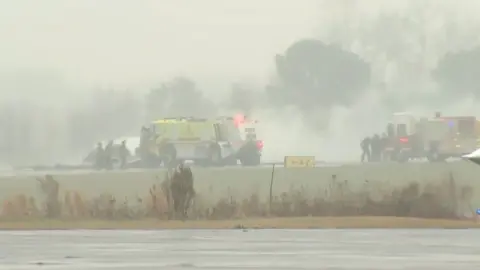
Weather conditions played a significant role in the flight’s trajectory.
The NTSB report indicates that the pilots received automated weather updates at 9:45 a.m., with calm winds and visibility of ten statute miles.
However, just nine minutes later, conditions began to deteriorate, with visibility dropping significantly and heavy drizzle setting in.
The cockpit voice recorder (CVR) captured the pilots’ attempts to start the engines, which initially failed for the left engine.
They resorted to a cross-generator start method, which, while not unusual, raises questions about the electrical issues that followed.
The preliminary report notes that both engines were operational but does not clarify if any electrical breakers were tripped, a crucial detail that investigators will examine.
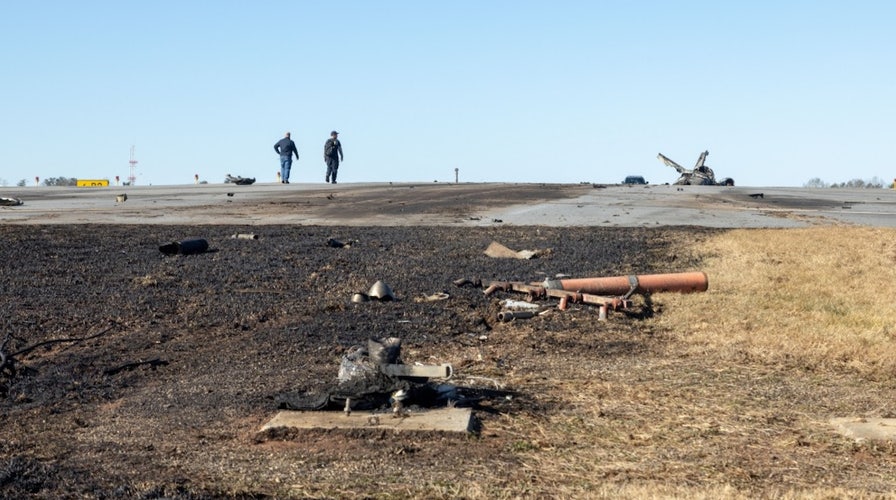
As the aircraft taxied at 9:59 a.m., the CVR recorded discussions about a thrust reverser indicator light failure, a concerning situation that should have halted the flight.
Despite these red flags, the aircraft continued its takeoff roll at approximately 10:06 a.m., with the intention of picking up an IFR clearance in the air.
During the takeoff, the left seat pilot noticed an imbalance in engine power, yet the decision was made to proceed with the flight.
Initial climb data appeared normal, but within moments, the aircraft began to descend unexpectedly.
Attempts to contact air traffic control for IFR clearance were unsuccessful, and critical instrument failures began to manifest.
At 10:09:37, the Garmin GTN 750 stopped recording airspeed data, indicating a troubling trend.
Shortly thereafter, the left seat pilot reported losing altimeter readings and other instruments, a clear sign that the flight was in distress.
Control of the aircraft pᴀssed to the right seat pᴀssenger, who lacked the experience to handle such a critical situation effectively.
Miscommunication regarding control transfer further complicated matters, as there was no recorded acknowledgment between the pilots about who was flying the aircraft.
As the situation deteriorated, the left seat pilot called for flaps and gear, but indications were that the gear was not deployed properly.

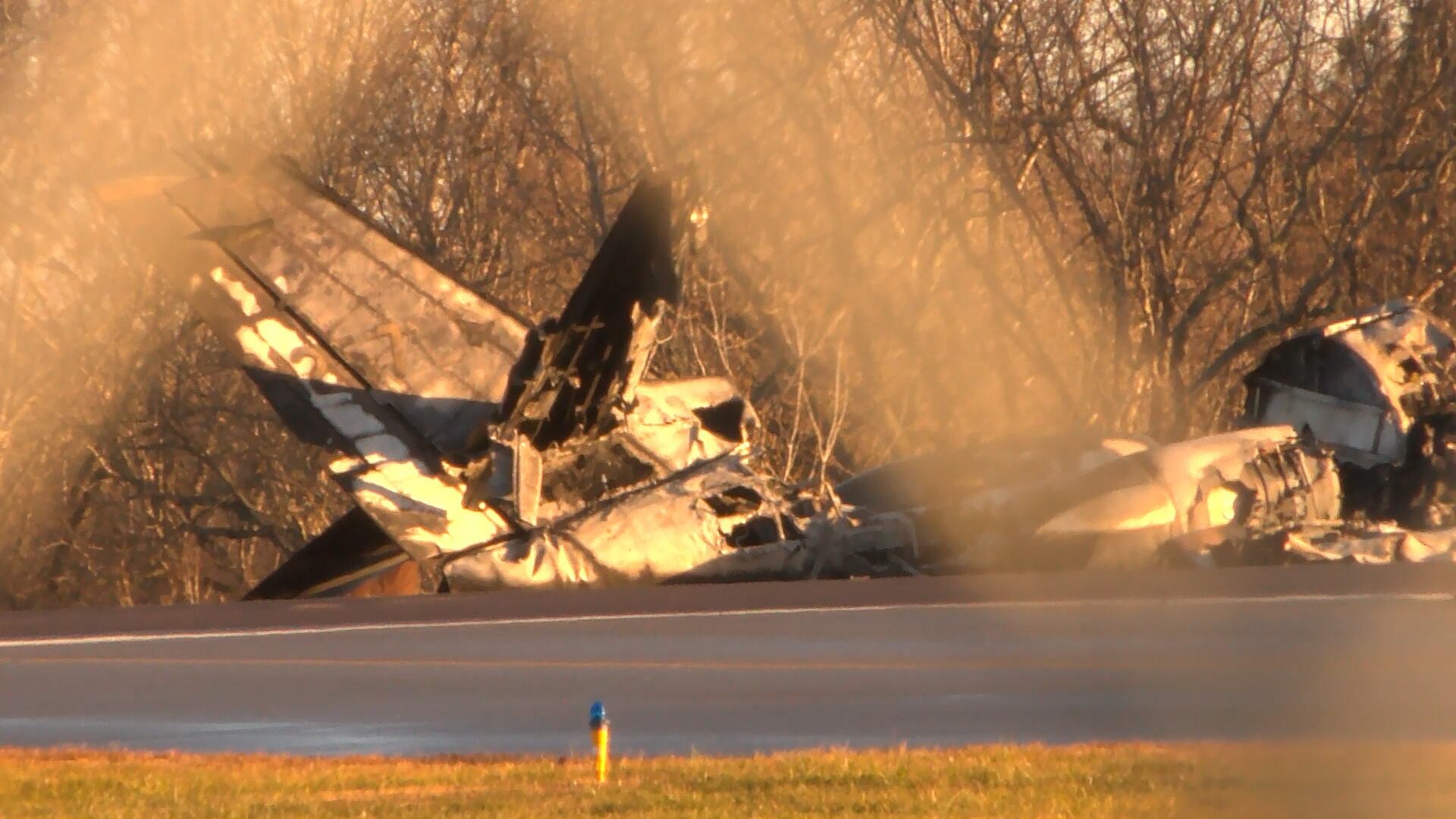
At 10:14:50, the aircraft was dangerously low and slow, ultimately impacting terrain just 350 feet from the runway threshold.
The post-impact fire consumed much of the aircraft, resulting in the tragic loss of all seven occupants.
Investigators are now piecing together the final moments of the flight, examining whether the pilot realized the aircraft’s low speed too late to take corrective action.
The findings of the NTSB report reveal a pattern of rule violations and complacency that are reminiscent of other aviation disasters.
The normalization of deviation, where pilots gradually disregard safety protocols, can lead to catastrophic outcomes.

This crash serves as a stark reminder of the need for pilots to respect their profession and adhere to established safety standards, regardless of external pressures.
Additionally, the concept of “celebrity pᴀssenger syndrome” may have played a role, highlighting the importance of maintaining professional integrity in the face of personal or social pressures.
Ultimately, this incident underscores the necessity of rigorous training, adherence to regulations, and the importance of saying no when safety is at stake.
As we reflect on this tragedy, it is crucial to learn from it to prevent similar occurrences in the future.
My heart goes out to the families affected by this heartbreaking event, and I hope that we can all strive to be better pilots and individuals in the wake of such a loss.


