Capitol Hill Showdown: ICE Cameras, Training Standards, and Border Strategy Under Scrutiny
A recent congressional hearing turned into a pointed examination of Immigration and Customs Enforcement (ICE) and Border Patrol policies, as lawmakers questioned agency leaders on body camera deployment, training timelines, enforcement tactics, and political neutrality.
At the heart of the exchange was a straightforward question: how prepared — and how accountable — are federal immigration agents operating in communities across the country?
Representative Bennie Thompson pressed agency officials for clarity on how many ICE agents currently have body cameras in active use.
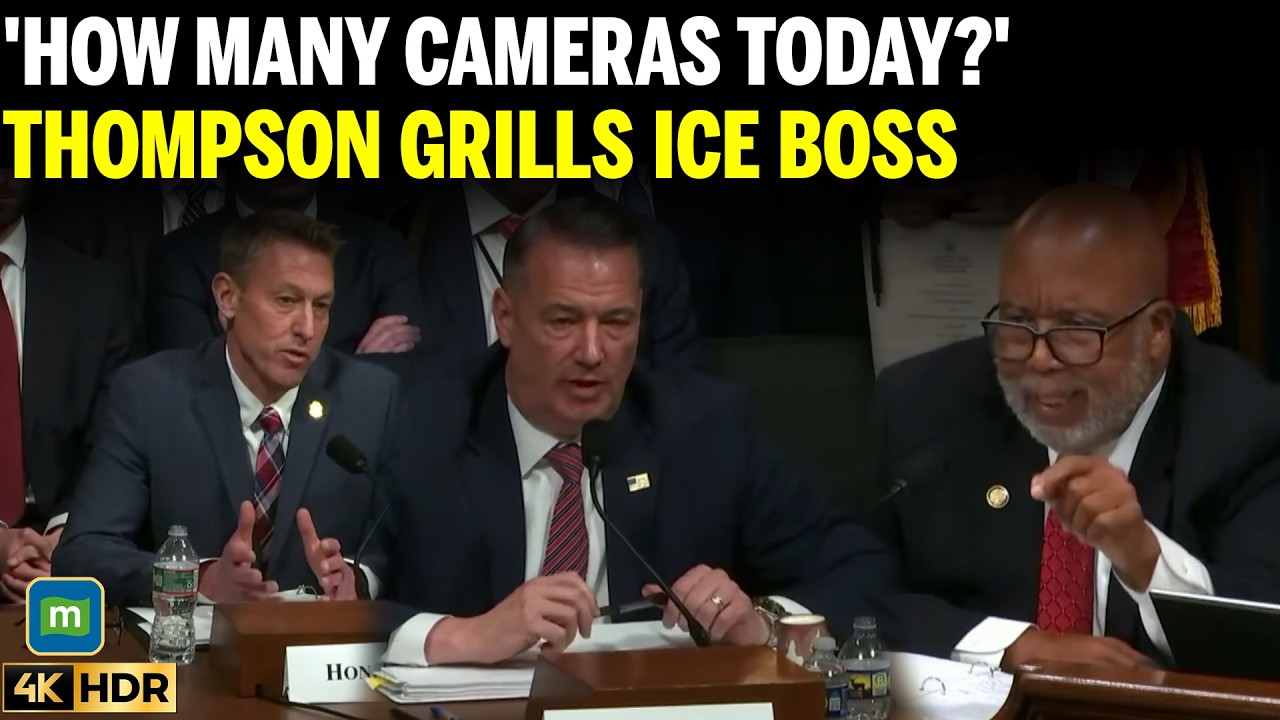
ICE leadership confirmed that approximately 3,000 officers in the field are equipped with cameras, out of roughly 13,000 field personnel. An additional 6,000 cameras are reportedly in the process of deployment.
Border Patrol officials reported that approximately 10,000 agents are equipped with cameras, out of about 20,000 agents total — roughly half the force.
However, the exact figures appeared fluid, prompting requests from lawmakers for precise, up-to-date numbers in writing. The exchange underscored ongoing concerns about transparency and accountability, particularly amid heightened scrutiny of enforcement operations in major cities.
Body cameras have become a focal point in law enforcement oversight nationwide. Supporters argue they protect both officers and civilians by providing clear documentation of encounters. Critics question whether rollout timelines are moving quickly enough, especially in high-profile enforcement environments.
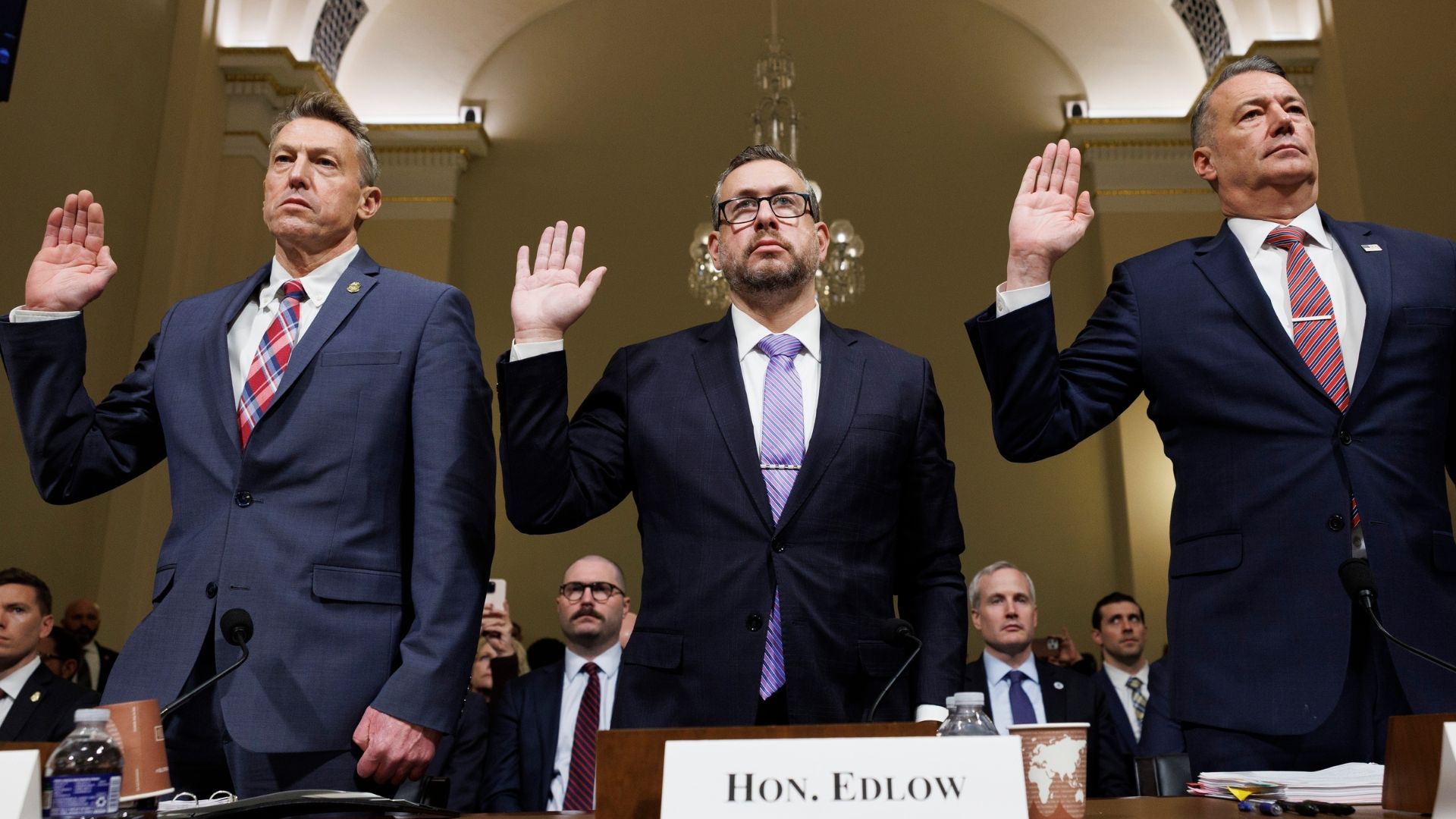
Another major area of questioning centered on how long it takes to train a new ICE agent.
Officials stated that total training for a new recruit with no prior law enforcement background is approximately three months, including:
-
47 days at the Federal Law Enforcement Training Center (FLETC)
-
Additional pre-employment instruction
-
On-the-job training (OJT)
However, some confusion arose regarding whether the 47-day academy portion represents the full training or only part of the overall timeline.

Officials clarified that prior certified law enforcement officers may undergo abbreviated programs, focusing primarily on immigration law and agency-specific training rather than repeating firearms or defensive tactics instruction.
Lawmakers requested a formal breakdown of the training structure, reflecting concerns that rapid hiring or accelerated onboarding could affect operational standards.
In a politically charged moment, Thompson asked directly whether ICE or Border Patrol had been involved in any planning to guard voting precincts following comments by the president about nationalizing elections.
Both officials responded clearly: no such plans exist, and no requests have been made to deploy personnel for election-related operations.
The exchange highlighted broader anxieties about federal law enforcement’s role in domestic political processes. At least in this hearing, agency representatives emphasized a strict boundary between immigration enforcement and election administration.
Representative Michael McCaul shifted the conversation toward border policy and sanctuary jurisdictions.
He argued that sanctuary city policies hinder cooperation between local and federal authorities, particularly regarding ICE detainers for individuals convicted of serious crimes. ICE officials confirmed that certain local jurisdictions, including Minneapolis, had declined to honor detainer requests in the past.
McCaul also referenced increased threats and ᴀssaults against ICE officers in recent years, arguing that political rhetoric has intensified operational challenges.

In response, agency officials described adjustments in enforcement strategy, including a move toward intelligence-driven, targeted operations rather than broader sweeps. They also emphasized coordination with local law enforcement for crowd control during protests.
Officials noted that protests in Minneapolis had subsided in recent weeks, allowing operations to continue with less direct confrontation between federal agents and demonstrators.
Representative Eric Swalwell introduced a different concern — how civilians distinguish legitimate ICE officers from potential criminals during enforcement actions.
He described a scenario involving plainclothes or minimally identifiable officers approaching individuals in public spaces, asking how civilians can verify authenticity.

ICE leadership responded that agents carry identifiable badges and placards and conduct targeted enforcement rather than indiscriminate “snatching” operations.
The exchange reflects a broader public debate over visible identification, uniform standards, and the balance between officer safety and public reᴀssurance.
This hearing illustrates the complex terrain federal immigration agencies now operate within:
-
Expanding body camera programs
-
Scrutiny over training rigor
-
Political polarization around enforcement
-
Safety concerns for both officers and communities
-
Ongoing debates over sanctuary policies
-
Border security challenges and shifting strategies
Immigration enforcement has increasingly become a flashpoint in national politics, blending operational logistics with deeply ideological disagreements.

On one side, lawmakers argue that enforcement is necessary to protect public safety and uphold immigration law. On the other, critics raise concerns about civil liberties, transparency, and community trust.
What the hearing made clear is that oversight is intensifying. Lawmakers are demanding precise data, documented policies, and visible accountability mechanisms.
Whether this results in faster reforms — such as accelerated body camera deployment or standardized identification requirements — remains to be seen.
For now, one thing is certain: immigration enforcement policy remains one of the most closely watched and politically charged issues in Washington.


