Inside Herod’s Temple: Engineering Marvel and Prophetic Ruin
In 19 BCE, Jerusalem became the site of one of the most ambitious construction projects in human history. Herod the Great—ruler of Judea under Roman authority—announced that he would rebuild the Jewish temple on a scale surpᴀssing even Solomon’s legendary sanctuary. What followed was not merely renovation. It was a feat of engineering so staggering that parts of it still defy explanation.
Yet behind the grandeur lay political calculation. And behind the stones, a story that would reshape religious history forever.
Herod’s claim to the throne was fragile. He was of Idumean descent, not fully Jewish by lineage, and many questioned his religious legitimacy. Rebuilding the temple was more than piety—it was strategy.

The existing temple, rebuilt after the Babylonian exile in 516 BCE, lacked the splendor of Solomon’s original. For centuries, it stood as a functional but diminished reminder of former glory. Herod saw an opportunity: if he could elevate the temple to unmatched magnificence, he could secure his place in history as Israel’s greatest builder-king.
According to the historian Josephus, Herod promised to raise the temple to a height and grandeur never before seen. But to avoid outrage, he took precautions. He trained 1,000 priests as skilled masons and carpenters so that sacred areas would only be handled by consecrated hands. Even ambition had to respect holiness.
Construction began around 20 or 19 BCE. The central sanctuary was completed in roughly 18 months to minimize disruption of worship, but surrounding courts and expansions continued for decades.
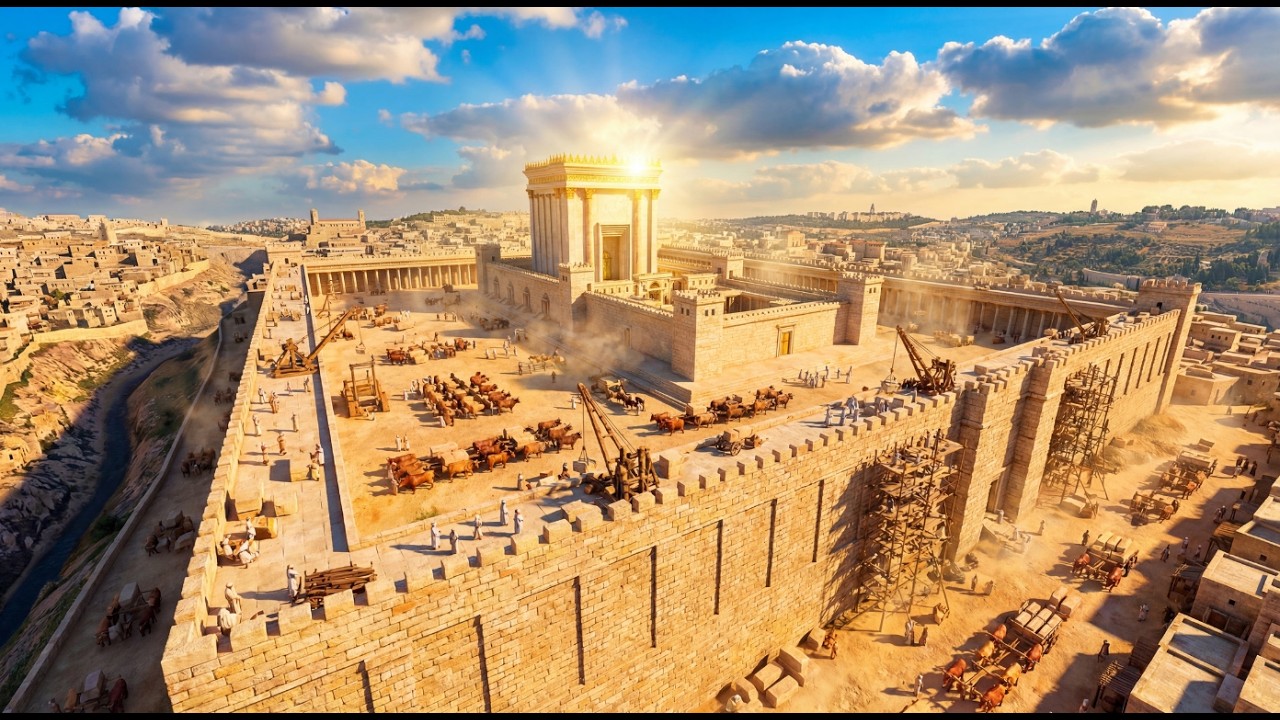
The greatest challenge was geographic. Mount Moriah was too small and uneven to support Herod’s vision of a vast sacred complex. The solution was audacious: expand the mountain itself.
Engineers constructed enormous retaining walls and filled surrounding valleys to create a 36-acre platform—the largest man-made religious precinct in the ancient world. In some places, these walls rose over 100 feet high.
The stones used were mᴀssive blocks of local meleke limestone, precision-cut with distinctive flat centers and drafted margins. They were fitted without mortar so тιԍнтly that even today a blade cannot easily slip between them.

One stone in the Western Wall tunnel—known simply as the “Western Stone”—measures approximately 44 feet long and weighs an estimated 570–600 tons. That is heavier than two fully loaded Boeing 747s.
How were such stones moved?
Archaeological evidence suggests quarrying techniques involving wooden beams inserted into cut channels and soaked with water. As the wood expanded, it split the rock along natural seams. Transport likely involved rollers, sledges, earthen ramps, cranes with pulley systems, and teams of oxen—possibly numbering in the hundreds.

Even more impressive was the subterranean architecture. To prevent collapse from the immense weight of earth fill, engineers built a network of vaults and arches beneath the platform. These structures distributed pressure and created usable space—later misidentified as “Solomon’s Stables.”
The Western Wall still stands because each layer of stone was slightly set back from the one below it, forming a subtle inward slope that strengthened stability against seismic activity.
Two thousand years later, modern engineers still marvel.
Herod’s temple was not merely functional—it was theatrical.
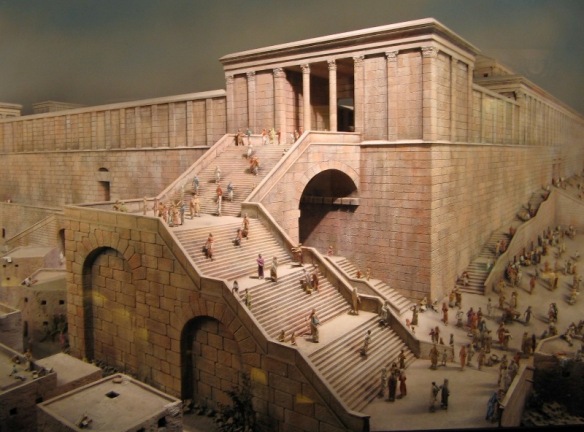
Pilgrims approaching Jerusalem for Pᴀssover, Pentecost, or Tabernacles would first purify themselves at ritual baths such as the Pool of Siloam. Then they ascended the southern steps—deliberately designed with alternating wide and narrow steps so that no one could rush upward. The architecture forced reverence.
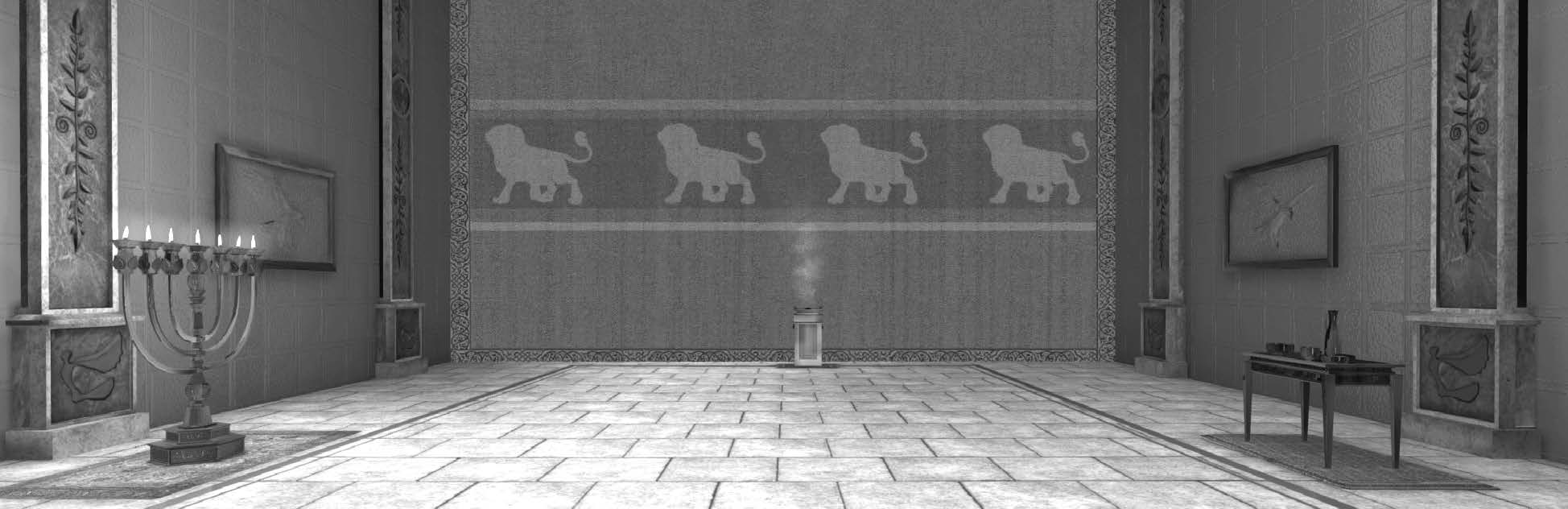
Upon emerging from underground pᴀssageways into the plaza, worshipers were confronted with a dazzling sight. The sanctuary façade was plated with gold. Josephus wrote that in sunlight it shone so brilliantly it appeared like a snow-covered mountain.
Above the entrance hung a mᴀssive golden vine, its grape clusters said to be as tall as a man. Levitical choirs sang psalms. Trumpets sounded. Incense filled the air. Sacrificial animals lowed in the courts.

It was sensory immersion—light, sound, scale, and sacred choreography.
Into this grandeur stepped Jesus of Nazareth.
As a boy of twelve, he was found teaching in the temple courts. During his ministry, he regularly taught in areas such as Solomon’s Portico. He famously drove out money changers from the commercial zones, declaring the temple to be “a house of prayer.”
Yet he also uttered a stunning prophecy.
When his disciples admired the mᴀssive stones, he responded: “Not one stone here will be left on another; every one will be thrown down.”
To those listening, it seemed absurd. These stones weighed hundreds of tons. The walls were nearly indestructible.
But in 70 CE, roughly forty years later, Roman legions under General тιтus besieged Jerusalem. The temple was set ablaze. As flames consumed the structure, gold from the sanctuary reportedly melted and flowed into cracks between stones.
Roman soldiers, eager to retrieve the precious metal, dismantled the structure block by block.
The sanctuary was destroyed. The retaining walls remained.
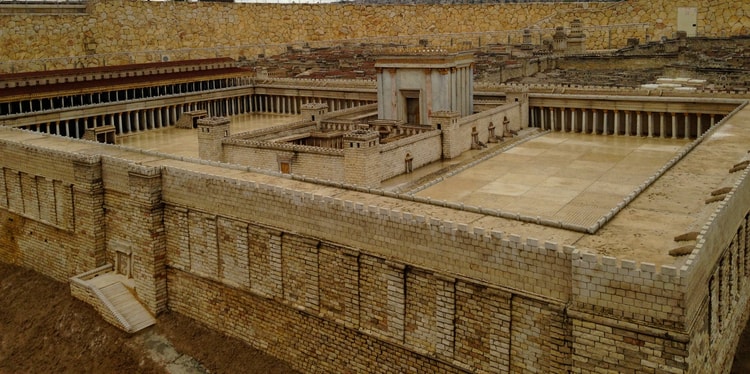
Exactly as foretold.
The destruction transformed both Judaism and Christianity.
Judaism shifted from temple-centered sacrifice to rabbinic teaching and synagogue worship. Christianity emphasized the belief that Christ himself fulfilled the role of temple and sacrifice.
From an engineering perspective, Herod’s achievement remains staggering. From a historical perspective, it stands as a monument to ambition. From a theological perspective, it became a stage upon which pivotal events unfolded.
Herod built for immortality. Yet within a generation, his masterpiece lay in ruins.
The Western Wall endures as a silent witness—not only to architectural genius, but to the fragility of even the greatest human achievements.
Mountains of stone can rise. Mountains of stone can fall.
And history continues to ask why.


