In modern public debate, it is often claimed that almost any idea can gain acceptance, while the historical existence of Jesus of Nazareth is questioned or dismissed.
For many believers, faith is not opposed to history, but strengthened by it.
Beyond sacred texts, there exists a wide body of material evidence that places Jesus firmly within the real world of the ancient Mediterranean.
Archaeology, inscriptions, hostile witnesses, and forgotten fragments of writing together form a cumulative case that Jesus was a historical individual whose life left measurable traces.
This article examines several of the most significant discoveries that support this conclusion.
One of the most discussed archaeological finds connected to the early Christian movement is the James Ossuary.

An ossuary was a limestone bone box used in a very specific burial practice among Jewish families in Jerusalem during the first century.
After a body decomposed, the remaining bones were gathered and placed into such a container.
This custom was limited to a narrow historical window, roughly between 20 and 70 AD, which allows scholars to date these objects with unusual precision.
Thousands of ossuaries have been uncovered, most bearing simple inscriptions that list the name of the deceased and the name of the father.
The James Ossuary stands out because of its inscription in Aramaic, the everyday language of the region at the time.
The text identifies a man named James as the son of Joseph and the brother of Jesus.
Mentioning a brother on an ossuary inscription was extremely uncommon.
It typically occurred only when the brother was widely known and socially significant.
Statistical studies have shown that the combination of these three names, along with the unusual inclusion of a brother, makes coincidence highly unlikely.
When the ossuary became public, skepticism was immediate and intense.
Some suggested that part of the inscription had been added later.
To address these concerns, the artifact underwent years of scientific testing.
Specialists examined the patina, the thin layer formed by centuries of natural aging.
Microscopic analysis revealed that the patina was present inside the engraved letters, indicating that the entire inscription was carved in antiquity.
This finding aligned with independent historical records describing James as a leader of the Jerusalem community who was e*ecuted around the early 60s AD.
Together, the archaeological and textual data point toward a real family connected to a real Jesus.
Beneath the streets of ancient Rome lies another powerful form of evidence.
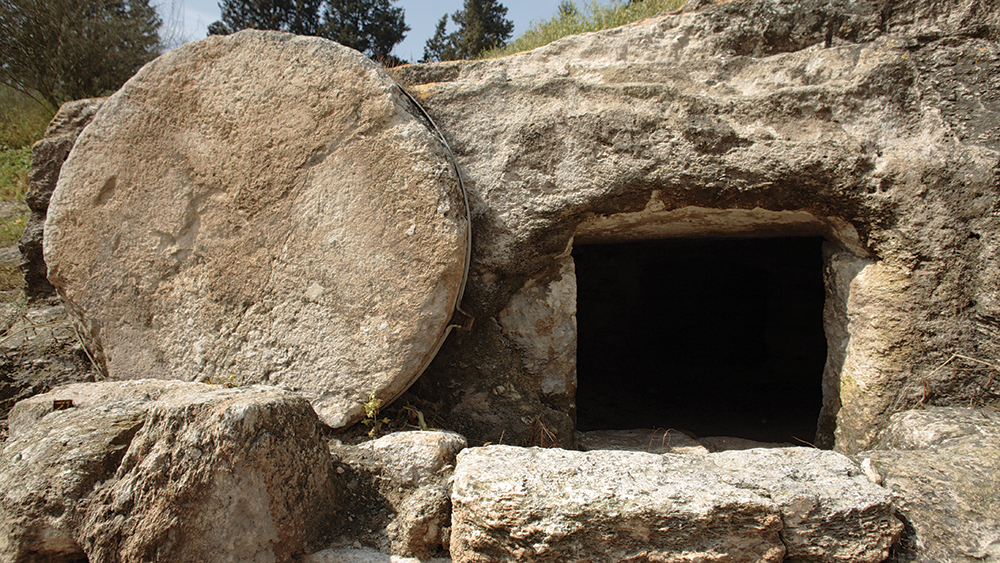
The catacombs, vast networks of underground burial tunnels carved into volcanic rock, were used extensively between the second and fourth centuries.
While Roman society favored cremation, Christians practiced burial, reflecting their belief in bodily resurrection.
During periods of intense pressure and persecution, these dark corridors became places of memory, worship, and idenтιтy.
The walls of the catacombs are covered with simple inscriptions and images.
Many were created quickly by ordinary people, yet they consistently center on Jesus as the source of life and hope beyond d*ath.
Because open identification as Christian could bring severe consequences, believers developed a symbolic visual language.
The image of a fish, for example, served as a discreet sign of shared faith.
Anchors, shepherds, and other everyday motifs concealed deeper meaning, often incorporating the shape of the cross in subtle ways.
These underground artworks reveal something essential.
They show that devotion to Jesus was already widespread and deeply rooted long before Christianity held any public authority.
People do not risk everything to honor a fictional character.
The catacombs demonstrate that early Christians believed Jesus was real, present, and victorious over the d*ath that surrounded them.
Another remarkable source comes from the sands of Egypt, at an ancient site that once served as a city garbage dump.
Excavations there uncovered tens of thousands of papyrus fragments preserved by the dry climate.
Among these documents was a small piece now known as Oxyrhynchus Papyrus 840, dated to approximately 150 to 200 AD.
Though fragmentary, the text contains a dialogue in which Jesus confronts a religious authority figure inside the temple.
The exchange focuses on purity and authority, themes well known from the canonical gospels.
The voice attributed to Jesus in this fragment is strikingly consistent with those earlier texts.
He speaks with confidence, challenges external ritualism, and emphasizes inner transformation.
This papyrus is important not because it adds new doctrine, but because it confirms that stories about Jesus, his teaching style, and his confrontations were circulating independently and very early.
It shows continuity rather than invention.
In Israel, another discovery reshaped understanding of early Christian belief.
During construction work inside a high security prison near Megiddo, workers uncovered a mosaic floor dating to around 230 AD.
This floor belonged to what is currently considered the oldest known Christian house of worship.
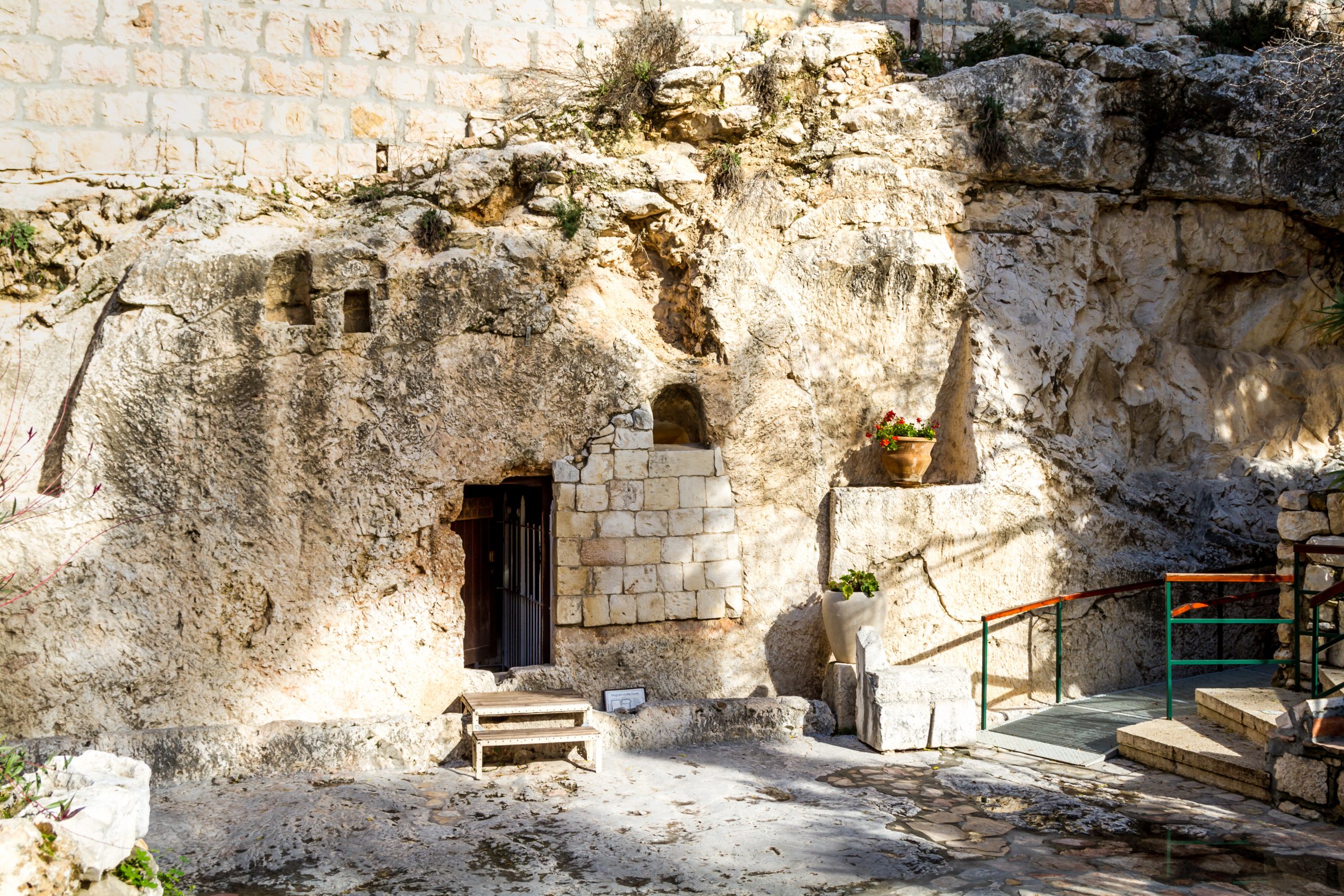
The mosaic includes a Greek inscription stating that a communion table was dedicated in honor of God Jesus Christ.
This inscription is significant because it predates the period when Christianity gained legal acceptance.
The worship of Jesus as divine was not imposed later by insтιтutional power.
It was already central to the faith of small, vulnerable communities.
The mosaic also records the names of donors, including a woman and a Roman military officer, illustrating the diverse social reach of the movement.
There are no images of the cross, likely because it was still ᴀssociated with intense trauma.
Instead, the space emphasizes communal meals and shared idenтιтy.
In Rome, a very different kind of artifact provides unexpected confirmation.
On a wall of a building ᴀssociated with imperial service, a crude drawing was scratched into plaster.
It depicts a man with the head of a donkey affixed to a cross, while another figure raises a hand in worship.
Beneath it is a brief caption identifying the worshiper.
This image, known as the Alexamenos graffito, was intended as mockery.
Its importance lies precisely in its hostile intent.
The artist ᴀssumed that viewers already knew Christians worshiped a crucified figure.
The ridicule confirms several facts at once.
Christians existed in Rome by the second century.
Their faith centered on the crucifi*ion.
And they directed worship toward Jesus as a divine figure.
Even attempts to humiliate believers inadvertently preserve historical truth.
Further east, in regions of ancient Syria, tomb inscriptions provide deeply personal testimony.
Simple grave markers from the third century contain brief messages expressing hope in Jesus Christ.
These epitaphs are not theological treatises.
They are expressions of grief and expectation carved by families who believed their loved ones remained alive in Christ.
Such inscriptions are powerful because they reflect what people truly believed when facing loss.
They define idenтιтy not by status or citizenship, but by relationship to Jesus.
Written sources outside Christian circles add another layer.
The Jewish Talmud, compiled over several centuries, contains references to Jesus under a variant name.
The authors were openly critical and opposed to the Christian movement.
Yet they never denied that Jesus existed.
Instead, they acknowledged his execution around Pᴀssover and attributed his influence to sorcery.
From a historical perspective, this is telling.
Opponents did not dismiss reports of extraordinary acts.
They reinterpreted them negatively, which still confirms that such acts were widely ᴀssociated with Jesus.
Pagan texts offer similar confirmation.
The Greek magical papyri, collections of spells and ritual formulas used by non Christians, frequently invoke various divine names believed to have power.
Among them appears the name of Jesus, invoked alongside other deities.
These pracтιтioners were not interested in belief or morality.
They used names that were thought to be effective.
The presence of Jesus in these texts shows that his reputation for spiritual authority had spread far beyond the church.
Finally, a satirical writer from the second century provides an unintended witness.
Known for mocking social trends, he ridiculed Christians as naive and foolish.
In doing so, he explained that they worshiped a man who had been crucified in Palestine and followed his teachings with remarkable devotion.
Like other hostile sources, he never questioned whether Jesus existed.
For educated readers of his time, that fact was beyond dispute.
When all this evidence is considered together, a clear picture emerges.
Archaeology, hostile testimony, private grief, and public ridicule all point to the same conclusion.
Jesus of Nazareth was a real historical figure.
His family lived in a known place.
His followers worshiped him early and openly, even under pressure.
His influence spread across cultural and religious boundaries.
Faith may address meaning and salvation, but history confirms presence and impact.
The traces of Jesus are not confined to belief.
They are carved into stone, scratched on walls, written on discarded paper, and preserved in the memory of those who opposed him.


