Catherine O’Hara and the Rare Condition She Discovered in Her 40s
Catherine O’Hara was celebrated for her impeccable comic timing, unforgettable characters, and the rare ability to balance absurd humor with genuine warmth.
From SCTV to Home Alone and later Schitt’s Creek, she became one of the most beloved actresses of her generation.
Yet behind the scenes, O’Hara lived most of her life unaware of a medical condition so rare that many doctors encounter it only once or twice in an entire career.
According to reports following her death at age 71 after a brief illness, O’Hara had a condition known as dextrocardia with situs inversus—a congenital anomaly in which the major organs in the chest and abdomen are mirrored from their usual positions.
In simple terms, her heart was on the right side of her chest instead of the left, and other organs were similarly reversed.

Remarkably, O’Hara did not learn about this condition until she was in her 40s.
The discovery came not through symptoms or medical distress, but by chance.
During a routine medical examination involving a chest X-ray and an electrocardiogram, doctors noticed something unexpected.
The images suggested an error—until they realized that her organs were positioned as a mirror image of the norm.
What had gone unnoticed since birth was suddenly, undeniably clear.

The condition occurs in roughly one in 10,000 people, making it exceptionally rare.
Many individuals with situs inversus live their entire lives without knowing they have it, especially if it is not accompanied by other complications.
O’Hara herself once joked about the diagnosis on a podcast, laughingly referring to herself as “a freak,” a remark that reflected her trademark humor rather than fear or distress.
Medically speaking, dextrocardia with situs inversus is often benign.
In the absence of related syndromes or heart defects, people with this condition can live completely normal lives with no reduced life expectancy.
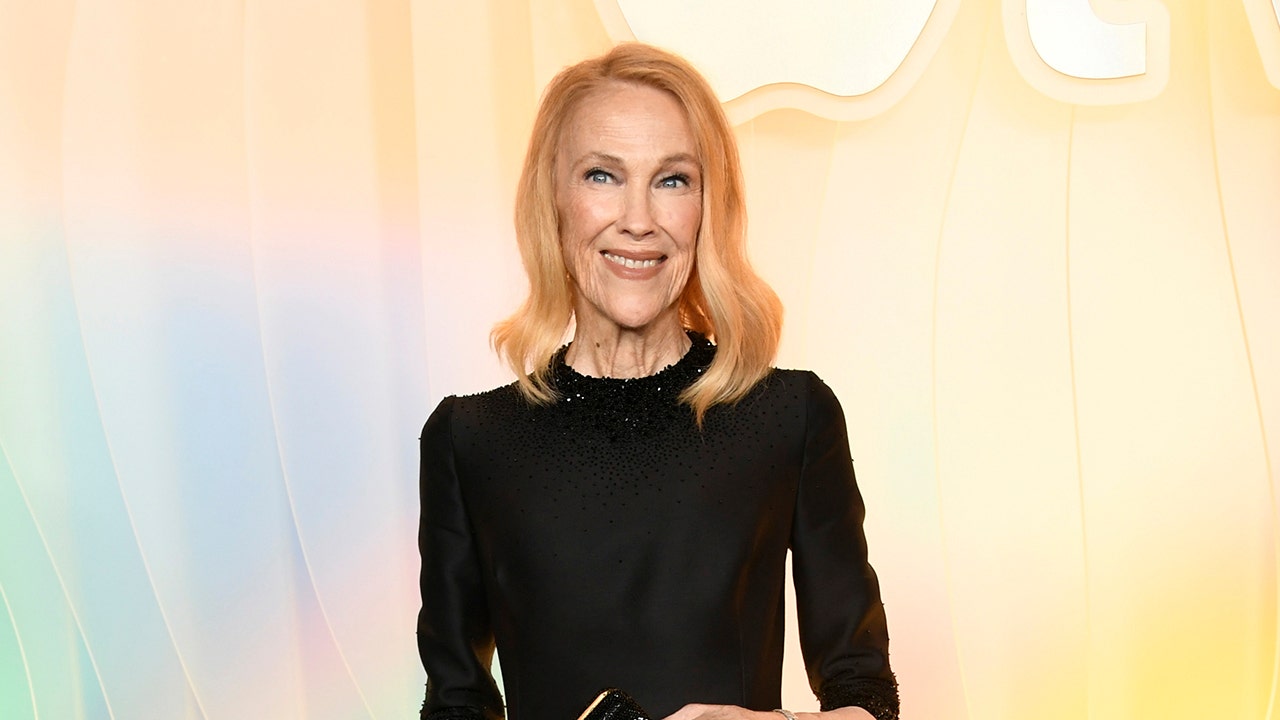
Doctors interviewed following O’Hara’s death emphasized that it is unlikely the condition directly contributed to her pᴀssing.
Still, the revelation has sparked public fascination, partly because of its symbolism.
A woman known for playing characters who felt out of place, misunderstood, or exaggeratedly “different” was, in a literal anatomical sense, built differently from most of the world.
The irony has not been lost on fans revisiting her career.
O’Hara’s final months, however, raised quiet concern.
Her last public appearance took place five months before her death at the Emmy Awards, where some observers noted that she appeared noticeably gaunt.
Shortly before the Golden Globe Awards, where she was nominated for her role as a sharp-tongued Hollywood executive in The Studio, she failed to appear—an absence that went unexplained at the time.
Her representatives have released little information beyond confirming that she died after a short illness.
In an era of constant speculation, medical experts have urged caution, reiterating that situs inversus alone does not typically lead to serious health complications.
Born in Toronto, O’Hara rose to fame through SCTV, where her fearless parody work set her apart.
One of her most famous sketches—a satire of Brooke Shields—resurfaced online after her death, prompting Shields herself to post a heartfelt tribute.
“What an honor it was to be spoofed by Catherine O’Hara,” Shields wrote.
“What an unfathomable loss.”
That reaction captures the essence of O’Hara’s impact.
She was not merely admired; she was respected by peers who understood the difficulty of making comedy look effortless.
Her characters were often exaggerated, but never cruel.
Even at her most outrageous, there was humanity underneath.
Learning that O’Hara lived for decades without knowing her own anatomy was unique only deepens the sense of wonder surrounding her life.
It is a reminder that even the people who feel most familiar to us can harbor extraordinary, hidden stories within their own bodies.
As fans mourn her pᴀssing, Catherine O’Hara is being remembered not only for the laughter she gave the world, but also for the quiet resilience of a woman who carried a rare condition without it ever defining her.
In the end, her legacy remains unchanged: a singular talent, a deeply original performer, and a presence that felt both larger than life and intimately human.


