Prince William Explores How Riyadh Is Redefining Sustainable Living
Under a bright Saudi sky, Prince William stepped into a vision of the future — one where sustainability, wellness, and urban innovation intersect in the heart of the desert.
During his visit to Riyadh, the Prince of Wales toured a groundbreaking development designed to transform how residents experience city life.
What once might have seemed improbable in a region known for extreme summer temperatures is steadily becoming reality: walkable neighborhoods, green corridors, rooftop gardens, and lifestyle spaces that encourage community connection.
From the moment he arrived, the tone was energetic yet purposeful.
Project leaders and designers gathered to introduce the Prince to what they described as a “new lifestyle ecosystem.”
The focus was clear — reduce reliance on cars, integrate greenery into urban planning, and create spaces that promote physical and mental well-being.
“This is from your head — design,” one guide remarked while explaining how leadership vision had shaped the initiative.
Prince William, long known for his interest in environmental innovation and sustainable development, appeared engaged as he moved between presentations and outdoor areas filled with landscaping and pedestrian pathways.
“Very exciting. A lot of green,” he commented, noting the unexpected abundance of plant life integrated into the surroundings.
At the heart of the development was a lifestyle concept increasingly central to modern urban planning: accessibility.
Cafés, walking routes, fitness spaces, and retail hubs were designed to sit within easy reach — encouraging residents to step outside rather than drive.

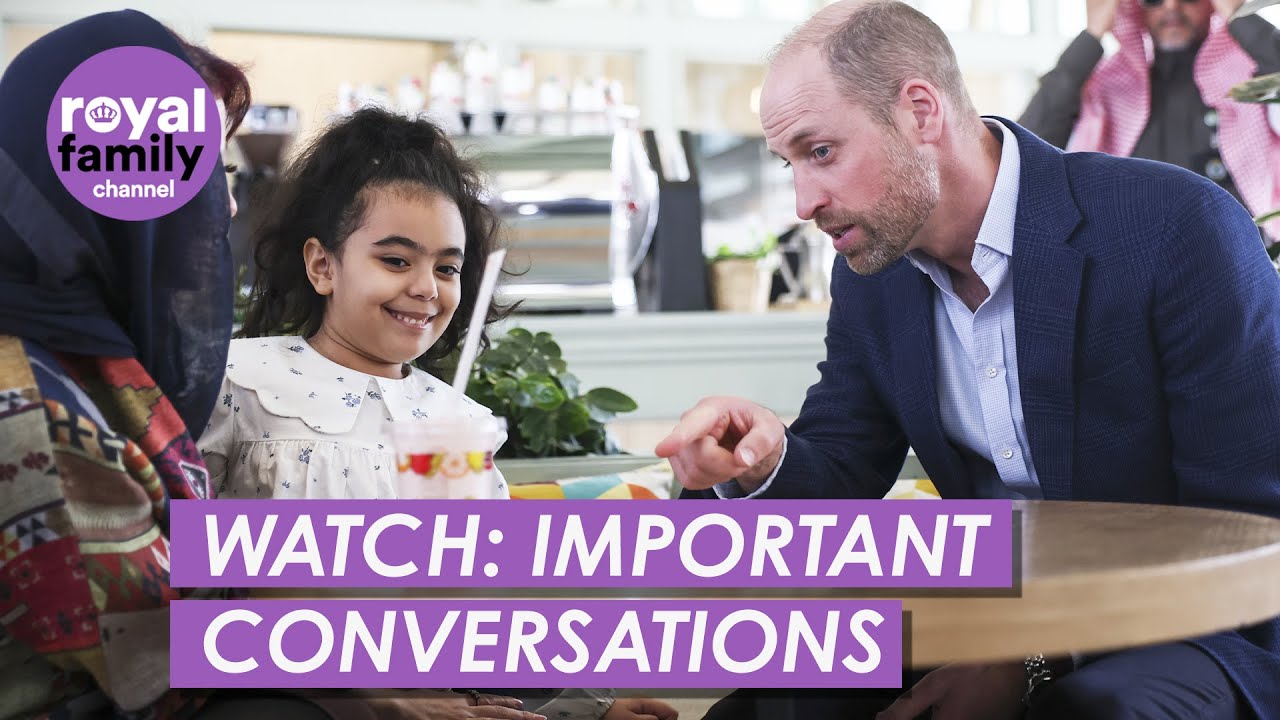
One stop during the visit highlighted this shift perfectly: a newly opened café built with sustainability and health in mind.
The Prince asked about its origins.
“Is this your brand-new café?” he inquired warmly.
The owner explained the business began in 2019, inspired by a changing culture that embraced “grab-and-go” convenience and healthier living.
The conversation turned to nutrition and oversight.
“Do you have a dietician?” William asked.
The answer was yes — the café works with health professionals and adheres to ministry guidelines.
Much of the menu is homemade, including freshly baked bread.
The emphasis was not simply on commerce but on fostering balanced, accessible food options within a walkable environment.
The Prince sampled a beverage and chatted easily with customers nearby, including families enjoying the space.
When offered organic sweets and lollipops, he smiled: “Are they for my kids? That’s so sweet of you.
” The brief exchange underscored a hallmark of his public engagements — blending policy interest with personal warmth.
Beyond cafés and retail, the broader vision addresses one of Riyadh’s most pressing challenges: climate.
Summers in the Saudi capital can soar past 45°C (113°F), historically discouraging outdoor activity.
“When you were growing up, was it harder to exercise outside?” the Prince asked a local resident.
“Very hard to walk,” came the candid reply.
The development aims to counter that barrier.
Shaded pathways, tree-lined streets, cooling technologies, and carefully positioned buildings work together to mitigate heat.
In winter months, when temperatures are milder, the spaces become vibrant hubs for runners, walkers, and families.
“You would say it’s winter here,” one resident noted, prompting William to laugh.
“This is very summer for us.”
The exchange highlighted a deeper ambition: designing infrastructure that adapts to climate realities rather than ignoring them.
By prioritizing pedestrian zones and micro-mobility options, planners hope to reduce carbon emissions while improving public health.
The initiative also reflects Saudi Arabia’s broader Vision 2030 framework, which seeks to diversify the economy and enhance quality of life.
Central to that strategy is reimagining cities not merely as commercial centers, but as livable, human-scale environments.
For Prince William, whose EarthsH๏τ Prize champions scalable environmental solutions, the visit aligned closely with his global advocacy.
Throughout his public life, he has emphasized the need for practical sustainability — projects that balance ambition with real-world application.
Observers noted that this engagement felt less ceremonial and more exploratory.
The Prince asked detailed questions about design, community response, and long-term viability.
He appeared particularly interested in how cultural habits are evolving alongside infrastructure improvements.
Indeed, shifting lifestyle patterns may be as transformative as the physical redesign itself.
Residents described how the new layout encourages spontaneous encounters, healthier routines, and greater social cohesion.
Instead of isolated indoor living during much of the year, families now have spaces designed to draw them outdoors.
As the tour concluded, one theme stood out: sustainability here is not framed solely as environmental preservation, but as holistic well-being.
It encompᴀsses food systems, exercise, urban heat management, and community connection.
Riyadh’s experiment is still unfolding.
Challenges remain — particularly during peak summer months.
Yet the visible progress offers a glimpse into how rapidly cities can evolve when vision, funding, and policy align.
For Prince William, the visit reinforced a message he has often articulated: meaningful climate action requires innovation at the local level.
Whether in London, Nairobi, or Riyadh, the path forward depends on rethinking how communities are built and how people move within them.
In a city once defined by car-centric sprawl and desert heat, a quieter transformation is underway — one shaded walkway, rooftop garden, and neighborhood café at a time.


