The Permian Basin’s Silent Collapse: Sinkholes, Orphaned Wells, and Earthquakes Threaten America’s Oil Heartland
The Permian Basin, sprawling across West Texas and southeastern New Mexico, stands as the undisputed powerhouse of U.S. energy production.
Pumping nearly half of America’s daily crude oil output—around 6.5 million barrels—it fuels the economy with billions in revenue and supports hundreds of thousands of jobs.
Yet beneath this booming success lies a growing crisis: the ground is literally falling apart.

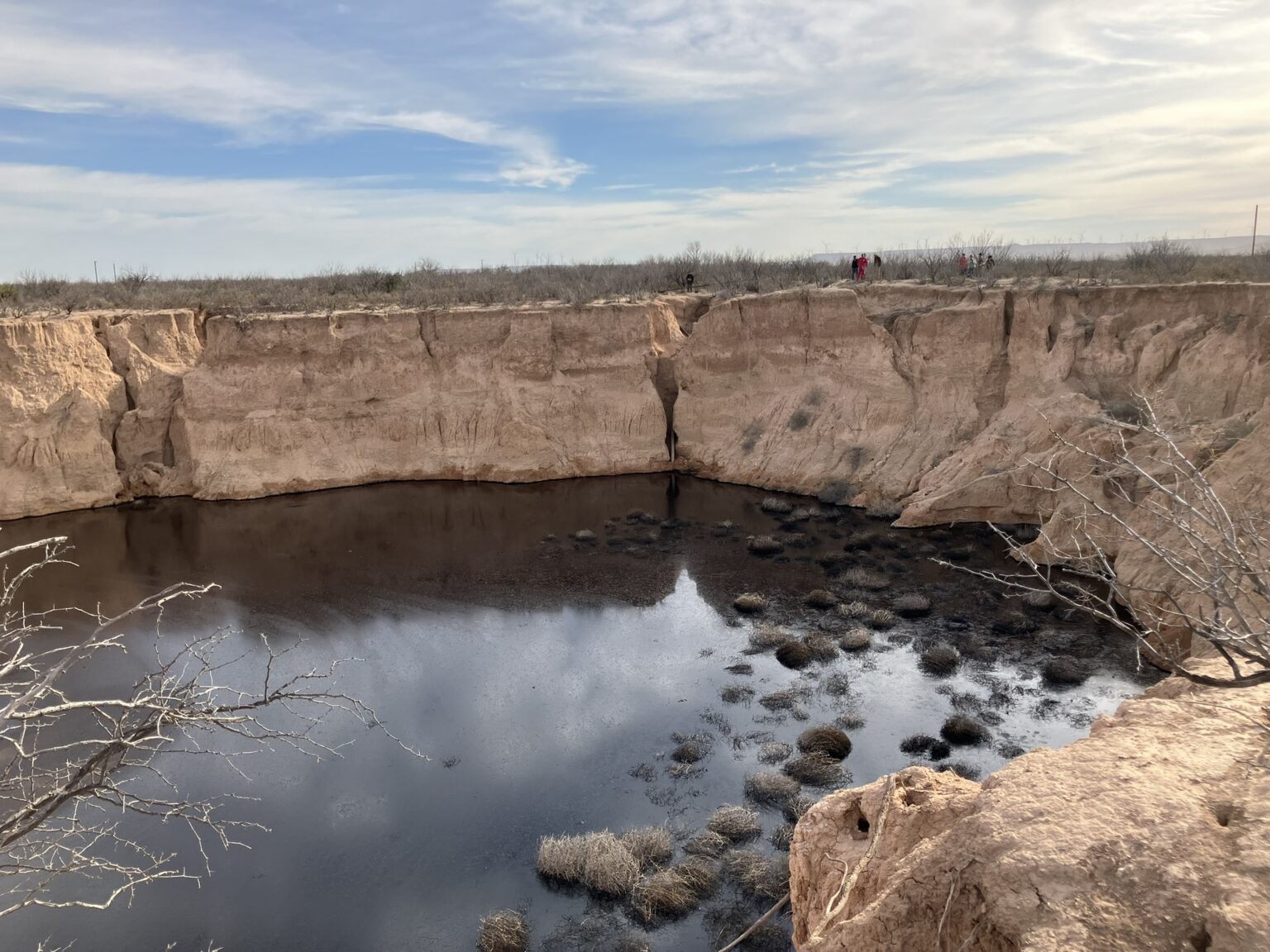
In early 2025, a dramatic sinkhole erupted on the Kelton Ranch in Upton County.
Centered on the Radford Grocery No.17 well—drilled in the 1950s, converted to saltwater disposal, and plugged in 1977—the crater rapidly expanded to 200 feet wide and 40 feet deep.
Crude oil pooled at the surface, forcing the family to abandon a nearby water well over contamination fears.
Bill Kelton described the hole doubling in size within weeks, with no clear responsible party left to address it—the original companies long defunct.
This incident is no isolated freak event.

It echoes the infamous Wink Sinkholes in Winkler County.
Wink Sink No.1 formed in 1980 around a 1928 well, swallowing pipelines in a 360-foot crater over 100 feet deep.
Sink No.2 appeared in 2002 near a mᴀssive water-supply well, now stretching 670–900 feet wide and still expanding slowly.
The town of Wink, home to about 940 residents, lies perilously close, with cracks spiderwebbing the desert floor.
Satellite radar from Southern Methodist University has detected alarming subsidence—up to 60 cm per year in some zones—signaling potential new collapses.
The root cause traces to the geology: the Permian sits atop the Salado Formation, a thick salt layer 400–670 meters down.
Freshwater intrusion dissolves the salt, creating voids that collapse upward.
Old wells, poorly sealed or corroded, serve as conduits, channeling water into these vulnerable zones.
On ranches like Ashley Watt’s 22,000-acre Antina in Crane County, inspections revealed every checked well leaking despite plugs—cement cracked, steel rusted—allowing fluids to migrate.
The scale is staggering.
Texas tracks 8,925 orphaned wells (inactive, no responsible operator), but estimates of idle or unplugged wells range from 115,000 to 476,000.
Many date to the early 20th century, when standards were lax.
These “zombie wells” leak methane, oil, and brine, contaminating soil and groundwater.
Compounding the instability is wastewater injection.
For every barrel of oil extracted, 3–10 barrels of toxic produced water return, much reinjected underground—15 million barrels daily across the basin.
Volumes in Reeves County exploded from 16.9 million barrels in 2010 to 1.2 billion in 2024.
This mᴀssive pressure buildup triggers earthquakes: from 177 in 2021 to over 9,000 in 2024, including magnitude 5.0+ events felt hundreds of miles away.
A 2022 blowout near Toyah spewed a 160-foot geyser; another in Crane County linked to nearby disposal wells caused surface uplift then subsidence after relief.
Infrastructure suffers too—highways crack, pipelines twist in craters, and blowouts cost millions to cap.
Methane emissions soar, with satellites detecting 3 million metric tons annually from Texas sites alone, far higher than in neighboring New Mexico due to laxer capture rules.
Regulatory response has lagged.
The Texas Railroad Commission, overseeing the industry, updated disposal guidelines in June 2025—the first major overhaul since 1982—introducing pressure-based limits and area reviews.
A $100 million one-time fund aids plugging, and new laws target idle wells.
Yet critics note the Commission’s elected officials receive substantial oil-industry funding, and plugging rates trail new orphans.
Ranchers like Skyler White and Billy Wayne Meister sue companies, while advocates push for stronger reforms.
The Permian remains vital, but the ground’s unrest signals unsustainable strain.
As subsidence spreads across thousands of square miles and seismic activity climbs, the question looms: can the basin’s operators and regulators adapt before the instability escalates into widespread catastrophe?


