Secret Mafia Tunnel Under the Formosa Cafe Finally Revealed
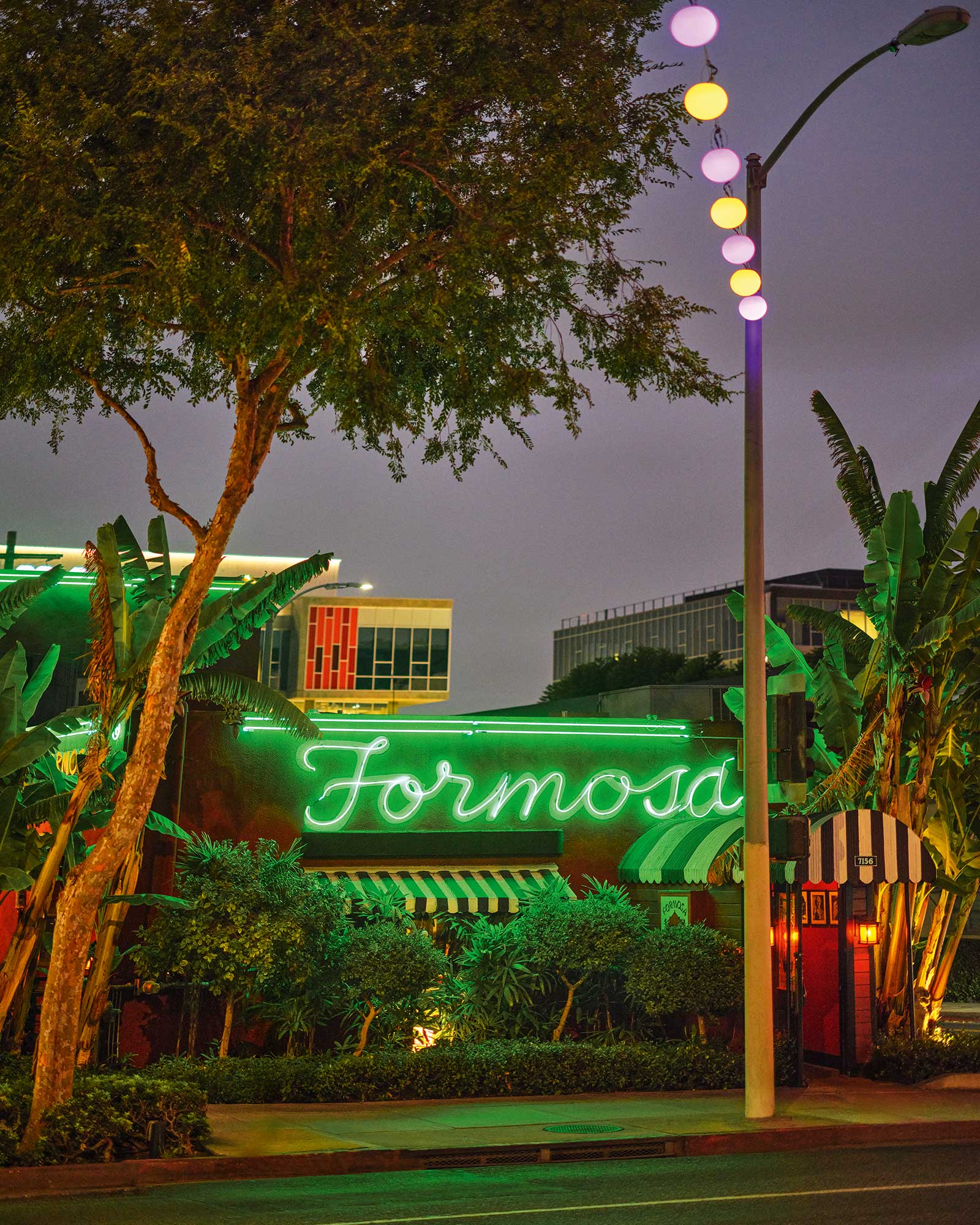
For most of its life, the Formosa Cafe looked like nothing more than another legendary Hollywood restaurant.
Frank Sinatra played piano there after hours.
Elvis Presley had his own booth.
Ava Gardner drank quietly in the back, while John Wayne slept off hangovers behind locked doors.
But beneath the laughter, music, and celebrity glamour, the Formosa hid a darker purpose—one that only came fully into focus during a restoration that began in 2019.
When crews started removing layers of drywall that had been untouched since the 1940s, they uncovered a hidden back room sealed off for decades.
This was not just forgotten storage space.
It was once the operational heart of Los Angeles organized crime.
Bugsy Siegel was the first to use it.
After his ᴀssᴀssination, Mickey Cohen stepped into the same shadows and turned the Formosa into a nerve center for gambling, extortion, and power.
The cafe’s address—7156 Santa Monica Boulevard—sat directly across from major studio lots.

Movie stars walked in for dinner while, just a few steps away, illegal operations ran quietly behind concealed walls.
According to historical accounts and restoration leader Bobby Green, Siegel used the hidden room to manage prosтιтution and gambling rackets while maintaining a friendly image with studio executives.
One of the most chilling discoveries lay beneath a red leather booth: a floor safe installed in 1947.
It was designed with a slot that allowed people to drop off cash without ever seeing Siegel face to face.
Debtors could enter at night, leave money anonymously, and disappear.
Siegel would collect it later.
No witnesses.
No handoffs.
No paper trail.
The safe remained locked for 53 years.
The origins of the Formosa itself are murkier than the legends suggest.
While popular stories credit prizefighter Jimmy Bernstein with opening the cafe in 1925, archival research revealed earlier versions dating back to the 1920s under different owners.
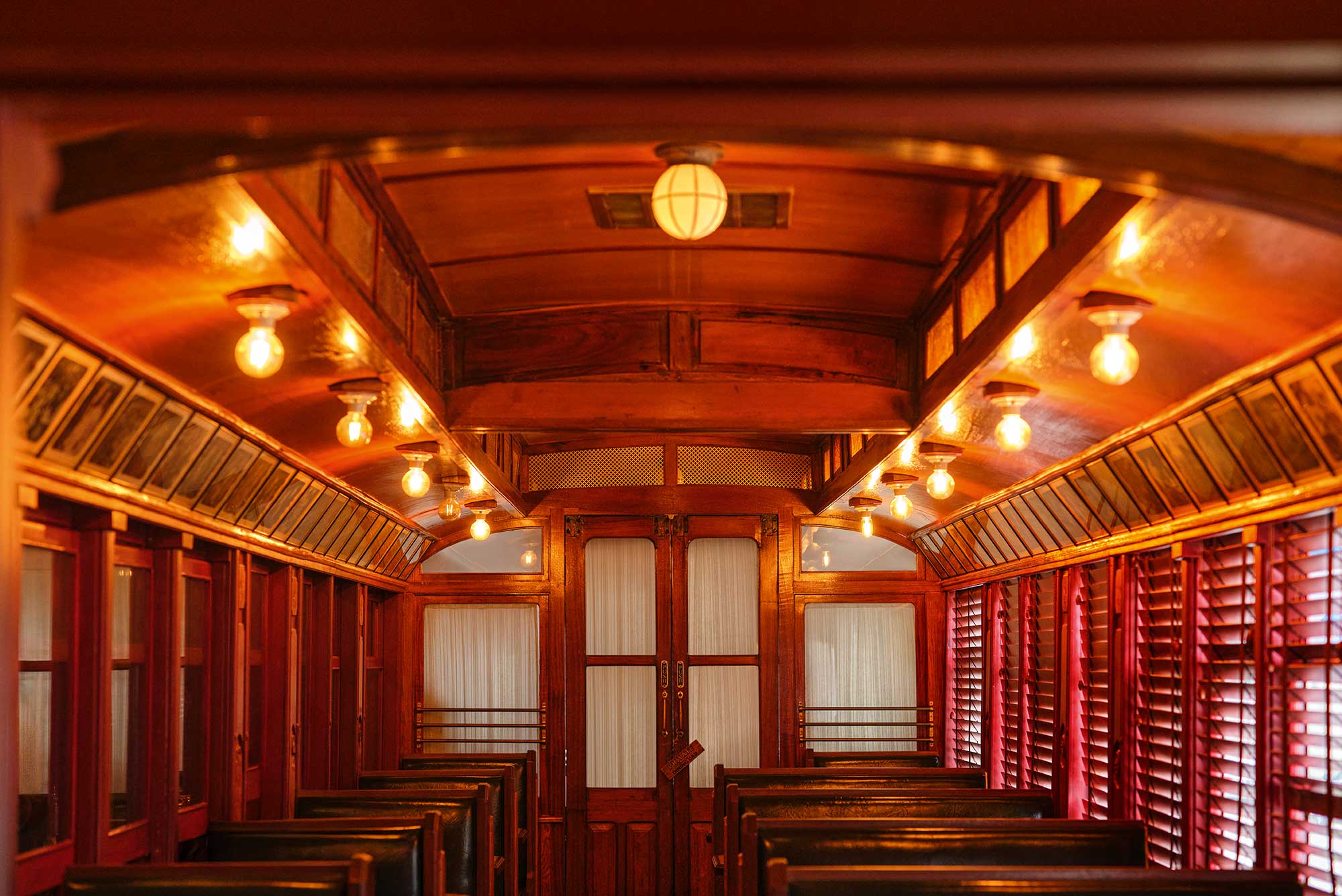
The place transformed in 1939 when Max Goldie rebuilt it as the Formosa nightclub and attached a decommissioned Pacific Electric Red Car—car number 913—to the building to expand seating.

That railcar turned out to be a historic artifact in its own right.
Built between 1902 and 1906, it was part of the first high-speed interurban system in Southern California.
During the 2019 restoration, workers discovered it was the oldest surviving Pacific Electric Red Car in existence—the last of its kind anywhere in the world.
Goldie’s own story ended violently.
After selling his share of the cafe, he was found ᴅᴇᴀᴅ in a phone booth on Santa Monica Boulevard, sH๏τ in the back.
The case was never solved.

By the late 1940s, Bugsy Siegel had firmly embedded himself in Los Angeles, sent west by Meyer Lansky to expand syndicate operations.
Within a year of arriving, Siegel borrowed more than $400,000 from movie stars alone—money no one expected him to repay.
Siegel’s reign ended abruptly on June 20, 1947, when he was ᴀssᴀssinated at Virginia Hill’s Beverly Hills home.
Within minutes of his death, Lansky’s men seized control of the Flamingo H๏τel in Las Vegas.
Power shifted instantly, and Mickey Cohen rose just as fast.
Cohen was volatile, ambitious, and ruthless.
After Siegel’s murder, he stormed into the H๏τel Roosevelt firing guns into the ceiling, demanding the killers reveal themselves.
Soon after, he claimed the Formosa’s hidden back room as his own.
From there, Cohen ran a mᴀssive bookmaking network powered by multiple phone lines, protected by secret entrances that allowed his men to move unseen.
The violence followed him everywhere.
Cohen survived 11 ᴀssᴀssination attempts, including shootings, ambushes, and even a dynamite attack that nearly destroyed his home.
Ultimately, it wasn’t bullets that ended his empire—it was the IRS.

Convicted twice for tax evasion, Cohen spent years in Alcatraz and federal prisons before dying quietly in 1976.
Meanwhile, the front of the Formosa told a very different story.
It became a refuge for Hollywood royalty.
Sinatra played late-night piano sessions.
Elvis once tipped a waitress with a Cadillac.
Marilyn Monroe, Humphrey Bogart, Clark Gable, and Ava Gardner all claimed favorite booths.
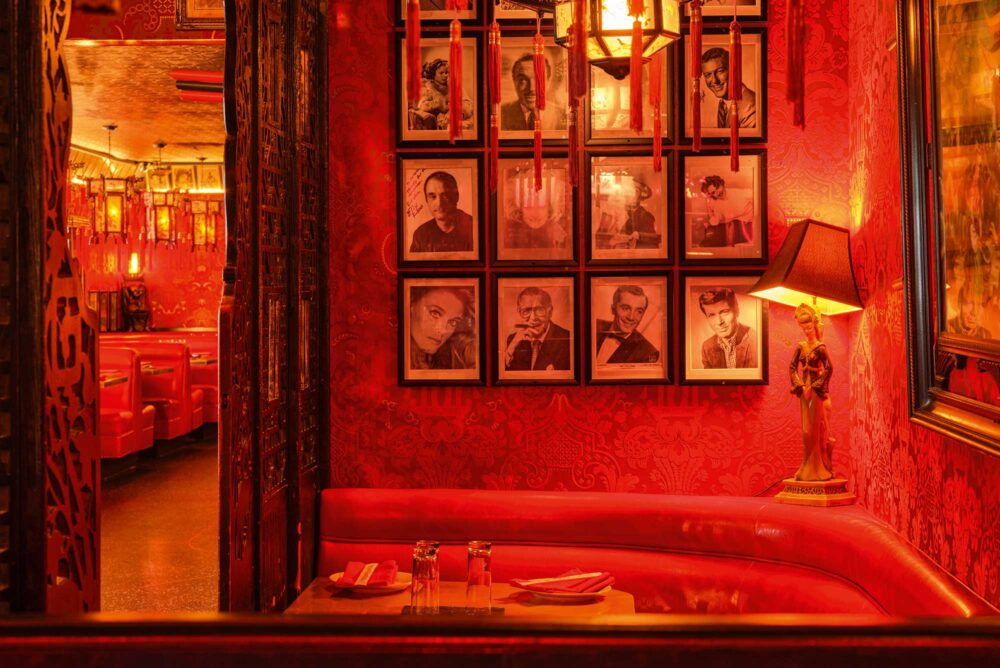
The staff locked John Wayne inside overnight when he pᴀssed out drunk, only to find him making breakfast the next morning.
That dual idenтιтy—glamour in the front, crime in the back—defined the Formosa for decades.
By 2015, a poorly executed renovation nearly erased that history.
The cafe closed in 2016, sparking outrage from preservationists and locals.
Salvation arrived in 2017 when the 1933 Group took over and committed to restoring the Formosa’s soul.

The $2.4 million restoration uncovered not only architectural treasures, but the full truth of what the building had been.
When the Formosa reopened in 2019, it was officially named a cultural landmark.
The hidden back room returned—now as an intimate space for guests—complete with a rotary phone as a nod to its criminal past.
The artifacts, pH๏τographs, and stories came back to the walls where they belonged.
Today, the Formosa Cafe stands as a rare survivor: a place where Hollywood myth and organized crime truly overlapped.
Beneath the dim lights and red booths lies a reminder that the golden age of Hollywood was never as clean—or as innocent—as it looked.


