After Demon House, Questions Linger — The Unseen Moments That Still Follow Zak Bagans
When Zak Bagans released Demon House, audiences expected an intense paranormal documentary.

What they didn’t expect was the long shadow the project would cast — not just over viewers, but over Bagans himself, at least in the stories and speculation that followed.
Years later, discussion about the film often focuses less on what made it to the screen and more on what reportedly didn’t.
The documentary centered on a house in Indiana that had already attracted national attention due to claims of disturbing phenomena and alleged psychological and physical distress connected to the location.
By the time Bagans became involved, the case carried a reputation heavy with fear, controversy, and debate.
His approach — immersive, confrontational, and emotionally charged — shaped the tone of the project from the start.
Filming conditions were described as intense.

The atmosphere, according to interviews and commentary shared at the time, was emotionally heavy for the crew.
Paranormal investigations often blend long hours, heightened expectation, and psychological suggestion, factors experts say can amplify stress responses.
In that environment, every unexplained sound, technical glitch, or emotional reaction can feel magnified.
After the documentary’s release, conversation shifted toward claims that some material was never publicly shown.
It’s common in documentary filmmaking for footage to be left out — sometimes for pacing, sometimes for legal reasons, sometimes because it lacks clarity or could be misinterpreted.
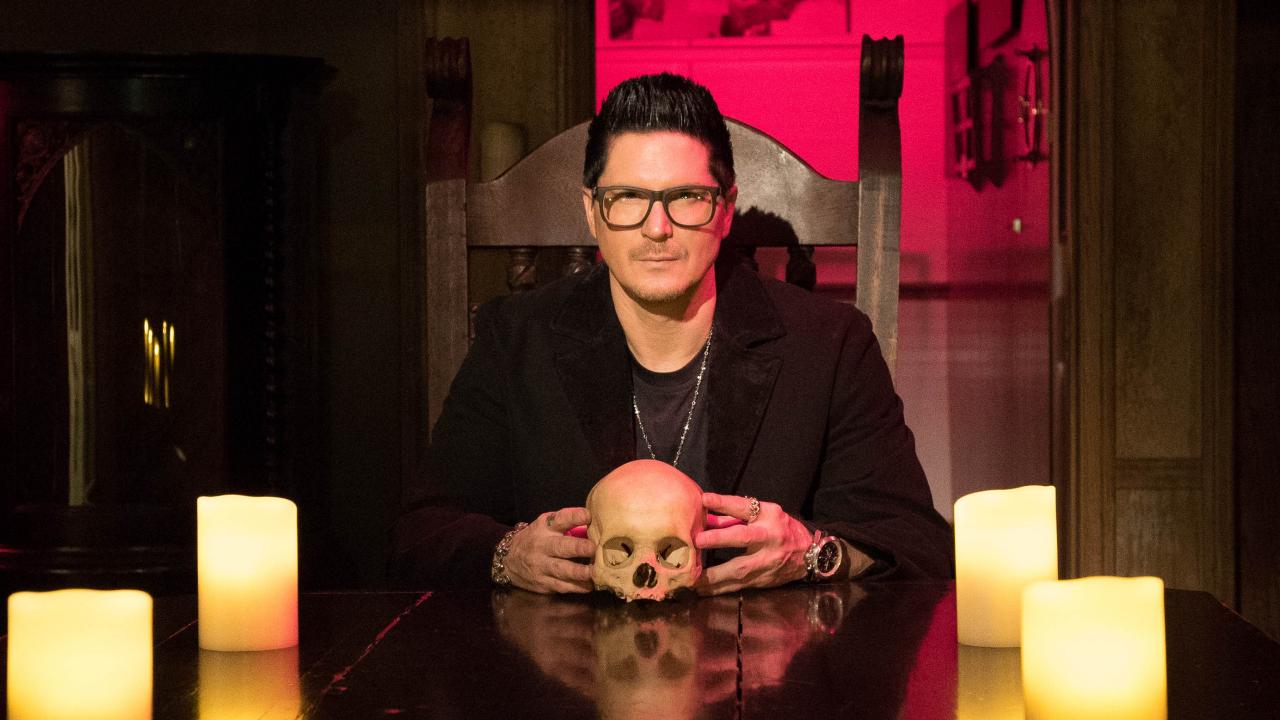
In this case, however, the idea that omitted material was “too disturbing” became part of the lore surrounding the project.
Bagans has spoken in general terms over the years about the emotional toll certain investigations can take, emphasizing the psychological intensity of immersive paranormal work.
Investigators often enter situations expecting unusual experiences, which can heighten awareness and stress.
Researchers who study perception note that in charged environments, ordinary stimuli can be interpreted as extraordinary, particularly when fatigue and anticipation are involved.
Still, fans of paranormal media point to moments in Demon House that felt unusually heavy even by genre standards.
The film didn’t rely solely on jump scares or dramatic music; it leaned into atmosphere, interviews, and the emotional impact on those involved.
That tone helped fuel the idea that the story extended beyond the final cut.
Part of the enduring fascination may stem from how Bagans presents himself as both investigator and participant.
Rather than standing at a distance, he often frames experiences personally.
That style draws viewers in but also blurs the line between observation and immersion.
When someone known for confronting fear suggests certain experiences were deeply affecting, audiences naturally wonder what was left unsaid.
It’s also worth noting that paranormal television and documentaries walk a delicate line.
Producers must balance storytelling, audience expectation, and responsibility.
Claims presented without context or verification can be misleading, while overly cautious editing can dilute tension.
Decisions about what to include often reflect that balancing act rather than secrecy.
Over time, the narrative of “unseen footage” took on a life of its own in online communities.
Clips, quotes, and secondhand accounts circulated, sometimes detached from original context.
This pattern isn’t unique to Demon House.
In the age of digital forums, speculation often grows around the spaces between confirmed details.
Meanwhile, Bagans continued other projects, including work connected to his haunted artifact collection and museum in Las Vegas.
That ongoing focus on the paranormal has reinforced the sense that Demon House was one chapter in a broader journey rather than an isolated event.
Still, the documentary remains a reference point — a moment fans describe as especially intense.
Skeptics approach the story differently, suggesting psychological factors, environmental stress, and the power of suggestion can explain many reported effects in high-pressure investigations.
Believers counter that emotional and physical reactions are precisely what make such cases compelling.
The divide ensures the conversation never fully settles.
What keeps the topic alive isn’t verified danger or proven harm, but mystery layered onto mystery.
A documentary about an allegedly haunted location evolved into a story about the making of that documentary, and then into speculation about unseen moments.
Each layer adds distance from the original event while deepening intrigue.
In media studies, this phenomenon is sometimes described as narrative afterlife — when a work continues generating meaning beyond its runtime.
Demon House fits that pattern.
Whether one views it as compelling, unsettling, or simply atmospheric filmmaking, it clearly resonated.
As for what truly happened behind the scenes, concrete documentation remains limited to what participants have chosen to share publicly.
The rest exists in interpretation, rumor, and the natural human tendency to fill gaps with imagination.
For viewers, perhaps the lasting impact lies not in hidden footage but in the emotional space the film created.
Fear, curiosity, and uncertainty are powerful experiences, especially when presented as real.
Once those emotions take hold, stories can grow long after cameras stop rolling.


