Shock Strike: Iran’s Sejjil Ballistic Missile Tests Israeli and American Defense Shields
The war between Iran, Israel, and their allies has entered another volatile chapter after Iran reportedly deployed one of its most powerful ballistic weapons—the Sejjil missile—in a dramatic escalation that sent shockwaves through military command centers across the Middle East.
Radar networks across the region lit up as the launch was detected, triggering defensive alerts from Israeli air defense units and American military installations monitoring the conflict.
The missile launch, described by analysts as a strategic signal as much as a military strike, marked a rare operational appearance of the Sejjil system, a two-stage solid-fuel ballistic missile developed by Iran as part of its long-range deterrent arsenal.
Capable of traveling thousands of kilometers at high speed, the weapon is designed to reach targets across the Middle East, including Israeli territory and U.S. bases scattered throughout the region.
According to reports emerging from the battlefield, the launch came during a broader exchange of missile strikes that has defined the rapidly expanding Iran–Israel war.
Sirens echoed across parts of Israel as early warning systems detected incoming projectiles, while American military ᴀssets in the Gulf region moved to high alert.
Unlike older liquid-fuel missiles that require lengthy preparation before launch, the Sejjil uses solid fuel, allowing it to be fired much more quickly.
Military analysts say this gives Iran a critical advantage in wartime conditions because launchers can deploy, fire, and relocate before enemy forces have time to track and destroy them.
The missile itself is a formidable piece of technology.
The Sejjil is believed to have a range of up to 2,000–2,500 kilometers, enough to strike Israel from deep inside Iranian territory.
With a payload estimated at around 700 kilograms, the missile can carry conventional warheads capable of causing devastating damage to strategic targets such as military bases, command centers, or infrastructure facilities.
The speed of the weapon also adds to its threat.
Traveling at several times the speed of sound, the missile can reach targets within minutes after launch.
Analysts estimate that if fired from central Iran, the Sejjil could reach Israeli territory in roughly seven minutes, giving defending forces very little time to react.
This short warning window forces air defense systems into an intense race against time.

Israel’s defensive architecture—often described as one of the most sophisticated in the world—relies on multiple layers of missile interception technology designed to detect, track, and destroy incoming threats.
These systems include radar networks, interceptor missiles, and command centers capable of coordinating defensive responses within seconds.
Yet even the most advanced defenses can be strained when faced with high-speed ballistic weapons launched in coordinated waves.
Military planners in Washington have been closely monitoring the situation as the conflict threatens to expand beyond Israel and Iran.
The United States maintains a significant military presence across the Middle East, including naval fleets in the Persian Gulf and air bases spread across allied countries.
Those installations could become potential targets if the conflict widens.
Iran’s missile strategy has long been centered on deterrence.
Lacking a large modern air force, Tehran has invested heavily in ballistic missile technology as a way to project power and counter adversaries with superior conventional forces.
Today, Iran is widely believed to possess the largest ballistic missile arsenal in the Middle East.
That arsenal includes dozens of missile types with ranges spanning from short-range tactical rockets to longer-range strategic systems like the Sejjil.
The current war has seen Iran rely heavily on missile and drone strikes as a primary means of retaliation against Israeli military operations.
Since the start of the conflict, hundreds of missiles and drones have been launched toward Israeli territory, with varying degrees of success depending on interception rates and defensive coverage.
Some strikes have been intercepted before reaching their targets, while others have caused damage in urban areas or near military facilities.
The appearance of the Sejjil missile in combat signals a possible shift in Iran’s strategy.
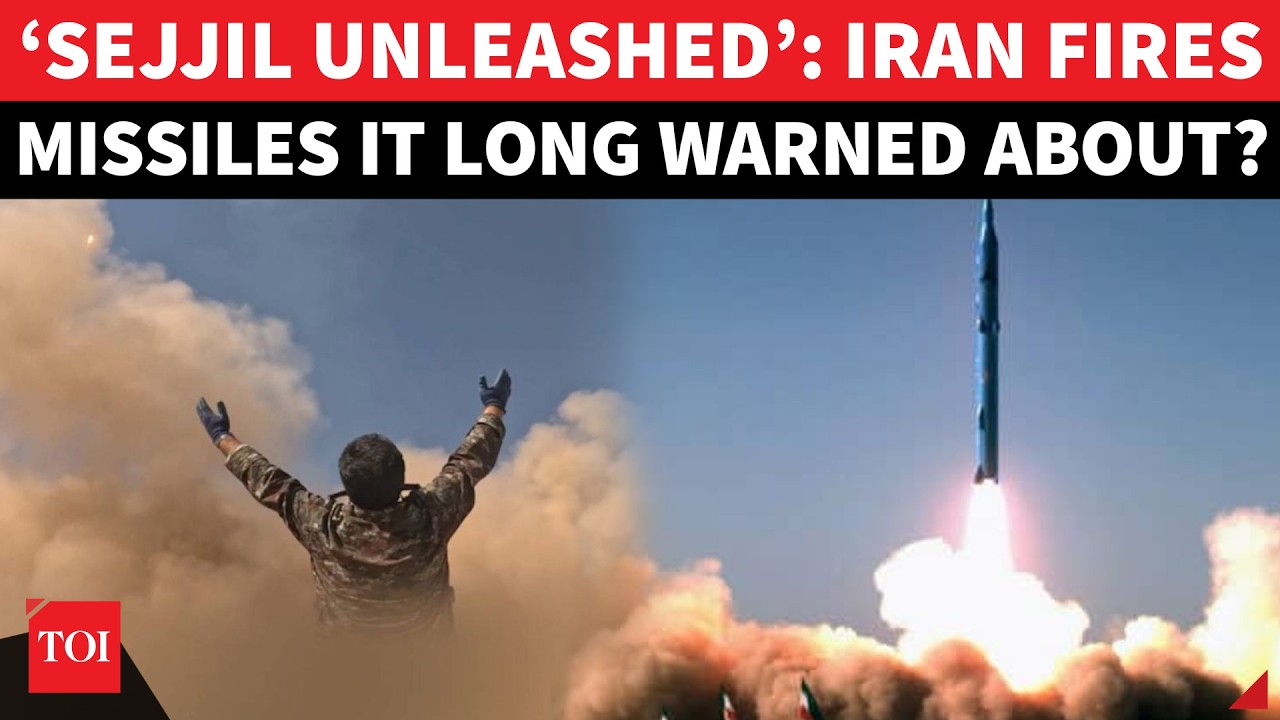
Experts believe Tehran may be gradually introducing more advanced weapons into the battlefield as the war intensifies.
Such a move would allow Iran to test both the effectiveness of its technology and the resilience of Israeli and American defense systems.
At the same time, analysts warn that deploying more powerful missiles carries significant risks.
Each escalation raises the possibility that additional countries could become directly involved in the conflict.
The United States has already increased its military presence in the region in response to the growing instability, while regional actors watch closely for signs that the confrontation could expand into a broader war.
For civilians across the Middle East, the missile exchange has become a grim reality of daily life.
Air-raid sirens, emergency alerts, and the distant rumble of explosions have become familiar sounds in cities that were once far from the front lines.
Families rush into shelters with little warning, while military forces on all sides remain on constant alert.
The deployment of weapons like the Sejjil missile underscores how rapidly the technological dimension of warfare in the region is evolving.
Ballistic missiles capable of traveling thousands of kilometers at extreme speeds compress the timeline of modern combat, forcing nations to make life-or-death decisions within minutes.
And as the conflict continues to unfold, each new launch raises a chilling question across the region:
If this is only the beginning of Iran’s advanced missile arsenal entering the battlefield, what might come next? 🚀🔥


