Middle East on the Brink: Unconfirmed Strike Sparks Global Alarm, Emergency Meetings, and Fears of Rapid Escalation!
In a development described by world leaders as one of the most consequential in recent history, Iran’s Supreme Leader Ayatollah Ali Khamenei has been killed in a coordinated airstrike carried out by Israeli and allied forces.
The death of Khamenei, who had led the Islamic Republic since 1989, was confirmed by Iranian state authorities late Saturday night.
The airstrike, which targeted Tehran and critical strategic sites, also reportedly killed several senior Iranian military commanders and officials closely aligned with the supreme leader.
The attack has set off a dramatic escalation in an already volatile region, triggering international alarm, retaliatory threats from Iran, and concerns of a wider conflict that could engulf the Middle East and beyond.
This moment marks an extraordinary shift in the geopolitical landscape.

Never before in the modern era has a sitting supreme leader of Iran been killed by foreign military action.
The repercussions of this strike are expected to resonate across global politics, military strategy, energy markets, and the balance of power in the Middle East.
The Airstrike and Its Immediate Impact
The operation began in the early hours of Saturday morning.
According to military sources, precision strikes were launched against multiple locations, including fortified compounds in Tehran where Khamenei was believed to be present.
Defence systems in the capital were engaged throughout the attack, but the sheer scale and coordinated nature of the aerial offensive overwhelmed local defences.
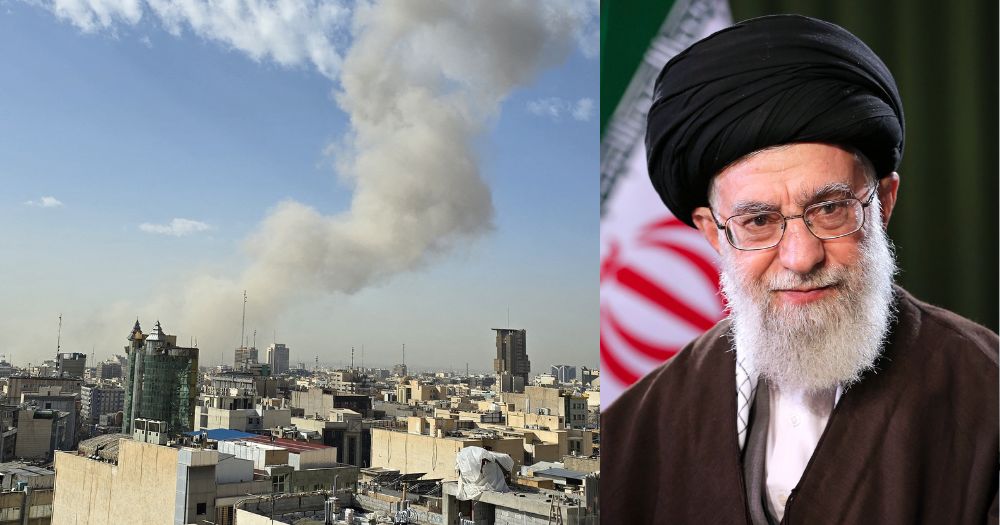
Amid the chaos of the attack, explosions were reported across the city, sending shockwaves through residential neighbourhoods.
Emergency sirens blared as civilians fled to shelters, and communications within certain districts were disrupted.
Iranian security forces attempted to mount air defence responses, but the intensity and precision of the strikes meant that several key targets were struck before defences could be fully mobilised.
The strikes reportedly focused first on military sites and leadership compounds before extending to other strategic facilities.
After hours of bombardment, Iranian state television announced that Supreme Leader Ayatollah Ali Khamenei had been killed.
The news instantly sent waves of shock, fear, and outrage through Tehran and throughout the Islamic Republic.
Iranian Government Reaction and Retaliation Threats
Following the confirmation, political and military leaders in Iran reacted with a mix of fury and resolve.
President Masoud Pezeshkian addressed the nation, declaring that Iran would respond forcefully to what he called an “unprecedented act of aggression.”
In televised remarks, Pezeshkian vowed that retaliation would be swift and “proportionate,” framing the airstrike as an ᴀssault not only on Iran’s government but on its people and sovereignty.
The president did not offer immediate specifics but emphasized that Iran retained the capability and desire to hit back.
The Islamic Revolutionary Guard Corps (IRGC) — Iran’s elite military branch — issued strong statements condemning the attack as a declaration of war.
Senior commanders vowed that Iran’s response would be decisive and that “the aggressors will regret this action.”
Within moments of the announcement, Iran reportedly launched counter-strikes against military bases housing foreign troops in the region.
Missile and drone barrages were directed at positions where U.S.and allied forces are stationed, particularly in Gulf nations.
Explosions and anti-aircraft fire were observed over key military installations, and several facilities reported damage or ongoing outbreaks of combat activity.
The reverberations were immediate.
Civilians in neighbouring countries reported hearing distant blasts and alerts were issued across multiple capitals.
Airspace restrictions were put in place, and emergency meetings between defence officials were convened in several nations.
Global Diplomatic Turmoil
World leaders reacted swiftly.
Capitals from Asia, Europe, and the Americas held emergency consultations to ᴀssess the implications of the strike.
Some governments condemned the airstrike as a violation of international norms and a dangerous escalation.
Others expressed support for the removal of a leader whose policies had been at the centre of long-standing regional tension.
The divided international response underscored the complexity of global diplomatic relations and the polarised nature of opinion on Iran’s role in Middle Eastern affairs.
Russia and China issued stern warnings, characterising the attack as unlawful and urging restraint.
Both nations stressed that such military action threatens global stability and must not go unanswered.
European nations called for urgent de-escalation and diplomatic dialogue, urging all parties to avoid actions that could spiral into larger conflict.
The United Nations Security Council held an emergency session to address the crisis, though divisions among permanent members made it difficult to adopt a unified stance.
Appeals for calm and negotiation were voiced repeatedly, but no definitive pathway emerged as nations grappled with the implications of Khamenei’s death.
Iran’s Intra-State Political Uncertainty
With the supreme leader gone, Iran faces a profound consтιтutional and political transition at a moment of intense external pressure.
Under the Iranian consтιтution, the ᴀssembly of Experts — a body of senior clerics — is empowered to select a new supreme leader.
However, the sudden violence of this transition and the heightened security crisis complicate what would normally be a structured, if politically contested, process.
In the immediate aftermath, a provisional leadership council composed of senior military figures, clerics, and political officials reportedly ᴀssumed temporary authority.
The IRGC and other powerbrokers are expected to play central roles in shaping internal decision-making during this turbulent period.
Analysts warn that Iran’s internal divisions — between conservative hardliners, moderate clerics, and pragmatic technocrats — could intensify as rival factions seek influence over the country’s future direction.
At a time when unity is critical for national defence, political jockeying for influence may further complicate Tehran’s response.
Regional Ramifications and Proxy Risks
The Middle East is marked by an intricate network of alliances, proxy groups, and long-standing conflicts.
Iran’s influence spans across countries and theatres, including Lebanon, Syria, Iraq, and Yemen.
Groups aligned with Tehran, many of which receive funding, training, or strategic direction from Iran’s military apparatus, have already begun signalling their intention to avenge Khamenei’s death.
Hezbollah, the Lebanese militia and political movement, pledged to stand with Iran and warned of intensified operations against Israeli targets.
In Yemen, the Houthi movement — another Iran-aligned group — escalated attacks on shipping in the Red Sea and against regional infrastructure.
Meanwhile, Iraqi militia factions loyal to Tehran also reported heightened readiness and vowed to strike coalition forces in the region.
The involvement of proxy groups raises the spectre of a multi-front regional conflagration.
Borders that have seen intermittent conflict for decades could now become active theatres of wider war.
Impact on Global Energy and Markets
The geopolitical shockwave was immediately felt in global energy markets.
Oil prices surged as traders reacted to the possibility of disruptions in one of the world’s most vital energy corridors — the Strait of Hormuz — through which a significant percentage of global oil supplies transit.
Energy analysts warned that prolonged instability could lead to supply constraints, driving prices higher and impacting economies already strained by inflation and post-pandemic recovery efforts.
Nations dependent on energy exports and imports alike braced for volatility in commodity markets.
Beyond oil, international stock markets reacted sharply, with investors seeking safe-haven ᴀssets such as gold and government bonds.
Currency markets exhibited heightened fluctuation as global risk sentiment shifted amid the unfolding crisis.
Humanitarian and Civilian Toll
As military operations expand, civilian populations are increasingly at risk.
In Iran, reports from major cities described widespread fear, casualties, and disruptions to basic services.
Hospitals in Tehran and other regions struggled to respond to wave after wave of injured civilians, many of whom were reported to have suffered from falling debris, blast injuries, and other effects of the bombardment.
Neighbouring countries also faced civilian stress.
Missile alerts and air-raid warnings prompted evacuations and shelter-seeking behaviour in multiple Gulf states and in Israel.
Schools, transportation hubs, and business districts braced for potential impacts as people sought safety.
Humanitarian organisations began mobilising emergency responses, though security conditions posed significant challenges to delivery of aid.
Concerns about shortages of medical supplies, clean water, and shelter grew as the situation worsened.
Public Reaction and Social Impact
Across the Middle East and around the world, public reactions varied widely.
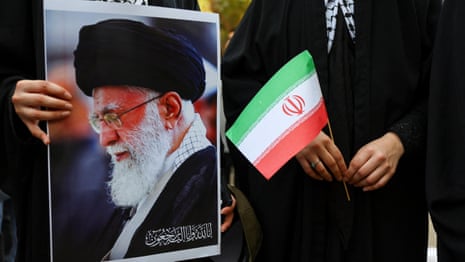
In Iran, state media broadcast hours of mourning coverage, with street rallies and displays of grief interspersed with official calls for unity against foreign aggression.
Social media platforms were full of expressions of solidarity, fear, condemnation, and confusion.
Iranian expatriate communities gathered in cities across Europe, North America, and Asia to hold vigils and protests, while public opinion elsewhere divided along political and ideological lines.
International Diplomatic Efforts
Amid escalating conflict, diplomats from major powers renewed calls for negotiation and restraint.
Multiple embᴀssies issued travel advisories urging citizens to leave regions at risk, while governments explored back-channel talks to prevent further escalation.
Despite these efforts, the window for de-escalation appeared narrow.
With military operations ongoing and rhetoric growing sharper by the day, the calculus of negotiation faced significant strategic and political obstacles.
A New Era in Middle Eastern Conflict
The death of Ayatollah Ali Khamenei marks a watershed moment — one that could reshape more than three decades of political, military, and diplomatic history.
As Iran transitions leadership amid external attack and internal strain, the resolve of its government and its ability to respond to both domestic pressures and international threats will be tested.
The coming days and weeks are likely to determine whether the region plunges into broader, sustained conflict or whether cooler diplomatic channels can eventually prevail.
For now, the Middle East finds itself at the precipice of an expanded war — one with the potential to redraw alliances, stoke further proxy engagements, and test the limits of global security arrangements.
In the face of uncertainty, the world watches as one of the most dramatic and unprecedented geopolitical shifts of the 21st century continues to unfold.


