“From Boom to Brakes: How Rising Rates Are Reshaping Canada’s Real Estate Economy”
Canada’s housing market, long described as overheated, resilient, and even untouchable, is now facing one of its most intense stress tests in decades — and the ripple effects are beginning to hit the labor market.

Reports of mounting layoffs tied to construction, real estate services, mortgage lending, and related financial sectors have fueled fears that the country could be entering a broader economic slowdown.
Headlines declaring “Canada in chaos” may amplify the drama, but there is no question that warning signs are flashing.
Home prices in several major markets — including Toronto and Vancouver — surged to historic highs during the ultra-low interest rate era of 2020–2022.
Cheap borrowing costs, pandemic-driven migration patterns, and speculative investment combined to push valuations beyond what many analysts considered sustainable.
Then interest rates began climbing.

The Bank of Canada launched one of the most aggressive тιԍнтening cycles in its history to combat inflation.
Mortgage rates that once hovered near historic lows quickly doubled or tripled.
For buyers, affordability collapsed.
For sellers, bidding wars evaporated.
For developers, financing costs surged.
Now the consequences are cascading.
Several mid-sized construction firms have announced workforce reductions, citing stalled projects and shrinking demand.
Real estate brokerages report declining transaction volumes.
Mortgage brokers face a slowdown in new applications as potential buyers retreat to the sidelines.
In some regions, property listings are climbing while sales lag, creating downward price pressure.
Layoffs, though not yet universal, are accelerating in pockets of the economy directly exposed to housing activity.
Construction is particularly vulnerable.
Canada’s building boom during the low-rate years drove significant employment growth.
When projects pause or get canceled, tradespeople feel the impact immediately.
Developers dependent on pre-sales to secure financing are confronting weaker buyer enthusiasm.
Financial insтιтutions are also watching closely.
Mortgage portfolios remain a cornerstone of Canadian banking stability.
While regulators have long touted strict underwriting standards, a sharp and prolonged drop in property values could strain certain borrowers — especially those who purchased at peak prices with variable-rate mortgages.
Economists caution that the situation remains fluid.
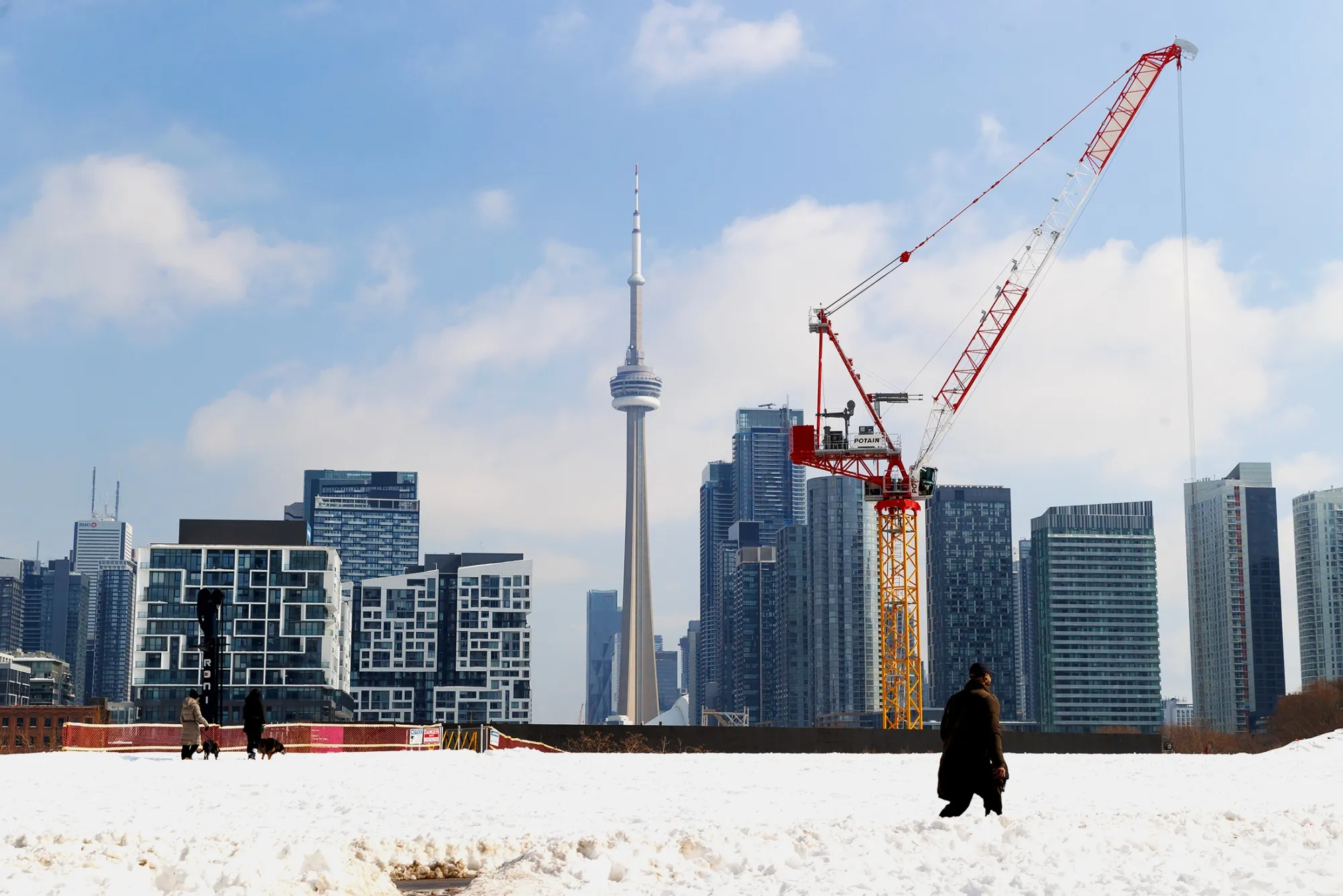
A housing correction does not automatically equal systemic collapse.
However, housing represents a substantial portion of Canada’s GDP and household wealth.
When property markets contract, consumer confidence often follows.
Consumer spending, already pressured by higher interest payments, may soften further if job insecurity rises.
The phrase “mᴀss layoffs” suggests a nationwide wave, but data so far indicates a sector-specific concentration.
Construction, real estate services, and related professional services show the clearest slowdown signals.
Technology and energy sectors, depending on region, exhibit different trajectories.
Still, perception plays a powerful role in economic cycles.
Fear of a crash can accelerate pullbacks.
Investors delay projects.
Families postpone purchases.
Employers freeze hiring.
Canada’s housing market has weathered downturn predictions before.
Policymakers have historically intervened through rate adjustments, mortgage rule changes, or targeted incentives.
Yet the current environment is complicated by inflation constraints.
The Bank of Canada cannot simply slash rates without risking renewed price pressures.
That policy tension intensifies uncertainty.
Urban centers like Toronto and Vancouver remain expensive relative to average incomes, even after modest price corrections.
Meanwhile, smaller cities that saw pandemic-era population surges are experiencing volatility as remote work patterns normalize.
Rental markets add another layer.
In many regions, rent prices remain elevated due to limited supply.
That dynamic complicates the narrative of a full-scale housing crash.
Ownership markets may cool while rental demand stays strong.
Industry analysts differentiate between a correction and a crash.
A correction implies gradual adjustment.
A crash implies rapid, destabilizing decline.
Current indicators suggest uneven cooling rather than freefall — but sentiment can shift quickly.
Mortgage renewals loom as a significant variable.
Thousands of Canadians who locked in ultra-low fixed rates during the pandemic will face renewal at substantially higher rates over the next two years.
Payment increases could strain household budgets, potentially increasing distress sales.
Yet Canada’s regulatory framework includes stress tests requiring borrowers to qualify at higher rates than they initially paid.
That buffer may mitigate default spikes.
Layoffs, however, amplify risk.
Employment stability underpins mortgage repayment capacity.
If job losses broaden beyond housing-related sectors, the macroeconomic picture darkens.
Some economists argue that a measured slowdown may ultimately restore affordability over time.
Reduced speculative demand could recalibrate prices closer to income levels.
That long-term benefit, though, offers little comfort to workers facing immediate uncertainty.
Public reaction has been intense.
Social media feeds fill with predictions of nationwide economic collapse.
Political leaders face pressure to respond decisively.
Federal and provincial governments have announced housing supply initiatives in recent years, aiming to increase construction and moderate prices.
Ironically, a downturn complicates that objective.
Developers may hesitate to launch new projects in soft markets, limiting future supply growth.
International investors are also watching.
Canada’s real estate market has long attracted global capital.
Prolonged instability could alter those flows.
Currency markets reflect some caution, though broader global economic forces influence the Canadian dollar more significantly than housing alone.
The psychological dimension cannot be overstated.
For many Canadians, homeownership represents not just shelter but primary wealth accumulation.
A perception that property values may stagnate or decline challenges deeply ingrained financial expectations.
At the same time, first-time buyers priced out during the boom may view cooling prices as opportunity.
The coming quarters will be pivotal.
If employment stabilizes and inflation continues easing, the Bank of Canada may gain flexibility to adjust rates.
A controlled easing cycle could soften the landing.
If inflation resurges or global shocks intensify, policy options narrow.
Housing cycles rarely unfold in straight lines.
Canada’s market has experienced corrections before, though regional variation often obscures national averages.
The current phase appears defined less by chaos than by recalibration — yet recalibration can feel chaotic to those directly affected.
Layoffs tied to housing contraction are real and concerning for impacted workers.
Whether they cascade into a broader economic downturn remains uncertain.
What is clear is that Canada’s housing era of effortless price acceleration has ended — at least for now.
And in its place stands a more cautious, more fragile landscape.


