Bishop Patrick Wooden Rebukes Rev. William Barber: A Battle Over Faith, Culture, and Democracy
In a powerful and uncompromising sermon that has since gained widespread attention online, Bishop Patrick Wooden delivered a sharp rebuke aimed at Reverend William Barber and, more broadly, at progressive Christian leaders whom he accuses of undermining both biblical truth and American democracy.
The message was not merely a theological disagreement—it was a warning, a declaration of cultural resistance, and a rallying cry for Christians who feel increasingly alienated in modern society.
At the heart of Bishop Wooden’s argument is a rejection of the claim that “traditional values” threaten democracy.

He challenges what he sees as a deliberate reframing of core moral teachings—such as opposition to abortion, traditional definitions of marriage, and biological understandings of gender—as “narrow, divisive cultural issues.”
According to Wooden, these were once foundational beliefs shared across Christian denominations and accepted as common sense.
The fact that they are now labeled divisive, he argues, signals not moral progress but spiritual decay.
Bishop Wooden recalls a time when Christians were united in their belief that taking innocent human life was wrong, that marriage was between a man and a woman, and that biological Sєx was immutable.
What once unified believers, he laments, is now treated as controversial—even dangerous.
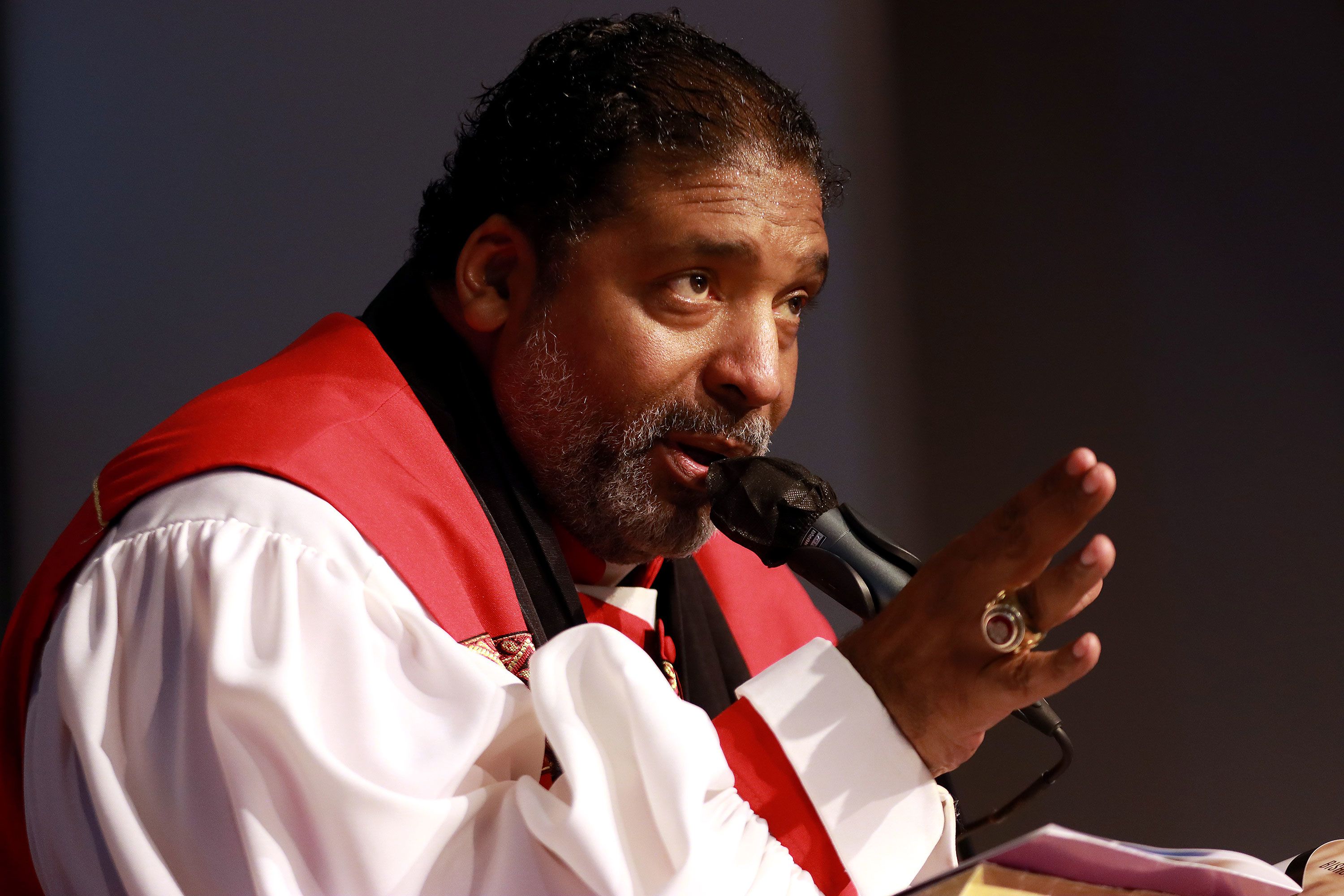
He directly challenges Reverend Barber by suggesting that if these issues are truly divisive, the solution is not abandonment of biblical truth but a return to it.
One of Wooden’s most forceful claims is that redefining marriage and family poses a greater threat to democracy than almost anything else.
He argues that societal confusion over idenтιтy—symbolized by debates over pronouns and gender—reflects a deeper moral disorder.
With biting sarcasm, he criticizes theological insтιтutions and public discourse that, in his view, demand people deny observable reality in the name of inclusivity.
The sermon also condemns a recent push for pastors to shift their preaching priorities.

Wooden criticizes calls for clergy to focus on topics such as living wages, union rights, healthcare, and ecological justice—while avoiding sermons on sin, abortion, Sєxual immorality, and personal repentance.
While not dismissing social issues outright, he insists that replacing moral preaching with political activism strips the church of its spiritual authority.
“If you fall for this,” Wooden warns fellow pastors, “you’re going to lose your anointing—and you’ll never get it back.”
For him, an authentically anointed preacher cannot be swayed by political trends or ideological pressure.
True preaching, he argues, must confront sin directly, regardless of cultural backlash.

A significant portion of the sermon addresses the controversial label of “Christian nationalism.”
Reverend Barber and others have portrayed it as a dangerous ideology rooted in exclusion and hatred.
Bishop Wooden rejects this framing entirely.
He unapologetically identifies himself as both a Christian and a nationalist, arguing that neither term should be shameful.
Loving one’s country, he insists, does not equate to hating others, nor does it contradict Christian teachings.
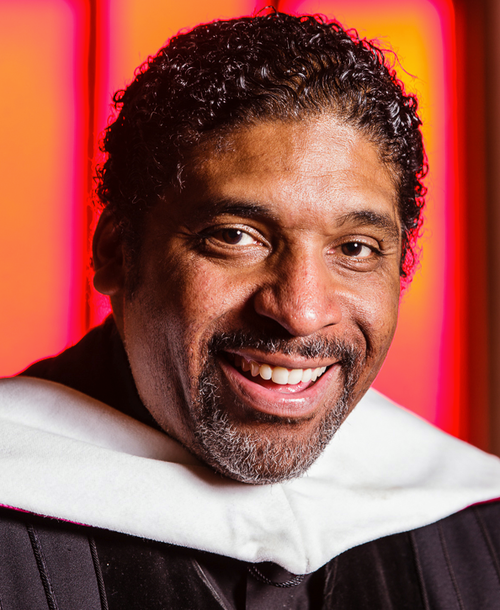
Drawing from personal anecdotes and scripture, Wooden emphasizes that Christianity calls believers to love their neighbors—but also to correct them.
Love, he argues, is not permissive acceptance of all behaviors.
Citing biblical teaching, he stresses that divine love includes discipline and transformation, not affirmation of every lifestyle or belief.
In his most stinging accusation, Wooden claims that progressive Christian leaders advocate a version of love that accepts all behaviors as morally equal—except traditional Christian beliefs.
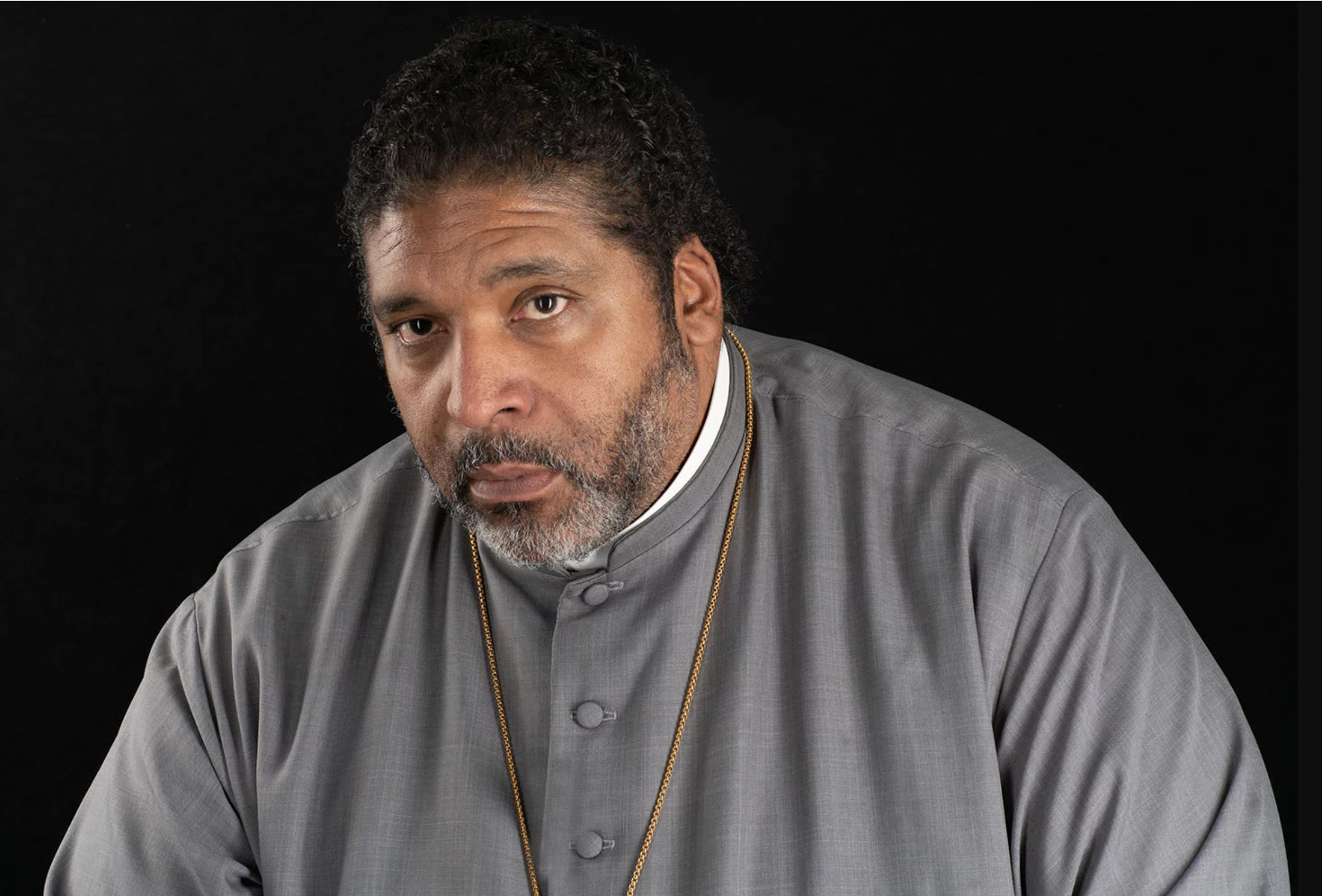
Those who hold to biblical orthodoxy, he argues, are often the very people excluded, ridiculed, or condemned in the name of tolerance.
Ultimately, Bishop Patrick Wooden’s rebuke is not just directed at Reverend William Barber, but at a broader movement within Christianity that he believes has exchanged truth for acceptance and conviction for comfort.
Whether one agrees with him or not, his sermon underscores a growing divide within the American church—a divide that reflects deeper cultural and political tensions shaping the nation’s future.


