D.B. Cooper Unmasked: The Astonishing Truth Behind America’s Greatest Mystery
On Thanksgiving Eve 1971, a man in a dark suit and clip-on tie boarded Northwest Orient Flight 305, handed a note to a flight attendant, and became the most elusive criminal in American history.
Under the alias “Dan Cooper,” he demanded $200,000, four parachutes, and a fuel truck on arrival in Seattle.
Calm and collected, he revealed a briefcase full of wires and what looked like dynamite, then vanished into the night sky over Washington State with a bag of cash strapped to his chest.

The legend of D.B. Cooper was born—a ghost who left no trace.
The FBI launched one of the largest manhunts in history, but Cooper melted into the wilderness.
He left behind only a clip-on tie and, years later, three bundles of $20 bills found by a boy along the Columbia River—bills whose serial numbers matched the ransom.
The mystery captured America’s imagination, spawning books, documentaries, and thousands of theories.
The FBI chased over a thousand suspects, but the case went cold, officially closing in 2016 after 45 years.

But the truth was never far away.
The breakthrough came from an unlikely source: Dan Grider, a retired airline captain and aviation YouTuber obsessed with the Cooper case.
Grider pored over flight logs, terrain maps, FBI files, and parachute models, reconstructing every detail of Cooper’s escape.
In 2023, his investigation led him to a storage unit in Utah once owned by a woman connected to the family of Richard Floyd McCoy Jr. —a name long whispered in Cooper circles but dismissed by the FBI.
Inside, Grider discovered a parachute matching the FBI’s description of Cooper’s rig: old military style, with peculiar modifications.
The storage unit’s link to McCoy was chilling—five months after Cooper’s hijacking, McCoy pulled off a nearly identical skyjacking, demanding $500,000 and parachuting out of a Boeing 727.
This time, the FBI caught him, thanks to a fingerprint and a handwritten note left behind.
McCoy was no ordinary criminal.
A decorated Vietnam veteran, helicopter pilot, devout Mormon, and law student, he seemed the picture of American virtue.
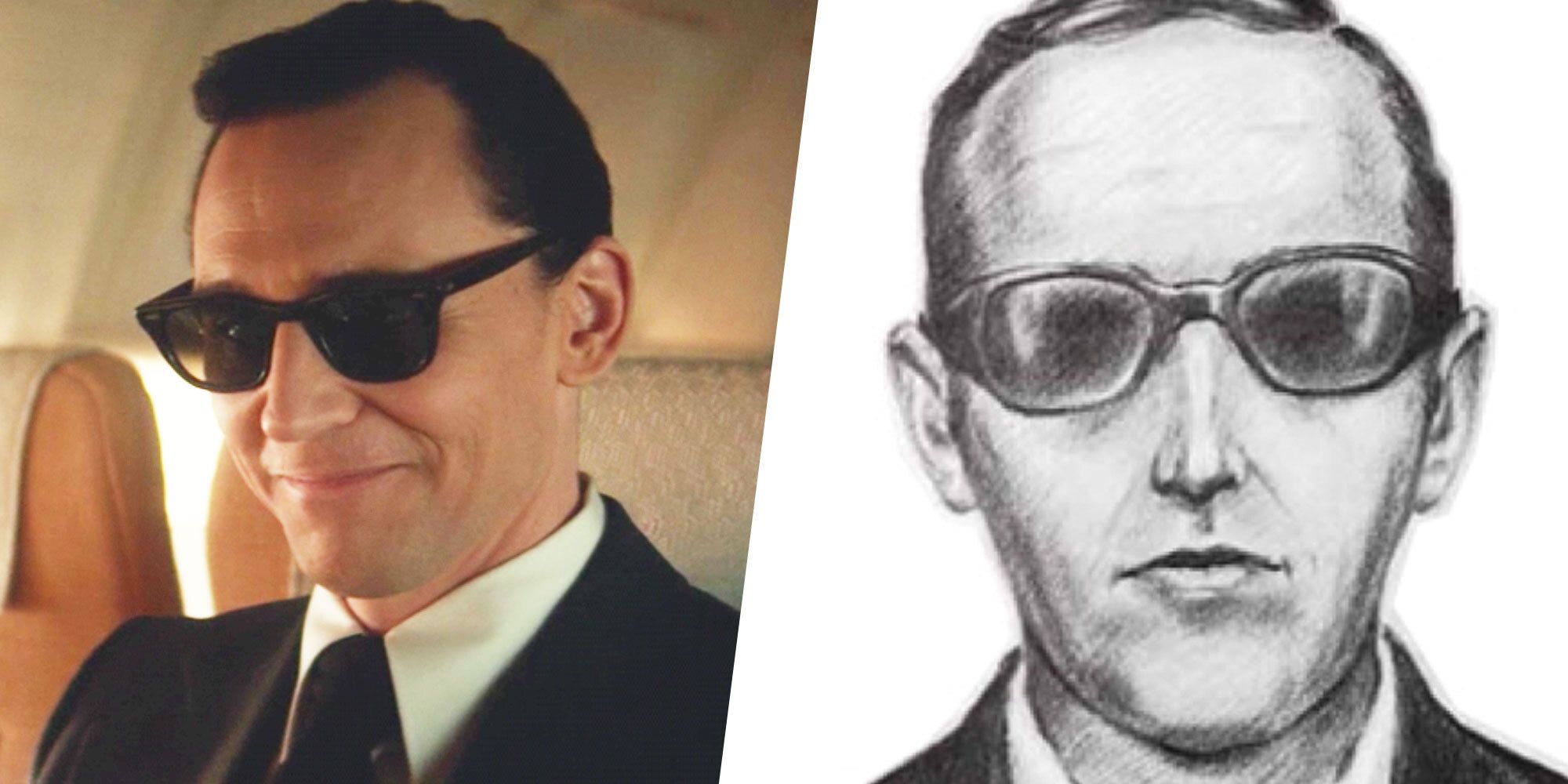
Yet his crime was a carbon copy of Cooper’s—same plane, same demands, same parachute escape, even similar phrasing in the hijack notes.
The FBI insisted McCoy was just a copycat, citing differences in age, appearance, and handwriting.
But Grider saw these as deliberate camouflage—tactics from a military mind trained to mislead.
The evidence mounted: McCoy’s expertise in parachuting, his skydiving instruction, his ability to modify rigs, and the family’s careful hiding of the parachute for decades.
Grider reached out to McCoy’s children, met only with silence—a silence that felt less like denial and more like protection.

Then, in a grandmother’s attic, he found a canvas bundle: the parachute, with the same harness clips and reinforced cord loops documented in the FBI’s 1971 files.
Grider’s findings went viral, drawing the FBI back into the case.
The parachute was sent to Quantico for forensic analysis, and plans were made to exhume McCoy’s body for DNA comparison with samples from Cooper’s tie and the parachute.
The tension was palpable—was Richard McCoy really D.B. Cooper?
The answer came not from a lab, but from the family itself.

After weeks of careful communication, Grider sat down with McCoy’s children, Shantae and Rick McCoy III.
With their mother gone, they finally spoke the truth: “He was Cooper. He had to be. We always kind of knew it was him.”
Their confession shook the world, confirming what investigators, enthusiasts, and conspiracy theorists had suspected for decades.
Richard Floyd McCoy Jr. —war hero, family man, and law student—was the man behind the legend.
His motives remain a subject of speculation: was it a thrill, a statement, or a desperate bid for control? Psychologists suggest the hijacking was a cry for agency in a chaotic era.
McCoy’s story is a reminder that legends are built on human flaws, ambitions, and secrets.
After his capture for the second hijacking, McCoy was sentenced to 45 years in prison.
He escaped two years later, only to be killed in a shootout with FBI agents in 1974.
The parachute, hidden for decades, became the final clue that unraveled the mystery.
For McCoy’s family, the decision to speak was about peace, not legacy.

For Grider, it was the triumph of relentless truth-seeking.
The D.B. Cooper case may finally be solved, but its echoes remain—a story of audacity, mystery, and the thin line between myth and man.
As new evidence surfaces and America absorbs the shocking revelation, one question lingers: what other secrets did McCoy take to his grave, and how many more legends are waiting to be unmasked?


