Nuclear Talks or Countdown to Conflict? 🚨🌍 Middle East Tensions Explode
Tehran is once again at the center of a geopolitical storm, and the stakes could not be higher.
President Donald Trump has issued a direct warning to American citizens currently inside Iran: leave immediately.
The urgent advisory comes as indirect nuclear negotiations between the United States and Iran unfold in Oman, marking the first in-depth engagement between the two sides since last year’s reported strikes on Iranian nuclear facilities.
The timing of the warning has fueled intense speculation that diplomacy may be running on borrowed time.
The face-to-face discussions in Oman reportedly lasted eight hours.
Both delegations agreed to continue talks, calling the first session a constructive start.
Yet behind the diplomatic language lies an unmistakable undercurrent of distrust.
These negotiations are taking place amid visible U.S.
military repositioning across the Middle East, including the deployment of a carrier strike group and additional strategic ᴀssets.
Sources close to the talks suggest that Washington’s position is uncompromising: zero nuclear capability.
President Trump has made it clear that any acceptable agreement must eliminate the possibility of Iran developing a nuclear weapon.
He has argued that had such terms been accepted years earlier, the crisis might have been avoided altogether.
Now, he insists the window for compromise is narrowing.
Meanwhile, Iranian officials maintain that their nuclear program is peaceful and intended solely for civilian energy purposes.
They have drawn a firm red line around their ballistic missile program, describing it as defensive and non-negotiable.
That position directly conflicts with Israeli demands that missile capabilities and regional proxy support be included in any comprehensive agreement.
Adding to the tension, satellite imagery reportedly shows renewed activity at the Esfahan nuclear complex, raising questions about whether protective measures or rebuilding efforts are underway.
Analysts point out that the nuclear plant contributes a minimal percentage to Iran’s national energy grid, intensifying skepticism among critics who argue that the scale and secrecy of certain facilities suggest alternative motives.
While diplomats engage behind closed doors, unrest simmers within Iran.
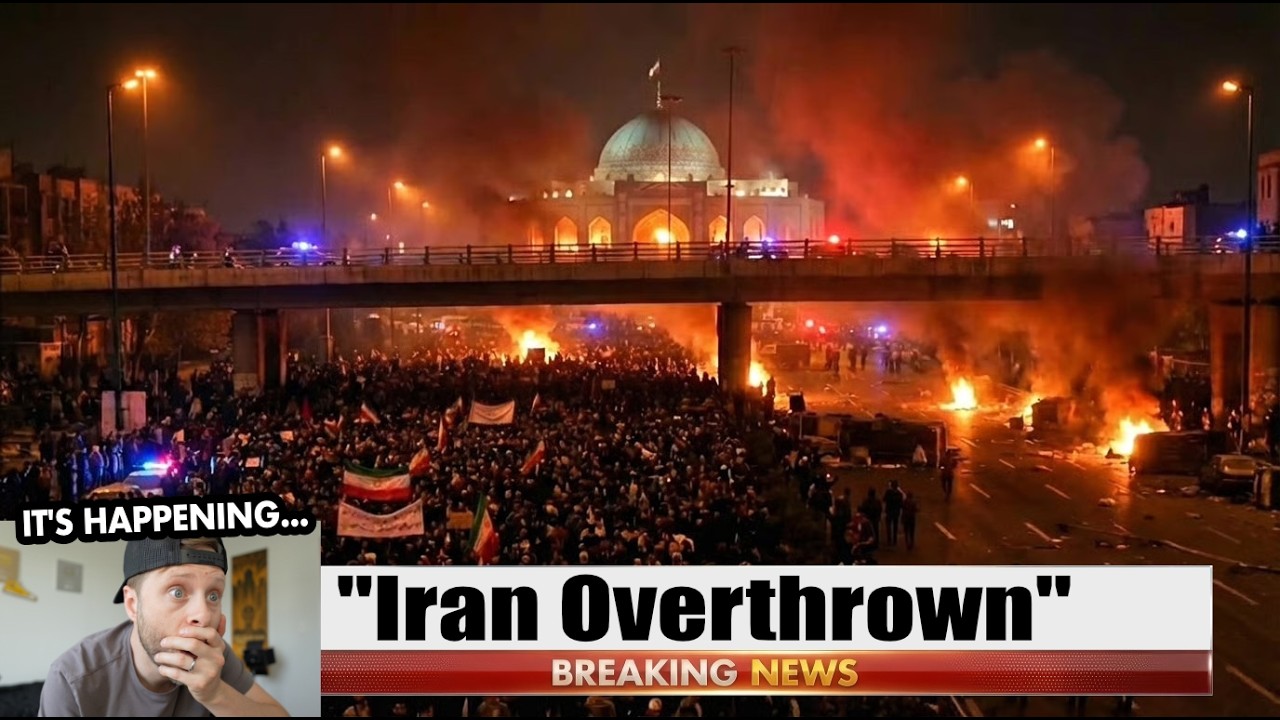
Reports describe renewed protests across multiple cities, with demonstrators expressing anger over economic hardship, corruption, and political repression.
Observers say the regime is under strain economically and politically, exacerbated by sanctions that have тιԍнтened financial conditions and restricted access to foreign currency.
Treasury officials have indicated that sustained economic pressure may have contributed to banking instability inside Iran, including the reported failure of a major financial insтιтution.
Such developments have intensified domestic discontent.
Critics of the regime argue that funds are diverted to military programs and regional proxies while ordinary citizens struggle with shortages and inflation.
The U.S.State Department’s advisory urging Americans to leave Iran immediately underscores the seriousness of the situation.
Officials have advised those unable to depart to secure safe shelter, stock essential supplies, and prepare contingency plans.
The message reflects a broader concern that if negotiations collapse, escalation could follow swiftly.
Military analysts note that the United States has ᴀssembled significant firepower in the region.
Carrier strike groups, missile defense systems, and reconnaissance ᴀssets provide both deterrence and rapid strike capability.
Should hostilities erupt, experts predict a swift and decisive campaign targeting critical military infrastructure, command centers, and weapons systems.
Israel remains a central player in the unfolding drama.
Prime Minister Benjamin Netanyahu has advanced a firm stance, insisting that ballistic missile restrictions and curbs on proxy support are indispensable components of any deal.

His upcoming meeting with President Trump in Washington has been moved forward, signaling urgency and coordination.
The Iranian Foreign Minister has warned that if the United States initiates an attack, retaliation would focus on U.S.
bases within regional reach.
Such rhetoric underscores the delicate balance of deterrence and brinkmanship now defining the standoff.
Both sides appear keenly aware of the consequences of miscalculation.
At the same time, diplomatic advocates argue that even flawed negotiations may buy critical time.
They contend that dialogue can prevent immediate escalation while offering opportunities for verification and oversight.
Skeptics counter that previous agreements failed to halt Iran’s nuclear trajectory and that enforcement mechanisms proved inadequate.
Former officials and security experts are divided.
Some believe the regime is leveraging talks to delay decisive action and preserve its strategic ambitions.
Others argue that unprecedented economic pressure and internal dissent may create leverage for meaningful concessions.
Beyond the nuclear question lies a broader regional chessboard.
Iran’s relationships with armed groups across the Middle East have long shaped regional dynamics.
Any agreement that excludes these dimensions risks addressing only part of a larger security puzzle.
Public discourse in the United States reflects similar divisions.
Supporters of a firm line argue that credibility depends on enforcing red lines and maintaining deterrence.
Others caution against entanglement in another prolonged conflict, emphasizing the unpredictability of escalation.
Within Iran, the calculus is equally complex.
A regime confronting economic strain and public dissent must weigh the risks of confrontation against the costs of compromise.
Conceding on nuclear capability could be perceived internally as weakness, yet refusing could invite military consequences.
International observers watch closely.
Russia and China maintain strategic relationships with Tehran, complicating the geopolitical equation.
Ensuring that no external interference undermines stability is reportedly a factor in U.
S.
force positioning.
The next round of negotiations looms.
Officials describe the initial meeting as productive, but the gulf between stated demands remains vast.
President Trump has reiterated that while he prefers a diplomatic resolution, military options remain on the table.
As the world waits, uncertainty hangs over the region.
Will dialogue bridge entrenched differences, or is it merely a prelude to confrontation? The answer may emerge sooner than many expect.
For now, Tehran stands at a crossroads.
Protests flicker in its streets.
Warships patrol nearby waters.
Diplomats draft proposals while generals refine contingency plans.
The coming days could define not only the trajectory of Iran’s nuclear ambitions but the broader stability of the Middle East.
History shows that moments like this can pivot rapidly.
A breakthrough agreement could reshape regional security.
A failed negotiation could unleash forces that reverberate far beyond Iran’s borders.
As President Trump signals resolve and Iranian leaders defend sovereignty, the world braces for the next chapter in a high-stakes standoff.
One thing is certain: the clock is ticking, and every move now carries consequences measured not just in political capital but in lives, alliances, and the fragile equilibrium of a region long defined by volatility.


