A City Overwhelmed: Floods, Landslides, and Emergency Evacuations in Cosenza
A state of emergency gripped southern Italy as violent floods, overflowing rivers, and sudden landslides brought the city of Cosenza to a near standstill.
What began as relentless rainfall quickly escalated into a full-scale disaster, overwhelming infrastructure and plunging residents into hours of fear and uncertainty.
Streets turned into torrents, hillsides gave way without warning, and entire neighborhoods found themselves cut off as nature unleashed its force.
The rain fell hard and fast across the region, saturating the ground and leaving nowhere for the water to drain.
As night fell, alarms sounded across the city when rivers and streams surged beyond their limits.

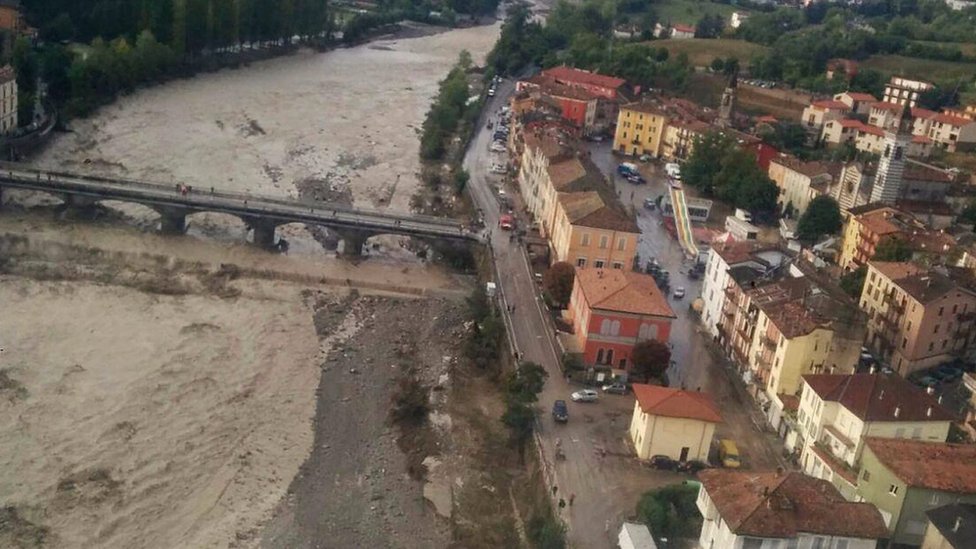
The Crati River, normally a quiet presence winding through the urban landscape, swelled rapidly, spilling into nearby roads and low-lying districts.
Within minutes, water poured into basements, garages, and ground-floor homes, trapping residents inside.
Eyewitnesses described scenes of panic as cars were swept from parking spaces and slammed against walls and railings.
In several districts, muddy water rushed downhill with such force that it tore up asphalt and carried debris through narrow streets.
Sirens echoed continuously as emergency services scrambled to respond to dozens of distress calls at once.
For many residents, the speed of the flooding left little time to react.
Landslides compounded the chaos.
On the hills surrounding the city, waterlogged soil gave way, sending rocks, trees, and mud cascading downward.
Some roads connecting Cosenza to neighboring towns were blocked entirely, isolating communities and complicating rescue efforts.
In a few areas, homes perched along slopes were evacuated as cracks appeared in walls and the ground beneath them shifted alarmingly.
Emergency crews worked through the night in exhausting conditions.
Firefighters waded through chest-deep water to reach stranded families, sometimes using ropes to avoid being swept away by strong currents.
Inflatable boats were deployed in the hardest-hit zones, while police shut down major roads deemed too dangerous to use.
Power outages struck multiple neighborhoods, plunging them into darkness just as the floodwaters peaked.
Hospitals and emergency shelters were placed on high alert.
Elderly residents and families with young children were among the first to be evacuated, many arriving at temporary shelters soaked, shaken, and carrying only a few personal belongings.
Volunteers distributed blankets, food, and H๏τ drinks, trying to provide comfort as uncertainty hung heavily in the air.
Some evacuees spoke of leaving their homes not knowing if they would ever be livable again.
By morning, the scale of destruction became clearer.
Thick layers of mud coated streets and sidewalks.
Shopfronts stood shattered, their interiors ruined by water and debris.
Vehicles lay abandoned where the floods had left them, some piled against barriers or half-buried in silt.
The smell of damp earth, fuel, and sewage filled the air, a grim reminder of the damage inflicted in just a few hours.
Local authorities warned that the danger was far from over.
Although rainfall had eased slightly, runoff from surrounding hills continued to feed swollen waterways.
Officials urged residents to stay indoors, avoid flooded areas, and follow evacuation orders without hesitation.
“The situation can change very quickly,” one emergency official said, stressing that even shallow water could conceal strong currents or unstable ground.
Meteorologists explained that the disaster was fueled by an intense weather system that stalled over the region, dumping extraordinary amounts of rain in a short period of time.
Combined with steep terrain and urban development, the conditions created a perfect scenario for flash flooding and landslides.
Experts warned that similar events could become more frequent as extreme weather patterns grow increasingly unpredictable.
The economic impact began to surface almost immediately.
Businesses reported severe losses as stock and equipment were destroyed.

Farmers in surrounding areas watched helplessly as fields were flooded and access roads disappeared.
Local officials acknowledged that recovery would be costly and slow, requiring regional and national support to rebuild damaged infrastructure and ᴀssist affected families.
Amid the devastation, stories of solidarity emerged.
Neighbors helped one another move furniture to higher floors.
Strangers offered shelter to those forced from their homes.
Rescue workers, despite exhaustion, continued searching flooded streets to ensure no one was left behind.
These moments of human connection provided rare light in an otherwise grim situation.
As the city ᴀssessed the damage, questions arose about preparedness and resilience.
Were drainage systems adequate for such volumes of water? Could landslide-prone areas have been better protected? While investigations will follow, many residents argued that the immediate priority is safety and support, not blame.
For now, life in Cosenza remains disrupted.
Schools and offices are closed, public transport is suspended in many areas, and cleanup crews face an immense task.
The psychological toll is also evident, with residents describing sleepless nights haunted by the sound of rushing water and cracking earth.
The disaster has left an indelible mark on the city.
Once-busy streets are silent, scarred by mud and debris.
Families wait anxiously for permission to return home, unsure of what they will find.
As floodwaters slowly recede and landslides stabilize, the long road to recovery begins.
Cosenza’s ordeal stands as a stark reminder of nature’s power and the fragility of urban life when confronted by extreme weather.
For the people of this southern Italian city, the floods and landslides are not just a news headline—they are a lived nightmare, one that will take months, if not years, to fully overcome.


