John Kennedy, Kash Patel, and the “Epstein PH๏τos”: Separating Drama from Documented Fact
A viral video circulating online claims that Senator John Kennedy confronted FBI Director Kash Patel during a Senate Judiciary Committee hearing by unveiling eight explosive pH๏τographs allegedly tied to Jeffrey Epstein.
According to the dramatic account, the pH๏τos showed Epstein alongside powerful political and business figures, including individuals connected to the Trump administration.
The story alleges that Patel invoked the Fifth Amendment multiple times and that one image showed a folder in his office labeled “to be destroyed.”
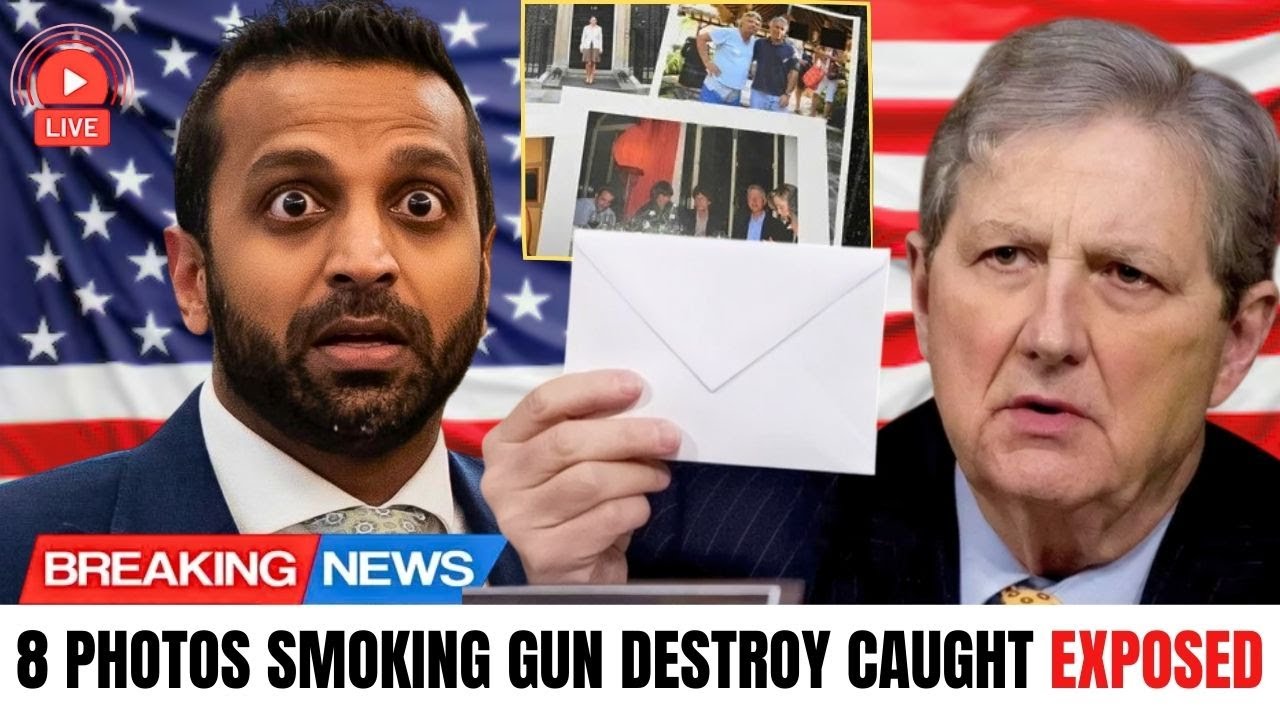
It’s a gripping narrative.
But as with any high-profile political claim—especially one involving Epstein, Trump, the FBI, and a supposed cover-up—it’s essential to pause and examine what is verifiable, what is speculative, and what may be entirely fabricated.
Major Senate hearings are public, recorded, transcribed, and heavily covered by national and international media.
If a sitting FBI director invoked the Fifth Amendment during a live Judiciary Committee session—particularly in response to allegations of destroying evidence—it would dominate headlines across every major outlet.
As of this writing, there is no publicly verified record of such a confrontation occurring in January 2026 or at any Senate Judiciary Committee session involving Senator John Kennedy and Kash Patel in the manner described.

No official transcript.
No confirmed video from C-SPAN.
No coverage from established news organizations.
That absence alone warrants skepticism.

The structure of the video transcript follows a familiar pattern common in sensationalized political content:
-
A dramatic “envelope reveal” moment.
-
References to anonymous sources.
-
Claims of newly declassified materials.
-
Allegations of evidence destruction.
-
A public official invoking the Fifth Amendment.
-
ᴀssertions that “the media will bury this.”
-
Calls to like, subscribe, and spread the video.

This formula is designed to maximize engagement.
It creates urgency, outrage, and a sense of insider revelation.
But it does not, by itself, consтιтute proof.
In fact, highly dramatic storytelling without corroboration is often a hallmark of unverified or fabricated political content.
One of the most serious allegations in the story is that Patel invoked his Fifth Amendment rights multiple times during a Senate hearing.

In reality, invoking the Fifth Amendment in a public congressional hearing—especially by a sitting FBI director—would be extraordinary.
It would trigger immediate legal and political consequences, likely including bipartisan scrutiny, emergency sessions, and intense media coverage.
Again, no verified evidence supports that this occurred.
Another claim describes a whistleblower pH๏τographing a folder in the FBI director’s office labeled “to be destroyed,” allegedly containing Epstein-related pH๏τos.
If such evidence existed and were entered into the congressional record, it would be publicly accessible.

Congressional records are not secret once formally entered unless classified under specific procedures.
No such record is publicly available.
The Epstein case remains one of the most controversial and widely scrutinized investigations in recent history.
Numerous documents have been released through court proceedings, civil suits, and government disclosures.
Media organizations worldwide continue to investigate connections involving high-profile individuals.

However, allegations involving specific pH๏τos, cover-ups, or direct evidence destruction require documented proof—particularly when they implicate named officials.
Extraordinary claims demand extraordinary evidence.
Content like this gains traction for several reasons:
-
It taps into existing distrust of insтιтutions.
-
It involves polarizing political figures.
-
It suggests hidden knowledge.
-
It frames the audience as uncovering something suppressed.
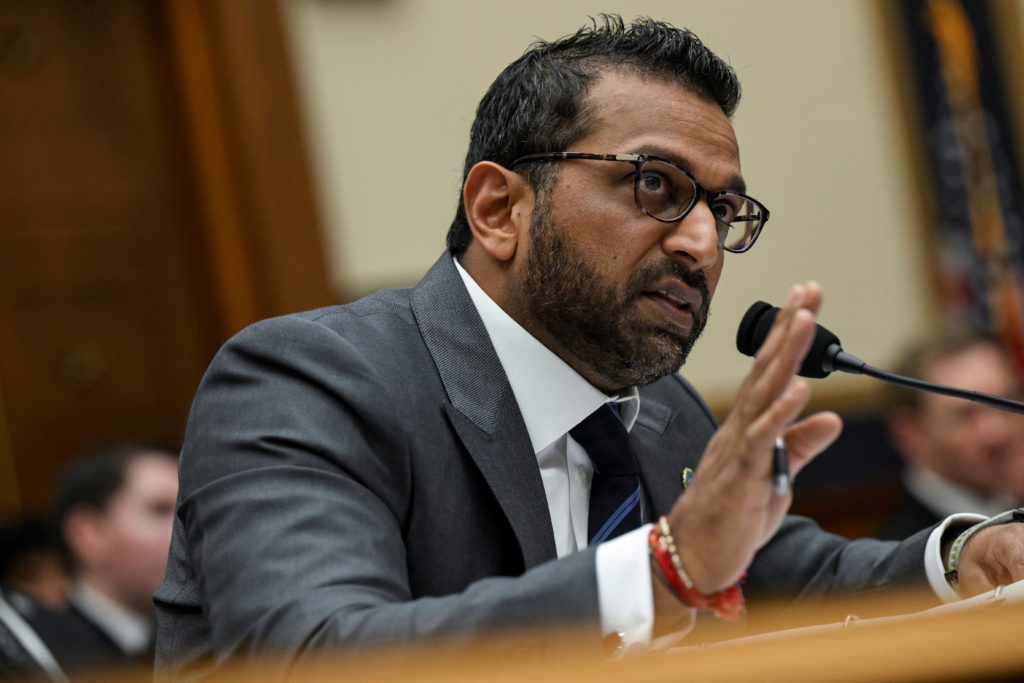
But emotional impact is not the same as factual accuracy.
That does not mean corruption is impossible.
It means that serious allegations require serious documentation—transcripts, verified footage, independent reporting, and corroborated evidence.
Before sharing or reacting to viral political content:
-
Check official Senate Judiciary Committee archives.
-
Search for coverage from multiple reputable news sources.
-
Verify whether transcripts exist.
-
Look for statements from the individuals involved.
-
Be cautious of anonymous-source claims without documentation.
In an era of rapid digital amplification, misinformation can travel faster than correction.

Sensational political narratives are often crafted to trigger immediate reaction before verification occurs.
The video presents a dramatic and explosive confrontation that, if real, would represent one of the most consequential moments in recent congressional history.
But without independent verification, public records, or credible reporting confirming the event, the claims should be treated as unverified.
In politically charged environments, critical thinking is not optional—it’s essential.
Before concluding that “eight pH๏τos changed everything,” the first question must be simple:
Where is the proof?


