Viral Panic or Policy Shift? Breaking Down the Truth Behind 2026 Immigration Rumors
In recent weeks, social media feeds have been flooded with dramatic claims about “new deportation laws in California for 2026” — posts warning that entire groups of people are about to be rounded up, that long-term residents are suddenly at risk, and that sweeping removals are imminent.
The headlines are explosive.
The reality is more complex — and far less sensational than viral captions suggest.
To understand what is actually happening, it’s important to clarify one foundational fact: deportation policy in the United States is governed primarily at the federal level, not by individual states.
Immigration enforcement, detention, and removal proceedings are handled by federal agencies such as U.S.
Immigration and Customs Enforcement (ICE) and U.S.
Customs and Border Protection (CBP).
States like California cannot independently create new deportation categories.

So where is the 2026 panic coming from?
Legal analysts say much of the confusion stems from a combination of federal policy shifts, court rulings, and proposed legislation at both the state and national levels.
Several immigration-related bills have been debated in Congress, and federal administrative priorities can change depending on leadership.
At the same time, California lawmakers have continued refining state-level policies regarding cooperation with federal immigration authorities.
California has long positioned itself as a “sanctuary state,” most notably through the California Values Act (SB 54), which limits state and local law enforcement cooperation with federal immigration enforcement in certain circumstances.
That framework remains in place.
No sweeping state-level law has been pᴀssed that expands deportation categories in 2026.
Yet viral posts claim otherwise.
Some online content suggests that long-term green card holders are suddenly vulnerable.
Others claim that undocumented immigrants with minor infractions will be fast-tracked for removal.
A few posts even allege that naturalized citizens are at risk.
Immigration attorneys are pushing back on those narratives.
“There is no new California law in 2026 that creates mᴀss deportation eligibility for new categories of people,” said one Los Angeles-based immigration lawyer.
“Deportation proceedings still follow federal immigration law.
”
That does not mean enforcement patterns cannot shift.
Federal administrations periodically revise enforcement priorities — for example, prioritizing individuals with serious criminal convictions, recent border crossers, or final removal orders.
But those priorities are administrative guidelines, not new categories of deportable status created by a state legislature.
In 2026, what has changed at the federal level is increased scrutiny in certain enforcement areas tied to criminal activity and visa overstays.
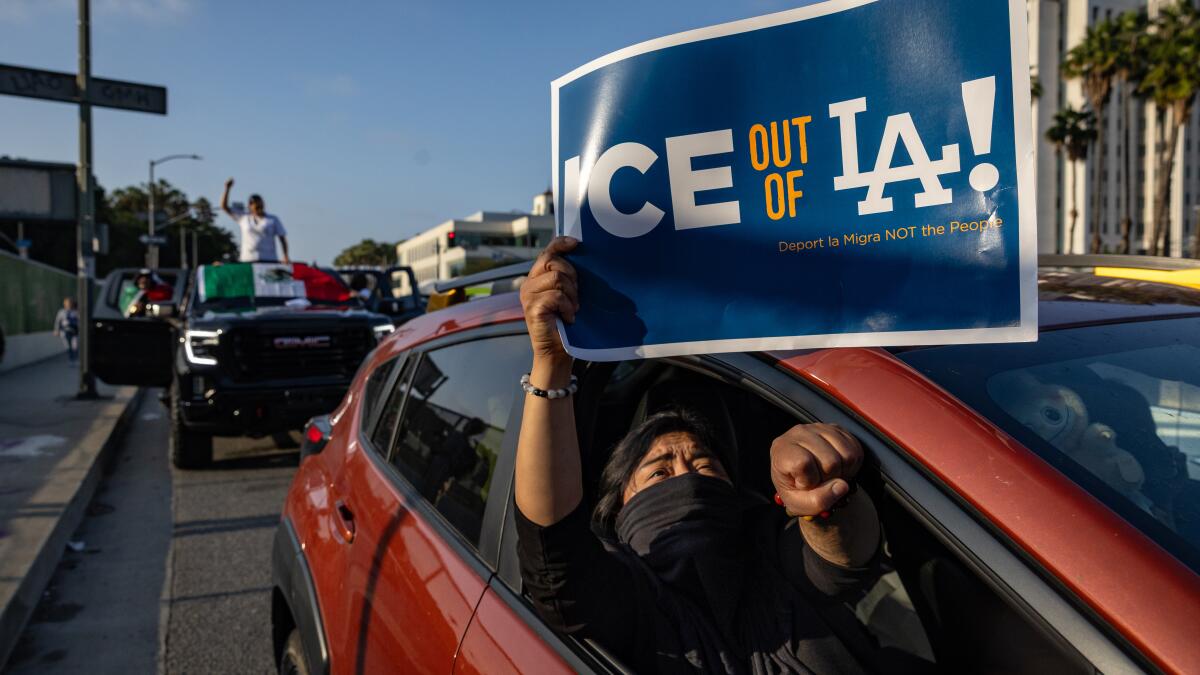
Federal agencies have indicated a renewed focus on individuals with final orders of removal who have not departed voluntarily.
That development has fueled anxiety — and misinformation.
One viral video claimed that DACA recipients (Deferred Action for Childhood Arrivals) would be automatically deported under “new California rules.
” That claim is false.
DACA is a federal program currently operating under ongoing legal challenges, but there has been no California law revoking protections or mandating removal.
Another widely shared post claimed that mixed-status families are being targeted for deportation under a 2026 statute.
There is no verified evidence of such a state-level statute.
Where confusion may be emerging is in workplace enforcement.
Federal authorities have reportedly increased I-9 compliance audits across several states, including California.
Employers are required to verify work authorization documentation.
When audits uncover unauthorized employment, consequences can include termination of employment — and potentially referral to immigration authorities.
But again, that is federal enforcement of longstanding federal law, not a new California deportation statute.
The phrase “You won’t believe who’s getting deported!” appears designed to provoke fear.
Immigration policy, however, is governed by specific legal categories outlined in the Immigration and Nationality Act (INA).
Grounds for removal typically include certain criminal convictions, immigration fraud, security concerns, or visa violations.
Long-term lawful permanent residents (green card holders) are not deportable without specific statutory grounds.
U.
S.
citizens cannot be deported.
Denaturalization — the revocation of citizenship — is extremely rare and typically involves proven fraud during the naturalization process.
There is no broad 2026 California law expanding denaturalization.
California state officials have continued to emphasize protections for immigrant communities within the bounds of federal law.
State funding for legal defense programs and immigrant resource centers has been expanded in recent years, not reduced.
Still, the political climate surrounding immigration remains charged nationwide.
Federal legislative proposals under discussion in Washington have included expanded border enforcement measures, revised asylum standards, and faster removal timelines for certain cases.
If Congress were to pᴀss new federal deportation statutes, those would apply nationwide — not uniquely to California.
At present, no sweeping 2026 federal law has been enacted creating unprecedented new deportation categories.
Immigration courts, meanwhile, continue to face backlogs exceeding two million pending cases nationwide.
Processing delays mean many individuals remain in legal limbo for years.
Experts warn that misinformation spreads rapidly in moments of uncertainty.
“Immigration law is complicated,” one policy researcher said.
“When people see a headline suggesting sudden mᴀss deportations, it triggers fear — especially in communities already living with uncertainty.
”
Social media algorithms amplify emotional content.
Phrases like “SHOCKING!” and “You won’t believe!” generate clicks.
But they often lack nuance.
That nuance matters.
For example, certain criminal convictions — including aggravated felonies under immigration law — have long triggered mandatory removal under federal statute.
That is not new.
What may change is enforcement intensity, prosecutorial discretion, or detention capacity.
In California specifically, local law enforcement agencies remain restricted in how they share information with ICE under state law.
Cooperation is generally limited to individuals convicted of certain serious crimes.
No 2026 California statute has reversed that framework.
Advocacy groups caution against panic.
They advise immigrants concerned about their status to consult licensed immigration attorneys rather than relying on viral posts.
Community organizations across California offer legal clinics, know-your-rights workshops, and multilingual guidance.
Federal agencies have not announced a mᴀss deportation program unique to California in 2026.
The broader context is worth noting: immigration enforcement patterns often shift after elections, court rulings, or administrative changes.
Those shifts can feel sudden.
But they operate within existing statutory frameworks unless Congress enacts new law.
As of now, there is no verified evidence of a sweeping new California deportation law in 2026 targeting unexpected groups.
That does not mean individual cases are unaffected.
Those with final orders of removal, unresolved visa overstays, or serious criminal convictions may face increased scrutiny if federal enforcement priorities intensify.
But those categories have existed for decades.
The phrase “You won’t believe who’s getting deported” implies surprise categories.
Immigration lawyers say there are none newly created by California in 2026.
The real story may be less sensational but equally important: understanding rights, legal status, and credible sources of information is essential in a climate where misinformation can spread faster than policy updates.
Immigration law remains federal.
California continues to operate under sanctuary state principles.
Enforcement discretion may evolve.
But no shockwave statute has secretly rewritten deportation rules in 2026.
The most powerful tool against panic may be clarity.


