Federal Enforcement Actions in Minnesota Highlight Law Enforcement Activity as False Claims Circulate
MINNEAPOLIS — Recent years have seen heightened activity by federal law enforcement agencies in the Twin Cities region of Minnesota, but many sensational claims being circulated online have diverged sharply from verified facts.
While the FBI, U.S.
Immigration and Customs Enforcement (ICE), and other agencies have pursued criminal arrests and enforcement actions linked to fraud and criminal activity, far-fetched narratives involving “married Somali judges,” multi-ton cocaine hauls, and multi-billion-dollar fraud schemes remain unsupported by credible reporting and have been debunked by multiple fact-checking organizations.
At the center of some online rumor mills have been claims that federal agents uncovered secret tunnel networks beneath luxury properties, seized enormous quanтιтies of narcotics, and exposed mᴀssive fraud coordinated by Somali officials or judiciary members.
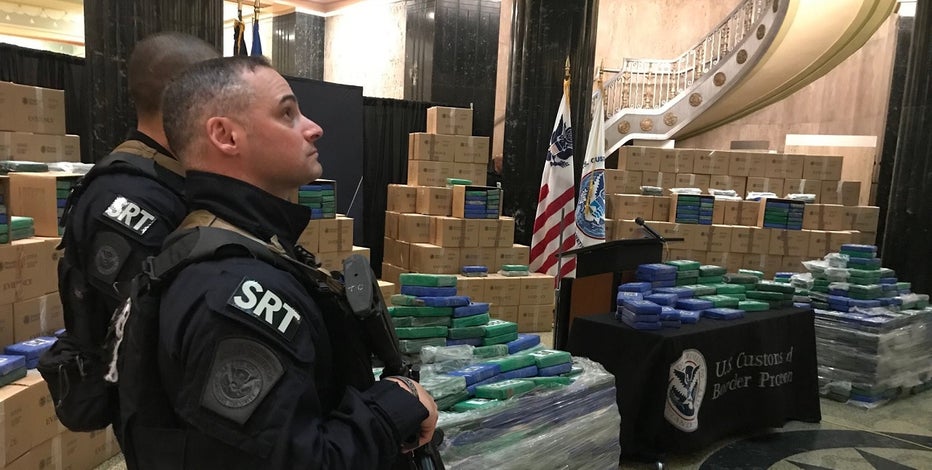
However, reputable news outlets and official statements from law enforcement agencies do not substantiate these ᴀssertions.
In fact, fact-checkers have specifically flagged stories ᴀsserting that agents found 2.
64 tons of drugs and $18.
7 million in cash during coordinated FBI and ICE raids on Somali attorneys’ properties as false and lacking evidence.
Office of Public Affairs sources and federal crime data do confirm that federal agencies have increased enforcement efforts targeting criminal networks and fraud schemes affecting Minnesota and broader regions.
One concerted effort, known as Operation Metro Surge, involved ICE and other Homeland Security units focusing on criminal illegal immigrants with serious convictions.
In early December, law enforcement announced the arrest of a handful of individuals, including some from Somalia and other countries, as part of enforcement sweeps aimed at removing dangerous offenders from the community.
Federal authorities have emphasized that these operations are concentrated on individuals with histories of violent crime, Sєxual abuse, gang activity, and other offenses that put public safety at risk.
One Department of Homeland Security official described the strategy as part of a broader initiative to arrest and remove “the worst of the worst” criminal illegal immigrants who pose threats to local communities.
Alongside immigration enforcement, other federal investigations in the region have focused on fraud schemes.
Previous reporting has documented significant cases involving fraud against federal benefit programs, including food aid and unemployment insurance, often involving complex networks of shell corporations and false claims.
Prosecutors have charged numerous defendants in these cases, and some have resulted in convictions or ongoing court proceedings.
Despite this genuine law enforcement work, misinformation continues to find an audience.

False narratives about law enforcement uncovering mᴀssive cocaine shipments or mᴀssive fraud orchestrated by judges or community leaders often start on social media and viral content sites.
A recent fact check noted that one such story claiming a coordinated FBI and ICE raid uncovered a tunnel network under a Minneapolis mansion was completely unsubstantiated and sourced to unreliable sites that lacked verifiable details, such as suspect names, official charges, or credible reporting.
Experts on misinformation warn that complex legal and enforcement actions can easily be distorted in public discourse, especially when they intersect with sensitive cultural, ethnic, or political issues.
When rumors frame broad communities as complicit in organized crime without evidence, they can spread quickly, fueled by fear, bias, and misunderstanding.
Public policy analysts emphasize the importance of checking claims against reputable sources and official statements before accepting them as truth.
Law enforcement agencies themselves have frequently stressed that large investigations, especially those involving multiple jurisdictions and complex financial or organized crime elements, unfold over long periods and are subject to courtroom scrutiny, not rapid headline revelations.

In many cases, authorities cannot comment on the specifics of ongoing investigations due to legal restrictions, which can create a perception of opacity that misinformation exploits.
In the absence of confirmed details supporting viral claims of extraordinary raids and mᴀssive contraband seizures tied to prominent community figures or judges, the public record instead shows a picture of ongoing, targeted federal law enforcement operations addressing crime and fraud.
The FBI, ICE, and Department of Homeland Security have all maintained that their actions are aimed at protecting public safety, enforcing immigration law, and pursuing individuals who have violated federal statutes.
Individuals or groups arrested by federal authorities are typically charged through the Department of Justice and made subject to court procedures, with documentation available through public court filings.
In contrast, wildly exaggerated figures or narratives lacking corroboration should be treated with caution and verified against official press releases from law enforcement or coverage by established media outlets.
Minnesota officials have also been involved in responding to enforcement activities.
City and state leaders have sometimes pushed back on federal raids, particularly when large numbers of agents or aggressive tactics have drawn public protests or community concerns.
This context has sometimes fueled heated political rhetoric, which can further blur the line between documented facts and exaggerated claims circulating online.
In summary, while federal raids and arrests — including those by the FBI and ICE — do occur, the dramatic storyline that names “married Somali judges,” mulтιтon cocaine seizures, and multi-billion-dollar fraud uncovered in a single sweep has no basis in credible reporting.
Rumors involving those claims have been rated false by independent fact-checkers and do not reflect the verified details of known operations.
Instead, the truth that emerges from official sources is more prosaic but still significant: law enforcement continues to investigate and prosecute crime, including violent offenders and fraud schemes, in Minnesota and beyond.
Understanding these real efforts — and distinguishing them from fictionalized accounts — is essential for informed public discussion about justice and community safety.


