Peru in Crisis as Torrential Rains Submerge Homes and Vehicles
A violent surge of water tore through southern Peru this week, transforming quiet neighborhoods into churning canals and leaving thousands scrambling for safety as historic floods engulfed parts of Arequipa.
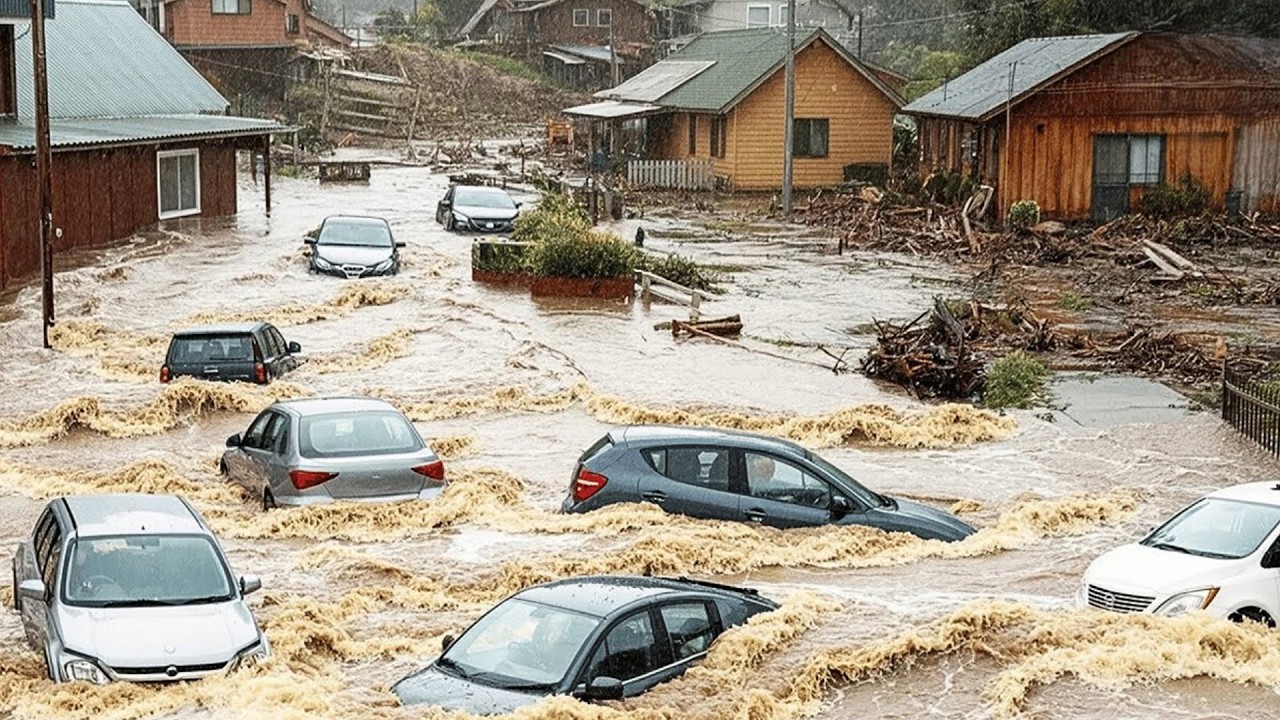
What began as heavy seasonal rainfall quickly spiraled into a full-blown emergency, overwhelming drainage systems, submerging homes, and stranding vehicles beneath muddy torrents that showed no mercy.
Residents say the rain intensified without warning.
Sheets of water pounded rooftops and hillsides surrounding the city, cascading down steep terrain toward densely populated districts below.
Within hours, streets vanished under rising currents.

Cars were swept sideways, their alarms blaring before falling silent beneath the floodwaters.
Shopkeepers rushed to lift merchandise to higher shelves as brown water forced its way through doorways.
Emergency responders worked against the clock.
Firefighters waded chest-deep into flooded avenues to reach trapped residents.
Inflatable rescue boats maneuvered between submerged vehicles, navigating around floating debris—furniture, branches, shattered signage—carried by the relentless flow.
Authorities urged citizens to avoid travel and seek higher ground as water levels continued to climb.
Local officials described the rainfall as one of the most intense in recent memory.
Meteorological services indicated that a powerful storm system stalled over the region, unleashing concentrated downpours that exceeded the city’s drainage capacity.
The surrounding topography, characterized by valleys and volcanic slopes, accelerated runoff into urban areas already saturated from previous precipitation.
Entire neighborhoods were cut off as key roadways became impᴀssable.
Underpᴀsses filled like basins, trapping vehicles.
Bridges were closed amid concerns about structural stability after water eroded supporting foundations.
Power outages swept across several districts as substations were inundated and precautionary shutdowns were enacted to prevent electrical hazards.
Inside flooded homes, families raced to salvage what they could.
Mattresses were propped against walls, appliances unplugged, personal belongings gathered in frantic moments before evacuation.

In some cases, residents climbed to second floors or rooftops, waving to rescue teams as water surged below.
Hospitals activated emergency protocols as injured individuals arrived suffering from falls, debris impacts, or exposure to contaminated floodwaters.
Health authorities warned of potential risks from polluted runoff mixing with sewage systems overwhelmed by the deluge.
Temporary shelters were established in schools and community centers on higher ground to house displaced families.
Economic damage is expected to be severe.
Arequipa, a major commercial and industrial hub in southern Peru, relies on transportation corridors that were crippled by the flooding.
Warehouses reported water damage to stored goods.
Markets remained shuttered as cleanup efforts began.
Small business owners face weeks of restoration work, uncertain how quickly customers will return.
Rural zones on the outskirts of the city also felt the impact.
Agricultural lands were submerged, threatening crops and livestock.
Farmers reported fences washed away and irrigation systems destroyed.
Mudslides in hillside communities added another layer of danger, with rocks and earth crashing onto roads and properties.
Environmental experts emphasize that flash flooding in mountainous regions can escalate rapidly when intense rainfall meets hardened urban surfaces and insufficient drainage capacity.
Once water finds its path downhill, its speed and force increase exponentially.
In Arequipa, the convergence of heavy rain, steep slopes, and densely built neighborhoods created a perfect storm of vulnerability.
As the rain gradually eased, the full scale of destruction came into view.
Streets were coated in thick layers of mud.
Vehicles sat at odd angles where currents had carried them.
Piles of debris lined sidewalks.
Volunteers formed human chains to pᴀss buckets and clear clogged drains in an effort to accelerate water withdrawal.
Government officials pledged support for recovery and reconstruction, announcing emergency funding and mobilizing military units to ᴀssist with debris removal and infrastructure repairs.
Engineers began inspecting bridges, drainage canals, and retaining walls to determine which structures could be salvaged and which would require full reconstruction.
Residents expressed a mix of shock and resilience.
“We watched the water rise minute by minute,” one homeowner said, surveying a living room soaked in brown sludge.
“We’ve had floods before, but never like this.”
Community solidarity quickly emerged, with neighbors sharing food, clothing, and temporary shelter.
Meteorologists continue monitoring weather patterns, warning that additional rainfall could complicate recovery if the ground remains saturated.
Authorities caution that hidden hazards—unstable roads, weakened foundations, contaminated water—persist even after visible flooding subsides.
The psychological toll may linger long after the streets dry.
For many families, treasured possessions are gone, and uncertainty hangs heavy.
Schools in affected districts announced temporary closures, while public transportation networks struggle to resume normal operations.
Arequipa has endured natural challenges before, from seismic tremors to seasonal storms, but this flood stands out for its sudden intensity and sweeping impact.
As cleanup crews scrape mud from doorsteps and heavy machinery clears blocked roadways, the city begins the long process of rebuilding.
For now, the memory of rushing water remains vivid: the roar in the night, the sight of headlights disappearing beneath the surface, the urgent calls for help echoing through flooded streets.
Peru faces yet another test of resilience, and in Arequipa, the battle against the aftermath of historic floods has only just begun.


