FORMER FBI AGENT SAYS GUTHRIE CASE IS AT THE “PRECIPICE” OF A MAJOR BREAKTHROUGH
Nine days into the disappearance of Nancy Guthrie, the case has entered a phase defined by urgency, uncertainty, and enormous stakes.
With no official suspects named and a ransom demand that has reportedly ballooned to $6 million, the investigation has become one of the most closely watched cases in the country.
Now, a former FBI special agent believes the situation is nearing a decisive turning point.
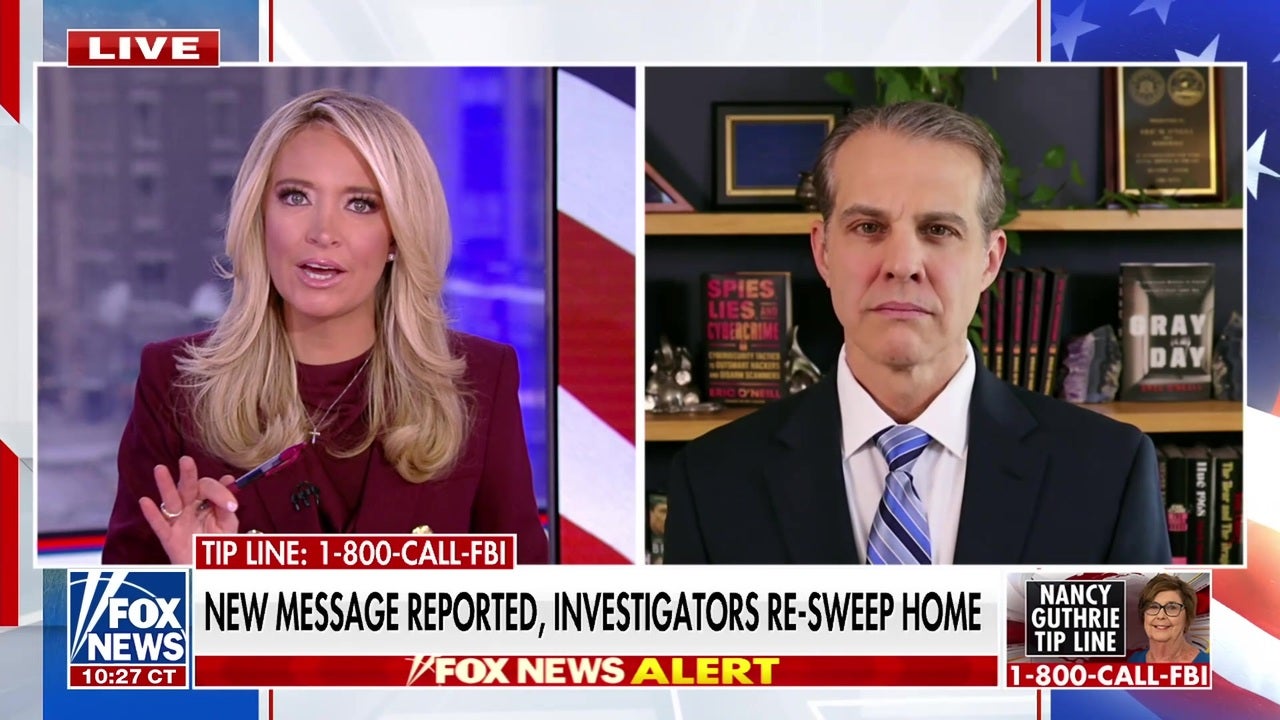
Speaking during a televised interview, former FBI agent Stuart Kaplan described the investigation as being on the “precipice” of a breakthrough—driven not by dramatic arrests or public tips, but by the quiet, methodical power of advanced technology.
From the outside, the scene around the Guthrie home in Tucson looks deceptively calm.

Sheriff’s vehicles remain parked outside at the family’s request.
Deputies have returned multiple times to re-walk the property, even combing the area in darkness with flashlights.
Investigators have searched a septic tank, re-examined terrain, and re-entered the home itself.
To some observers, these repeated visits have raised questions.
To Kaplan, they suggest something else entirely.

“This is a cat-and-mouse game,” he explained, noting that public developments often lag far behind what investigators actually know.
According to Kaplan, law enforcement may be responding to very specific information contained in ransom communications—details the public has not seen and likely never will.
One of the most striking aspects of the case is the evolving nature of the family’s public messaging.
Early pleas for Nancy Guthrie’s safe return were emotional and direct.
More recent statements, however, have been noticeably restrained and precise.

Kaplan believes this is no accident.
In his view, the family’s words may be carefully calibrated responses to demands or questions posed by the kidnappers themselves, crafted in close coordination with federal authorities.
The money, of course, has intensified everything.
The reported ransom demand has jumped from roughly $1 million in cryptocurrency to $6 million, a dramatic escalation that Kaplan interprets as pressure tactics.
Such increases often follow perceived resistance or delays, whether real or strategic.

But Kaplan also pointed out that ransom ᴅᴇᴀᴅlines cut both ways.
If a ᴅᴇᴀᴅline pᴀsses without consequence, the kidnappers risk losing credibility.
If the family pays without proof of life, they risk everything for nothing.
At the heart of Kaplan’s optimism is technology.
Modern FBI investigations rely heavily on digital footprints—data that exists even when people believe nothing was recorded.
Security cameras that “didn’t capture anything,” for example, may still log unseen metadata: movement, signal strength, timestamps, and network activity.

Investigators have reportedly removed cameras not only from the Guthrie home, but from neighboring properties as well, harvesting what Kaplan described as “unseen data.”
“This takes time,” he emphasized, “but when it comes together, it comes together fast.”
Still, the case has not been without controversy.
Local authorities have acknowledged that the original crime scene was released and later re-secured, a decision critics argue may have compromised evidence.
Reports of staffing shortages delaying the deployment of high-tech search aircraft have only added to the scrutiny.
Kaplan did not dismiss these concerns.
In fact, he was blunt about them.
“In the real world, missing elderly persons are often treated as routine at first,” he said.
“That’s the danger.” He stressed that the integrity of a crime scene can only be fully preserved at the very first response—and once that moment pᴀsses, it can never be recreated.
While he expressed sympathy for local law enforcement, Kaplan made it clear that early ᴀssumptions can have lasting consequences.
Optics have also played a role.

PH๏τos showing the county sheriff attending a public sporting event while the case remained unresolved sparked outrage.
Kaplan called the decision a serious mistake, regardless of intent.
“The optics are horrible,” he said, adding that leadership during high-profile crises is judged as much by perception as by action.
Another key element in the investigation is the family’s cooperation.
According to Kaplan, consent searches of relatives’ homes—such as Nancy Guthrie’s daughter’s residence—are often the fastest way for law enforcement to access critical digital evidence without lengthy legal hurdles.
While such scrutiny can raise eyebrows, Kaplan noted that in a case of this magnitude, cooperation is both expected and unavoidable.
The public nature of the case has created extraordinary pressure.
With the nation watching, every decision by investigators, officials, and the family itself is dissected in real time.
Kaplan acknowledged the strain but maintained that behind the scenes, the FBI’s resources far exceed what the public can see.
“We are in 2026,” he said.
“The tools available today are unlike anything the public imagines.”
For now, the case remains unresolved.
No confirmation has been given about whether the ransom has been paid.
No suspects have been officially identified.
And yet, according to Kaplan, the pieces are moving into place.
Breakthroughs, he suggested, rarely announce themselves.
They emerge quietly—out of data sets, digital traces, and patterns that only become clear after days of painstaking analysis.
Whether that moment is hours or days away remains unknown.
But for the Guthrie family, for investigators, and for a public holding its breath, the sense that something is about to give has never been stronger.


