Cartier Creations That Changed Antiques Roadshow Forever
Few names carry the weight, mystique, and instant authority of Cartier.
On Antiques Roadshow, that name has repeatedly transformed ordinary-looking jewelry into historic, jaw-dropping treasures.
Time and again, guests arrived unsure, curious, or even skeptical—only to leave stunned as experts revealed that the object in their hands wasn’t just beautiful, but museum-worthy.

One unforgettable moment began with a sapphire ring bought quietly at an estate sale in Tennessee.
The owner knew the basics: an 11-carat sapphire, diamonds, platinum, and a Cartier mark.
What she didn’t know was how explosive the market for Sri Lankan (Ceylon) sapphires had become.
The stone’s electric blue, combined with Cartier’s signature, pushed its auction value to $40,000–$60,000, more than double what had ever been imagined.
The sapphire alone dictated the price—but Cartier sealed the legacy.
Another emotional appraisal featured Art Deco Cartier dress clips from around 1930.
Worn weekly by a glamorous mother dressed in black, these platinum clips held roughly 20 carats of diamonds and bore both serial numbers and signatures.
Their value—$30,000 to $50,000—came second to the tears they brought.
As one owner said, “When you love something, you don’t ᴀssign it a value.”
Cartier did that for her.

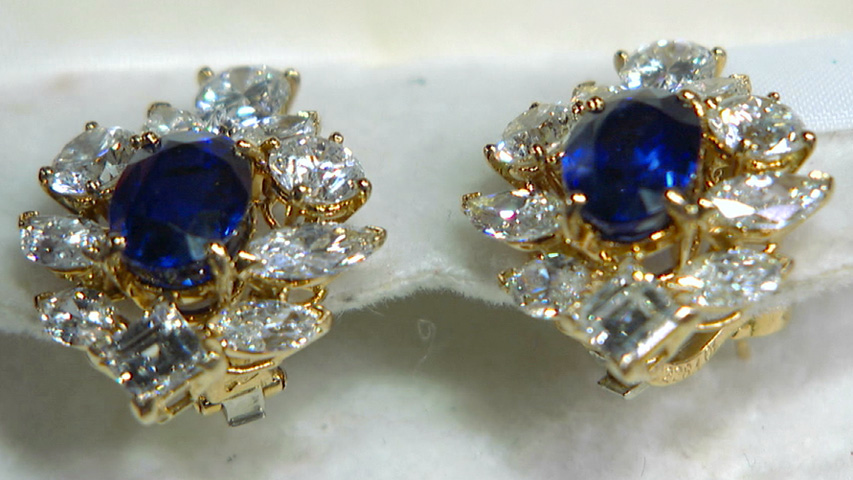
Earrings proved just as powerful.
A pair of sapphire and diamond Cartier earrings, once appraised lower for insurance, revealed their true strength when examined closely.
Each unheated sapphire glowed with saturated blue depth collectors crave.
Retail value? $75,000, potentially $100,000 if purchased directly through Cartier.
The difference between ordinary and extraordinary was provenance—and patience.

Sometimes, the surprise wasn’t sparkle but ingenuity.
A simple gold bracelet inherited from a grandmother turned out to be a hidden Cartier watch from the 1950s.
Crafted so the winding mechanism sat invisibly on the back, it preserved the illusion of a pure gold cuff.
Few survived intact.
Auction value: $15,000.
Expert reaction: “One of the nicest of its type I’ve ever seen.”

Then came the radical idea that changed modern jewelry forever—the Cartier Love Bracelet.
Before it became a global icon, Aldo Cipullo’s design was rejected by Tiffany.
Cartier embraced it.
On Roadshow, an early promotional version—electroplated, hinged, complete with its original box—surfaced.
Once a free gift with Revlon cosmetics, it now carried a retail replacement value of $1,000–$1,500, while original solid-gold Love bracelets soared past $8,000.
Some of the most powerful moments came from $5 junk-bin miracles.

A modular Cartier ring designed by Jean Dinh Van in the late 1950s—two rings that locked together into one—was pulled from a dark estate sale box.
Bought for five dollars.
Retail value? $6,000–$8,000.
A masterclass in why signatures matter.
Cartier’s obsession with hidden mechanisms appeared again and again: turtle brooches that opened to reveal watches, tubogas bracelets concealing dials, sculptural animal pins that doubled as timepieces.

These weren’t novelties—they were engineering triumphs.
One jeweled turtle watch alone reached $8,000–$10,000 at auction.
The Art Deco era delivered some of the highest shocks.
A jade pendant carved in Asia during the 19th century and later mounted by Cartier in the 1920s stunned experts.
With platinum, diamonds, seed pearls, and serial numbers intact, its insurance value hit $75,000.

Another Art Deco diamond bracelet—180 stones, approximately 15 carats total, perfectly matched—blew past expectations at $40,000–$60,000, with insurance set at $100,000.
Watches changed history too.
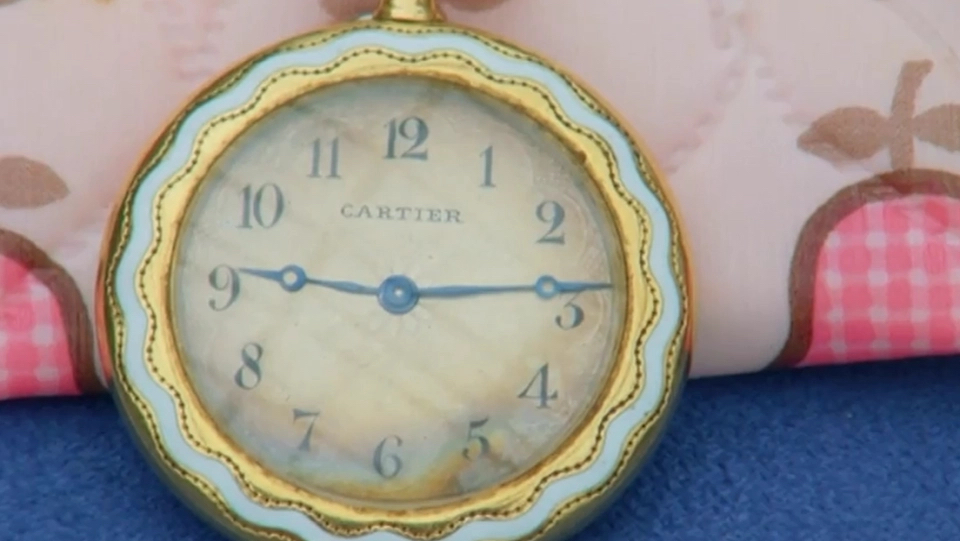
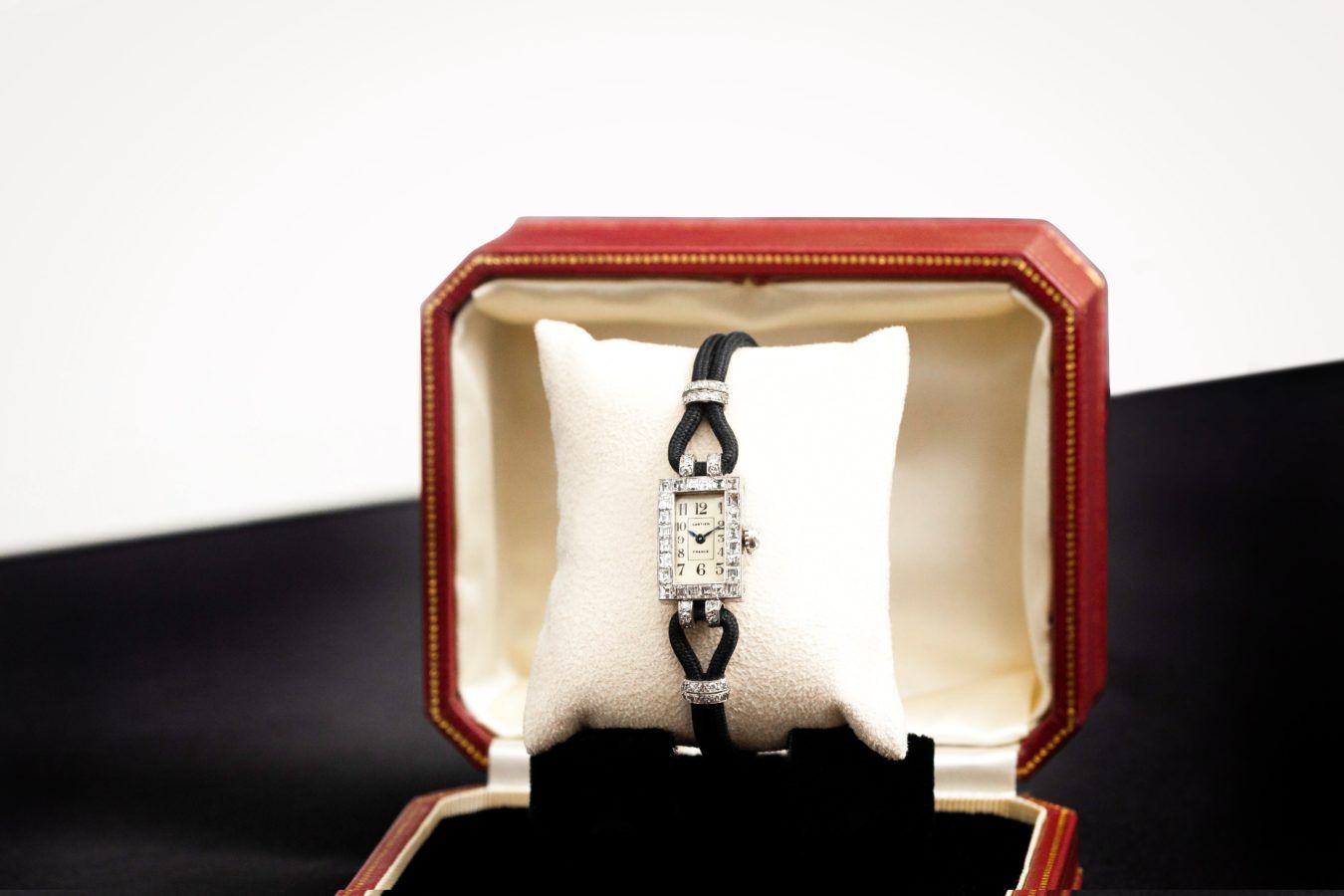
A forgotten ladies watch turned out to be a 1920s Cartier Tortue, one of the house’s earliest wristwatch designs.
Platinum, rose-cut diamonds, and French hallmarks pushed it to $20,000–$25,000.
Another Cartier minute repeater—ultra-thin and astonishingly complex—reached $12,000–$18,000, even needing service.
And then there were the stories that felt unreal.
A Cartier cigarette case traded for three breakfasts during the Great Depression resurfaced decades later.
Even in worn condition, it fetched $7,500, and $15,000 if restored.
A compact bought as a child’s toy for $3? Cartier-signed.
Auction value: $3,000–$4,000.
Over and over, Antiques Roadshow proved a singular truth: Cartier doesn’t just add value—it rewrites history.
A scratched box, a hidden hinge, a nearly erased hallmark can turn sentiment into legacy and curiosity into fortune.
These moments didn’t just shock owners.
They changed how audiences see jewelry forever.


