PREDICTION OR COINCIDENCE: The Simpsons’ 2026 “Warnings” Spark Global Panic
For decades, it has been dismissed as nothing more than a long-running animated sitcom.
A show built on satire, humor, and exaggerated versions of reality.
But over the years, The Simpsons has developed a reputation that goes far beyond entertainment.
A reputation for predicting the future.
And now, as 2026 unfolds, that reputation is once again under intense scrutiny.
Across social media, viral posts are spreading rapidly, claiming that the show “warned” the world about events set to take place this year.
Clips.
Images.
Old episodes resurfacing with eerie captions.
Each one suggesting that what we are witnessing today was somehow foreseen years ago.
The phrase is everywhere.
“2026 will change everything.”
But what exactly does that mean.
And how much of it is real.
The idea that The Simpsons can predict the future is not new.
Fans have long pointed to moments where the show appeared to mirror real-world events.
Technological advancements.
Political developments.
Cultural shifts.
In some cases, the similarities are striking enough to raise eyebrows.
But experts argue that there is a simpler explanation.
The show has been running for over three decades.
Hundreds of episodes.
Thousands of jokes.
Countless scenarios.
Given that volume, it is statistically inevitable that some elements will resemble future events.
Especially when those elements are based on trends already visible at the time of writing.
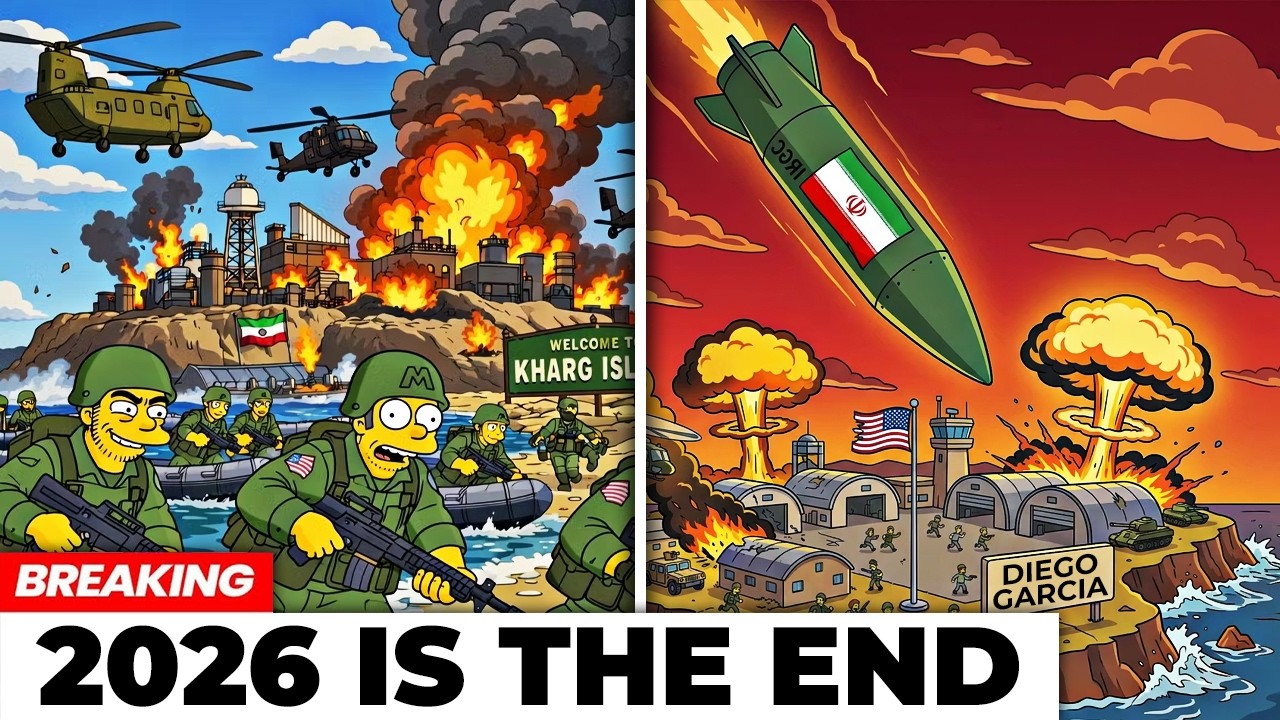
Writers often draw inspiration from current events, emerging technologies, and social patterns.
They exaggerate.
They speculate.
They imagine what could happen if those trends continue.
And sometimes, those imagined futures come closer to reality than expected.
But the current wave of claims goes further than coincidence.
Online posts suggest that specific episodes referenced major global changes tied to 2026.
Economic shifts.
Technological breakthroughs.
Even large-scale crises.
The problem is that many of these claims are difficult to verify.
Some clips are taken out of context.
Others are edited.
In some cases, entirely fabricated scenes are presented as authentic episodes.
This has created a powerful but misleading narrative.
One that spreads quickly because it taps into something deeply human.
The desire to find patterns.
To believe that events are not random.
That there is a hidden script guiding the future.
Psychologists refer to this as pattern recognition bias.
The tendency to connect unrelated dots into a meaningful story.
And in the age of viral content, that tendency is amplified.
Algorithms reward engagement.
Shocking claims travel faster.
Nuanced explanations struggle to keep up.
Still, the fascination persists.
Because even if the predictions are not literal, the themes often feel real.
The show has consistently explored ideas about technology, politics, and society.
Automation.
Media influence.
Globalization.
:quality(80)/https://asset.kgnewsroom.com/photo/pre/2025/06/13/d6818c60-cedd-4453-8d5f-1ef760275127_jpg.jpg)
Issues that continue to shape the modern world.
In that sense, its “predictions” are less about specific events and more about trajectories.
Directions in which society is moving.
And that may be why the 2026 narrative resonates so strongly.
We are living in a time of rapid change.
Artificial intelligence advancing at unprecedented speed.
Global tensions rising.
Economic systems evolving.
The future feels uncertain.
And uncertainty creates space for speculation.
For stories that attempt to make sense of what lies ahead.
But there is also a cautionary side to this phenomenon.
When entertainment is mistaken for prophecy, it can distort perception.
It can lead people to focus on dramatic narratives rather than verified information.
To expect sudden, world-altering events rather than gradual change.
Experts urge viewers to approach such claims critically.
To question sources.
To verify authenticity.
To distinguish between satire and reality.
Because while The Simpsons may reflect the world in clever and sometimes uncanny ways, it does not control it.
And it does not predict the future with certainty.
As 2026 continues to unfold, the real story is not a hidden warning encoded in animation.
It is the world itself.
Changing.
Evolving.
Responding to forces both seen and unseen.
The future is not written in a script.
It is being shaped in real time.
By decisions.
By actions.
By events that no single show could fully foresee.
And perhaps that is the most important takeaway of all.
Not that everything was predicted.
But that everything is still being decided.


