“Midnight Sweep: MS-13 Leaders Arrested in Miami as Cartel Cash Trail Exposed”
Before sunrise, the silence across several Miami neighborhoods was shattered by the synchronized knock of federal agents moving in unison.
Unmarked vehicles rolled through dimly lit streets.
Tactical teams fanned out with precision.

Radios crackled.
Doors were breached in swift succession.
By dawn, multiple alleged leaders connected to the notorious gang MS-13 were in custody, and investigators were combing through properties believed to conceal significant amounts of cartel-linked cash.
According to preliminary statements from authorities, the operation extended beyond Florida, unfolding simultaneously in several cities as part of a coordinated federal initiative.
Officials described it as a targeted effort to disrupt command structures, financial pipelines, and cross-state coordination tied to the gang’s activities.
The scale and secrecy of the operation stunned even seasoned law enforcement observers.
Federal sources indicate the investigation had been building quietly for months.
Surveillance units tracked communications.
Financial analysts followed money flows that moved through shell accounts and layered transactions.
Undercover operatives gathered intelligence on key figures believed to be overseeing regional operations.
When the green light was finally given, agents executed arrest warrants across multiple jurisdictions at once — a tactic designed to prevent suspects from warning one another or fleeing.
Authorities have not yet released the full list of charges, but early court documents reference allegations including racketeering conspiracy, narcotics distribution coordination, money laundering, and weapons-related offenses.
Officials emphasized that the arrests represent allegations only, and defendants are presumed innocent until proven guilty in court.
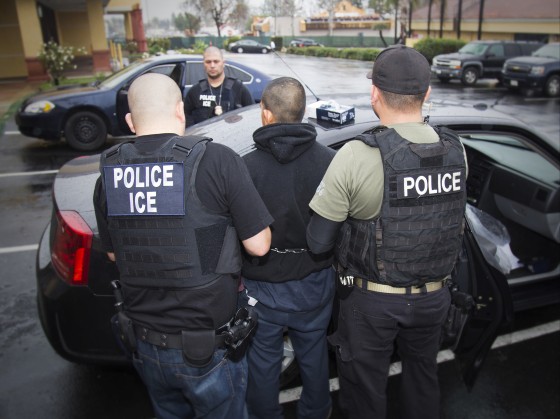
In Miami, law enforcement officers cordoned off properties as evidence teams entered residences believed to function as safehouses.
Investigators reportedly uncovered large sums of cash concealed in hidden compartments, storage containers, and modified interior walls.
While officials declined to provide an exact total pending formal inventory, sources familiar with the matter described the seized funds as substantial.
The financial component appears central to the case.
Authorities allege that certain arrested individuals acted not only as street-level coordinators but as financial stewards — managing proceeds generated through illicit activity and redistributing funds to sustain operations.
By targeting money movement rather than solely street enforcement, investigators aimed to strike at the organizational backbone.
A spokesperson for the Federal Bureau of Investigation confirmed that the operation involved federal, state, and local agencies working in tandem.
“Disrupting violent criminal enterprises requires coordination and persistence,” the spokesperson stated, emphasizing that the arrests were the result of sustained investigative effort.
The operation’s multi-city nature underscores how criminal networks operate across state lines.
Law enforcement officials note that MS-13, originally formed in Los Angeles decades ago, has evolved into a transnational gang structure with connections reaching beyond U.
S.
borders.
Investigators allege that communications intercepted during the probe revealed coordination between regional leaders regarding narcotics shipments, territorial disputes, and financial transfers.
Digital evidence, including encrypted messaging platforms, reportedly played a key role in mapping connections.
Community reaction in Miami has been swift.
Residents in affected neighborhoods described scenes of confusion as federal agents arrived in the early hours.
Some expressed relief, saying the arrests could reduce local intimidation and violence.
Others voiced concern about the broader implications and the possibility of retaliatory activity.
City officials urged calm, emphasizing that law enforcement presence would remain elevated as proceedings advance.
Legal experts caution that complex racketeering cases can unfold over extended timelines.
Prosecutors must present detailed evidence linking individuals to coordinated criminal enterprise structures.
Defense attorneys will likely challenge surveillance methods, financial interpretations, and the characterization of roles within the alleged network.
Meanwhile, authorities signaled that the investigation may not be over.
Officials hinted at ongoing efforts to identify additional ᴀssociates, financial conduits, and supply chains.
“This is about dismantling systems, not headlines,” one federal source remarked, suggesting further developments could follow.
MS-13 has long drawn national attention for its reputation tied to violent crime and organized trafficking.
Federal authorities over the years have prioritized targeting leadership tiers rather than only street-level participants, aiming to weaken operational command and funding capacity.
The recent Miami-focused arrests appear to align with that strategy.
By pursuing alleged leaders and money managers simultaneously across cities, investigators sought to prevent regrouping.
Coordinated timing is critical in such operations; staggered enforcement can give suspects opportunity to destroy evidence or flee.
Authorities confirmed that seized electronic devices, financial records, and physical documents will undergo forensic examination.
These materials may provide insight into transaction pathways, communication hierarchies, and cross-border connections.
The broader regional impact remains to be seen.
Gang-related investigations often trigger ripple effects, with rival groups attempting to exploit perceived power vacuums.
Law enforcement agencies have indicated they are monitoring developments closely to prevent instability.
Community advocates stress that enforcement alone cannot fully address gang dynamics.
They argue that prevention programs, youth outreach, and economic opportunity initiatives remain essential to long-term stability.
Still, they acknowledge that removing individuals accused of coordinating criminal activity can create space for broader solutions.
Political reactions have been measured but pointed.
State officials praised interagency collaboration, framing the arrests as evidence of sustained commitment to public safety.
Critics of federal enforcement tactics caution against overreach and emphasize the importance of upholding consтιтutional protections throughout prosecution.
For families of those arrested, the coming weeks will bring court appearances, bond hearings, and legal battles.
For residents in affected communities, the immediate aftermath is a mix of uncertainty and cautious hope.
Investigators are expected to detail the charges in federal court filings, where prosecutors will outline the alleged structure of the enterprise and the specific conduct attributed to each defendant.
If convicted on racketeering counts, penalties could be severe.
Yet as with any major criminal case, outcomes will depend on the strength of evidence presented.
The images from Miami — agents moving through darkened streets, stacks of seized cash laid out for cataloging, suspects escorted under guard — have already captured national attention.
But beyond the dramatic visuals lies a methodical legal process that will determine what facts ultimately stand.
For now, authorities emphasize that the operation represents a step in a broader campaign against organized criminal networks operating across jurisdictions.
As the sun rose over Miami following the coordinated raids, neighborhoods slowly returned to routine.
Traffic resumed.
Schools opened.
Businesses unlocked their doors.
But the echoes of the early-morning operation lingered — a reminder of the complex struggle between law enforcement and organized crime structures that operate in shadows.
Whether this operation significantly weakens MS-13’s regional influence will depend on what unfolds next — in courtrooms, in communities, and within the evolving strategies of those determined to disrupt criminal enterprises at their core.


