Hawaii Faces Catastrophic Flooding: A Tale of Destruction and Resilience
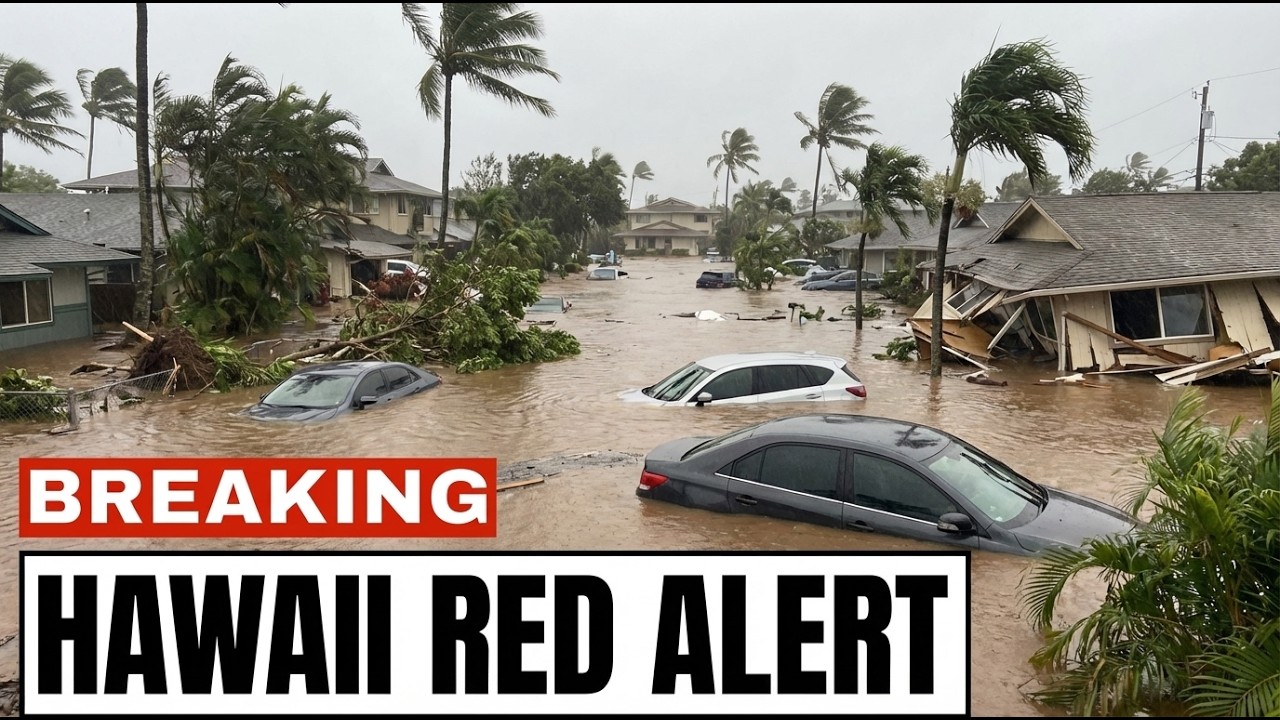
Hawaii has recently been engulfed in one of the most catastrophic flooding events in its history, leaving a trail of destruction and despair in its wake.
The torrential rains that began on Friday led to a near failure of the Wahiwa Dam, prompting the evacuation of 5,500 residents.
As the floodwaters rose, they reached alarming levels, ultimately impacting the state’s largest city, Honolulu.
Over 400 homes have been reported damaged or destroyed, with the agricultural sector suffering losses estimated at $9.4 million within just a week.
The situation escalated quickly, catching many residents off guard.
Michael Mchuan and his wife, Heather Nakahara, who reside in Walua on Oahu’s Northshore, experienced the flood’s rapid onset firsthand.
On that fateful Friday morning, the water surged so swiftly that they found themselves trapped in their home, retreating to a bedroom closet with their two small terriers and three parrots.
They spent eight harrowing hours in darkness, listening to the tumultuous sounds of rushing water outside.
At daybreak, Mchuan managed to flag down firefighters who were navigating the flooded road.
With a rope tied to a tree, the rescuers guided the couple through a narrow channel of rushing water to safety.
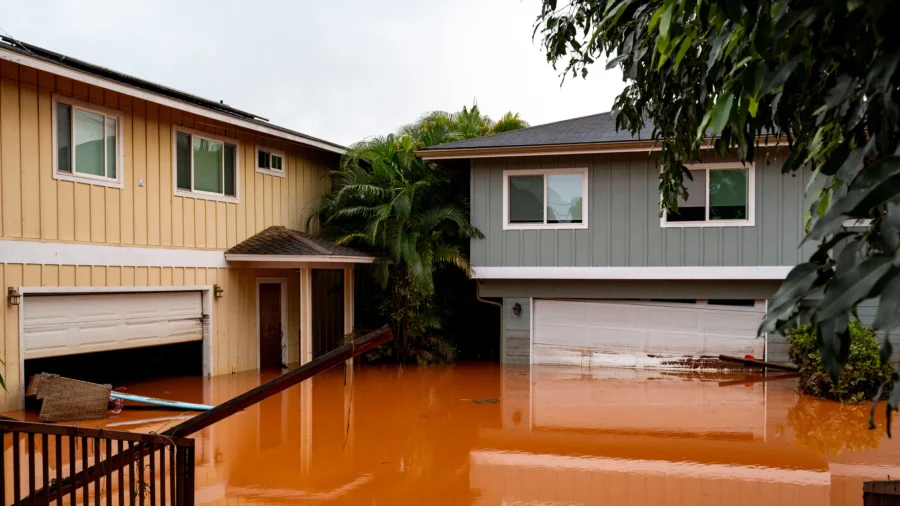
When they returned to their home days later, they found their kitchen counters coated in thick red volcanic silt, a reminder of the disaster that had unfolded.

The water may have receded, but the aftermath was far from over.
The residents of Walua and Haleiwa were allowed to return home by Saturday afternoon, only to discover that their properties were not submerged in water but buried under thick layers of reddish volcanic mud.
Molly Pierce, a spokesperson for Oahu’s Department of Emergency Management, described the mud as heavy and clinging, likening it to wet snow.
In some neighborhoods, residents had to wade through silt up to their knees just to reach their front doors.
By Sunday, Hawaiian Electric had restored power to around 1,200 customers in Walua, but thousands remained without electricity, and shelters began to close.
A boil water advisory was issued for the entire Northshore, as contaminated water supplies posed a significant health risk.

Residents were warned against drinking, cooking, or brushing their teeth with tap water unless it had been boiled first.
The situation took a turn for the worse on Monday when heavy rains returned, this time targeting Monoa Valley, just three miles from downtown Honolulu.
The rainfall intensified, with rates of 2 to 4 inches per hour, causing the Monoa stream to swell dramatically.
Principal Brian Gooseman at Noalani Elementary School reported that water rushed through the campus within minutes, submerging cars and creating dangerous conditions.
Fortunately, students remained safe inside their classrooms, but the cafeteria and school offices were inundated with muddy water.
Nearby, the University of Hawaii at Monoa faced similar challenges, with students forced to shelter in place as their cars were swept away by the floodwaters.
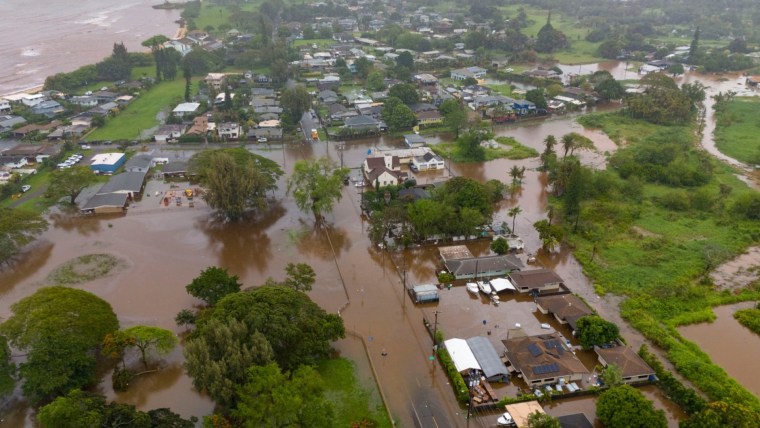
The mayor had previously declared that the worst was over, only for the situation to escalate dramatically within days.
The flooding that began on the Northshore spread southward, affecting urban areas and infrastructure.
A sinkhole opened on Kania Nioli Highway, leading to road closures and flash flood warnings throughout the region.
The consequences of the flooding are staggering, with 404 homes reported damaged or destroyed as of Monday, and the number is expected to rise.
The agricultural sector has taken a severe hit, with losses exceeding $9.4 million statewide.
Rescue efforts have been extensive, with over 236 individuals saved from perilous situations.
However, the aftermath poses new threats.
As the water recedes, mold becomes a pressing concern.
Hawaii’s tropical climate, with humidity levels rarely dropping below 70%, creates ideal conditions for mold growth.
Thousands of homes on the Northshore have been soaked for days, many of them wood-framed and without power to operate dehumidifiers.
The structural integrity of these homes may be compromised, and the health risks ᴀssociated with mold exposure are significant.
Governor Josh Green has publicly warned residents about the potential health hazards posed by contaminated water, naming specific pathogens that can lead to serious infections.

The boil water advisory remains in effect, and the contamination zone stretches from Mochalaya to Turtle Bay.
Water tankers have been deployed to ᴀssist those unable to boil their own water.
Compounding the crisis is the federal government’s response, which appears to be hampered by a lapse in funding.
FEMA’s website currently indicates that some transactions may not be processed, and no formal disaster declaration has been made for the March 20th flooding.
The governor has formally requested federal support, and while ᴀssurances have been given, the timeline for ᴀssistance remains uncertain.
Amidst all this, the Wahiwa Dam, built in 1906 and rated in poor condition, stands as a looming threat.

With a spillway that hasn’t been upgraded in over a century, the dam’s stability is a significant concern, especially with the next wet season approaching.
As the community begins the arduous process of recovery, the road ahead is fraught with challenges.
The ground remains saturated, and meteorologists caution that even a small amount of rain could trigger further flooding.
M Burton, a resident of Walua, aptly described the flooding event as a wakeup call, emphasizing the possibility that such storms may become more frequent in the future.
As residents continue to shovel mud from their homes and navigate the aftermath of this disaster, the question of preparedness for future events looms large.
The mud is still being cleared, the water tests are ongoing, and the threat of mold continues to grow.
The Wahiwa Dam, which nearly failed just days ago, remains standing on the same foundation it was built on in 1906, awaiting the next storm.


