Hawaii’s Skyline Rail Project: A Cautionary Tale of Ambition and Failure
As you navigate through the bustling streets of Honolulu, the sight of the H1 freeway during rush hour paints a familiar picture: a complete standstill.
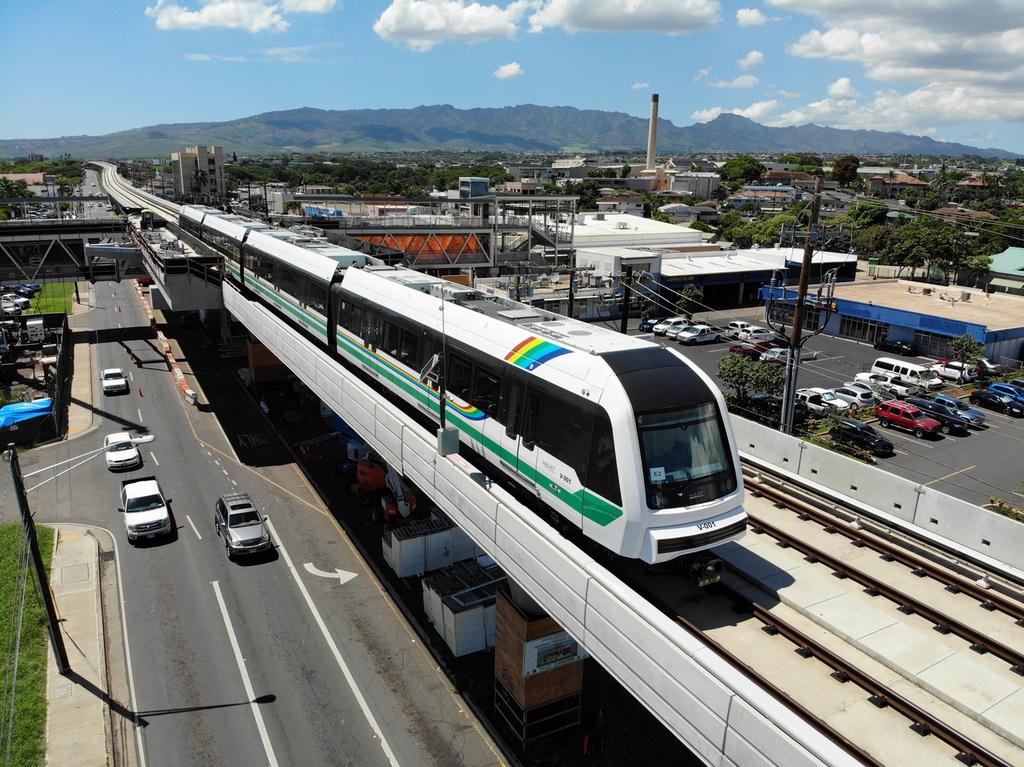
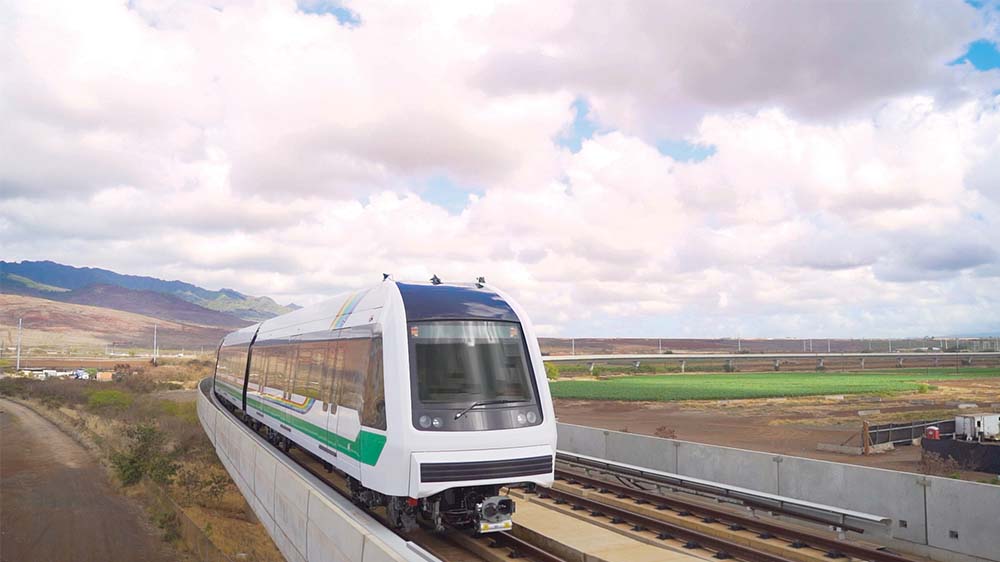
However, above this gridlock, a sleek driverless train glides along a concrete ribbon, representing America’s first fully automated large-scale urban metro system.
On paper, it appears to be a technological marvel, but a closer look at the financial figures reveals a different story—one of fiscal disaster.
Back in 2006, the draft plan for the Skyline rail project estimated a cost of $2.5 billion, with an expected completion date of 2020.
Fast forward to early 2026, and the price tag has skyrocketed to over $10 billion, with the most crucial segments of the line still not operational.

So, how did a project that has been in development for two decades end up feeling like an unfinished torso?
To grasp the urgency behind Hawaii’s need for this project, it’s essential to view Oahu as a closed system.
The island is not only small but also compressed, bordered by the Koʻolau Mountains on one side and the Pacific Ocean on the other.
Almost the entire population resides in a narrow corridor nestled between these two natural barriers, where jobs, schools, and the airport are located.
This corridor is also where the H1 freeway runs, consistently ranking among the most congested roads in the entire country.
With no room to expand the roads physically, the only feasible way to transport more people was to build vertically, leading the city to commit fully to the rail project.
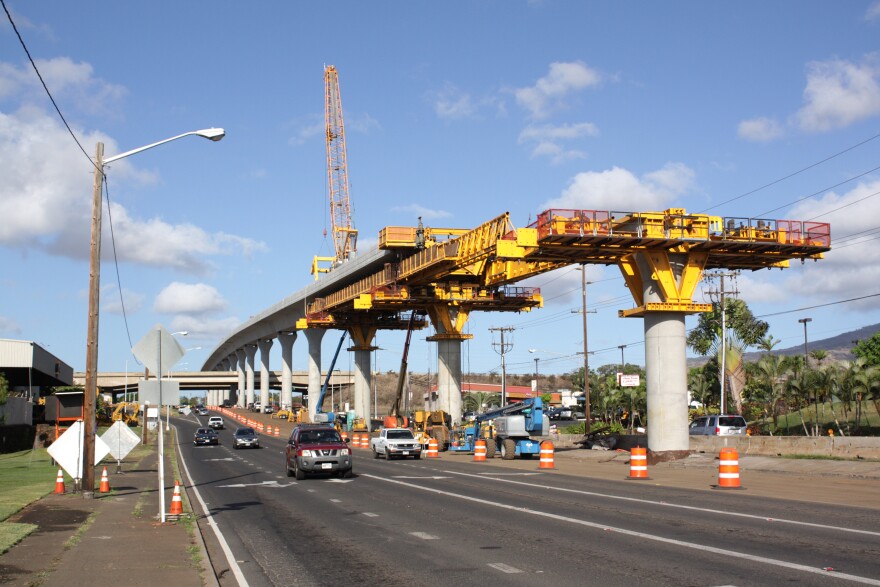
When you go all-in on an island with no margin for error, the stakes become incredibly high, especially when over $10 billion in public funds—sourced from federal, state, and county levels—are at play.
The Honolulu Authority for Rapid Transportation (HART) submitted multiple recovery plans from 2016 to 2019.
However, it wasn’t until 2022 that the Federal Transit Administration (FTA) approved the final plan, releasing the remaining $744 million in federal funds.
Currently, with only two segments open, the system is projected to incur an operational and maintenance cost of about $120 million annually.
Commuters were promised a 38-minute ride from East Kapolei in the western suburbs to downtown Honolulu by 2020, but that promise remains unfulfilled.
The people for whom the system was designed continue to endure traffic congestion.
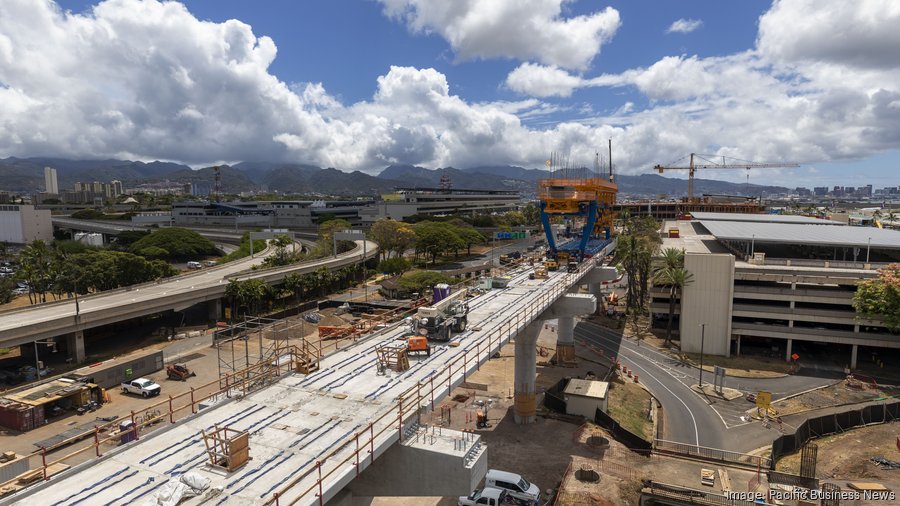
So, what went wrong with the plan?
Not entirely, as the project gradually drifted away from its original vision.
The initial concept included 19 stations spanning just under 19 miles from East Kapolei all the way to the Ala Moana Center, a major commercial and transit hub located at the edge of downtown Honolulu.
The entire line was meant to be elevated and fully automated from end to end.
Today, only 15 miles and 13 stations exist, with the latest milestone achieved in October 2025 when the airport extension opened, allowing direct train service from West Oahu to Honolulu’s International Airport.
While this connection is beneficial, it does not lead to downtown, where the majority of commuters need to go.
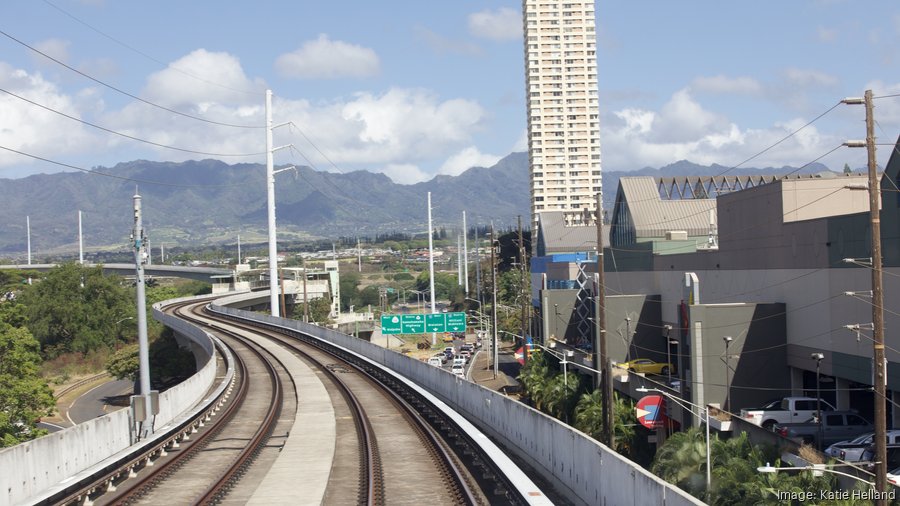
The critical stretch that would take people into the heart of the city—Segment 3, spanning three miles from Middle Street to the civic center—is still under construction, with a target completion date of 2031 that even federal officials are starting to doubt.
Additionally, in 2022, the city made a significant cut to the project by eliminating the final two stations, including the Ala Moana Center, to prevent further cost escalation.
This decision not only reduced the line’s reach but also undermined its original purpose as a transit solution for many riders.
To understand the technology behind this rail system is to delve into a realm not commonly seen in most American cities.
The trains operate without drivers, a rarity in the U.S., with everything managed from a centralized operation center that oversees driving, safety spacing, and real-time monitoring of all trains simultaneously.
The system was designed to run trains every three minutes during peak hours, but currently, they run every ten minutes.

This discrepancy isn’t due to technical limitations; the system could handle the frequency, but rather reflects the current ridership numbers on a line that doesn’t yet connect to the destinations most people need.
The tension at the core of this project lies in the fact that while the technology works and the infrastructure exists, the line was constructed from the suburban end inward, leaving critical urban destinations still under construction or removed altogether.
The strategy to open the line in phases has been fraught with challenges.
Segment one, which focused on the western foundation, opened in June 2023, but was delayed by three years.
Segment two presented its own logistical hurdles, including construction through active military land at Pearl Harbor and navigating strict height restrictions near the airport.
As work progressed, issues began to surface.

In 2016, a manufacturing defect in aluminum car shell components reportedly affected up to 27 rail cars during production, although later reports indicated that the problem was resolved.
During testing in 2020, engineers discovered that the train wheels were half an inch narrower than the track crossings, a significant oversight.
Now, all eyes are on segment three, which poses the most considerable challenge yet, requiring deep foundation work in a dense urban core filled with centuries-old unmapped utilities.
In August 2024, Tuttorini won the $1.66 billion contract for segment three, and while columns are finally rising in early 2026, the path ahead remains fraught with difficulties.
Examining why this project hit a wall reveals multiple layers of failure.

First, there were technical problems, such as the wheel-rail mismatch, which was just one example of poor oversight.
On segment two alone, dozens of change orders were necessary because the construction plans did not align with the reality of the underground utilities, many of which were not accurately mapped.
Second, governance and legal issues have compounded the delays.
In 2012, the Hawaii Supreme Court halted the project due to the city’s failure to adequately check for Native Hawaiian burial sites, known as iwi kūpuna, which are both sacred and legally protected.
This requirement led to years of redesigns and delays.
Simultaneously, a significant legal dispute has arisen, with Hitachi Rail suing the city for $320 million, alleging gross mismanagement.
According to the company, they were compelled to hire workers 18 months before the work was ready, leading to further complications.
The city has countered with its own lawsuit, resulting in a standoff that has stalled design work for the next phase.
Lastly, the financial planning was unrealistic from the outset.
The original cost estimates failed to account for Hawaii’s 20-30% labor cost premium, the complexities of island shipping logistics, or the mandatory archaeological survey requirements dictated by state law.
As the budget continued to swell, the city submitted repeated recovery plans to federal authorities.
In 2022, the project made a controversial cut known as the Ala Moana cut, removing two planned stations to save costs.
This decision weakened the system’s viability, contributing to a 30% shortfall in ridership that was not coincidental.
According to HART’s projections, the rail line no longer reaches one of the primary destinations that people travel to.
So, who truly benefits from this project?
For commuters in West Oahu or those heading to the airport, the system offers genuine advantages.
The connection alleviates some of the pressure on the H1 freeway.
However, for downtown workers, the wait continues until at least 2031, a date that is increasingly uncertain due to ongoing legal disputes with Hitachi.
The ridership statistics underscore the project’s challenges.
In February 2026, the system averaged around 11,500 rides daily, a fraction of what was anticipated for a $10 billion investment on an island grappling with severe traffic congestion.
The city faces a daunting financial gap, with the annual $120 million operational bill translating to approximately $28 per ride at current ridership levels—over ten times the fare.
![Hawaii] Honolulu's Rail Line Readies To Open 1st Section In 'June-ish' — Or Maybe July : r/transit](https://external-preview.redd.it/hawaii-honolulus-rail-line-readies-to-open-1st-section-in-v0-oC0sNASIzIw8Wg_ZHmqu3SQsiRTErkqrYyYSdjQPccc.jpg?auto=webp&s=3cfd8db9e061d5f099c5348cdac960452e192236)
This situation is unsustainable for a system designed primarily for suburban transit, while high-density destinations remain inaccessible.
Nonetheless, construction continues in the urban core, and the city recently pᴀssed Bill 60, allowing studies for potential rail extensions to Waikele and the University of Hawaii.
However, funding for these extensions remains elusive.
City leaders are even exploring partnerships with companies like Tokyo, a Japanese rail firm, in hopes that private investment could facilitate housing and development around rail stations, enhancing the system’s financial viability.
In many respects, Skyline serves as a textbook case of a broader issue: why major infrastructure projects in the U.S. often experience significant cost overruns and delays.
Early cost estimates can be overly optimistic to secure political backing, and when challenges arise, inadequate oversight complicates accountability.
Today, the trains are operational, and more sections are expected to open in the future.
However, the version of Skyline that voters approved in 2008 has evolved into something smaller, more expensive, and still incomplete.


