Shannon Lee Breaks Her Silence: The Truth Behind Bruce Lee’s Legacy
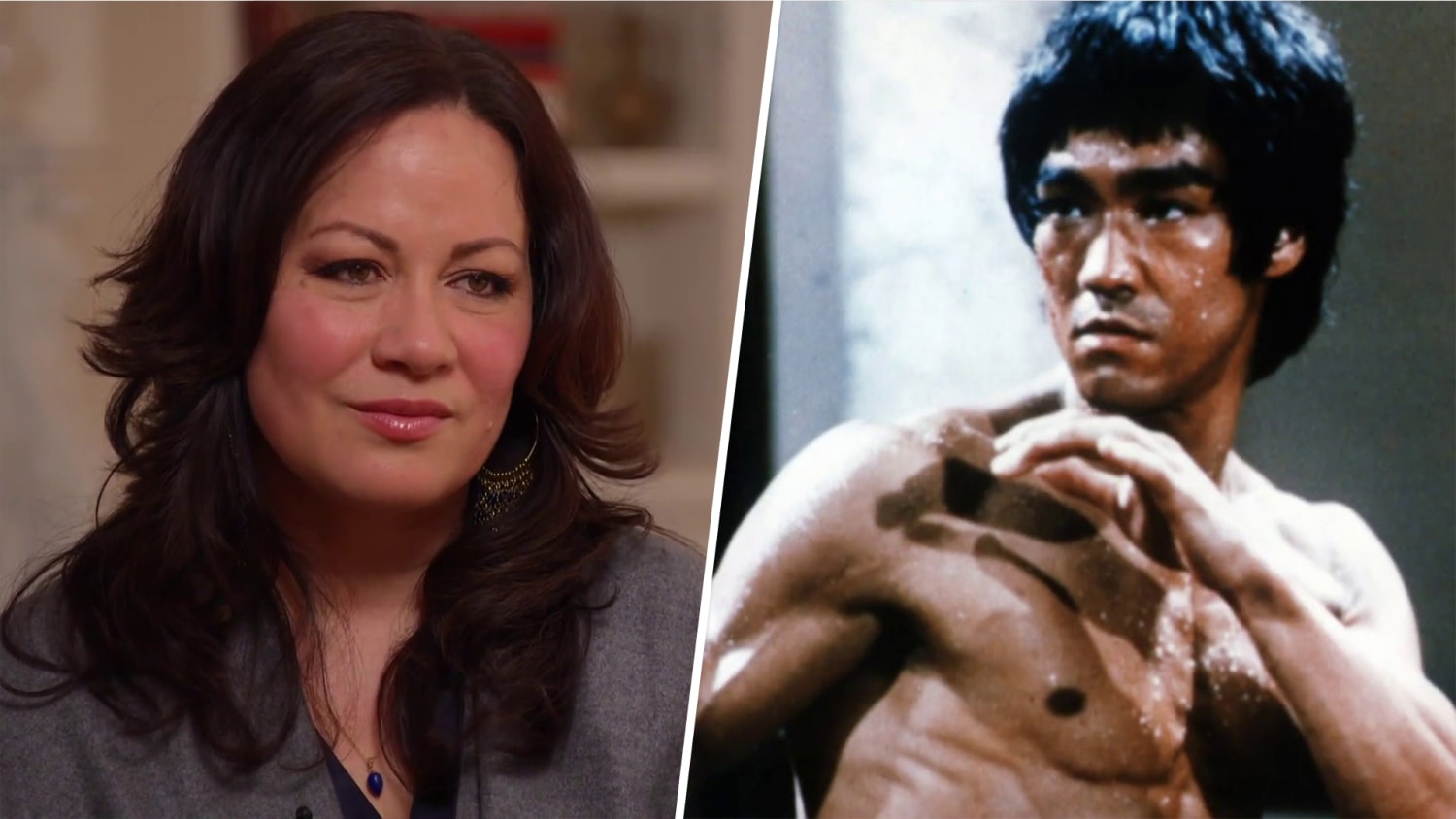
More than 50 years after Bruce Lee’s sudden death, his daughter Shannon Lee has stepped forward with a deeply personal mission: to reclaim her father’s story.
For decades, Bruce Lee has existed as both icon and enigma—martial arts master, Hollywood trailblazer, philosopher, and cultural revolutionary. Yet alongside admiration, a narrative slowly took shape portraying him as arrogant, angry, and difficult. Shannon, who was just four years old when her father pᴀssed away in 1973, believes that version of him tells only a fraction of the truth.
Through interviews and her book In My Own Process, Shannon has worked to present a fuller portrait of Bruce Lee—not merely as a warrior, but as a thinker, artist, husband, and father.

The public remembers Bruce Lee as the electrifying star of Enter the Dragon, the man whose speed and intensity redefined action cinema. But Shannon describes someone more layered and introspective.
She has emphasized that her father studied philosophy as intensely as he trained his body. While attending the University of Washington, Bruce immersed himself in both Eastern and Western thought—reading Lao Tzu and Chuang Tzu alongside Plato, Hume, and Aquinas. For him, martial arts was never just combat; it was self-expression.
He famously described his philosophy as “be like water”—a metaphor for adaptability, flow, and authenticity. That principle shaped not only his fighting style, Jeet Kune Do, but also his worldview. He rejected rigid systems, social hierarchies, and stereotypes, advocating instead for individual freedom and honest self-discovery.

According to Shannon, what some interpreted as arrogance was often simply confidence born from hard work—and a refusal to accept the limited roles Hollywood offered Asian actors in the 1960s.
“He worked on himself emotionally and mentally,” she has explained, stressing that her father was constantly striving to grow—not just as a martial artist, but as a human being.
Because Shannon was so young when Bruce died, her memories are emotional rather than cinematic. She does not recall box-office triumphs or film sets. She remembers warmth.

She has spoken about feeling safe, protected, and loved in his presence. She remembers playfulness and attention—a father who was fully engaged with his children despite growing fame.
That human dimension, she believes, has too often been overshadowed by mythmaking.
Bruce Lee’s death at age 32 stunned the world and gave rise to decades of speculation. Officially, he died from cerebral edema caused by a reaction to a pain medication. But alternative theories—from heat stroke to neurological conditions—have continued to surface over the years.
Shannon does not dwell on conspiracy. Instead, she focuses on preserving the integrity of his life and work.

After Bruce’s death, Shannon’s mother, Linda Lee Cadwell, worked tirelessly to protect and promote his philosophy. Later, Shannon ᴀssumed that responsibility herself.
As CEO of the Bruce Lee Family Company and president of the Bruce Lee Foundation, she has overseen projects that honor her father’s ideas while introducing them to new generations. Initiatives such as Camp Bruce Lee encourage children to build confidence, resilience, and self-awareness—values central to Bruce’s teachings.
Her role has also extended into Hollywood. Shannon served as executive producer of Warrior, a television series inspired by a concept her father originally developed. Set in 19th-century San Francisco, the show explores themes of immigration, idenтιтy, and struggle—subjects Bruce cared deeply about.

For Shannon, legacy is not about branding. It is about context.
The Lee family has endured more than one tragedy. In 1993, Shannon’s older brother Brandon Lee died in a prop gun accident on the set of The Crow, reopening wounds the family had carried since Bruce’s death.
That loss profoundly shaped Shannon’s outlook. In recent years, she has become an outspoken advocate for stricter safety standards on film sets. Following the fatal shooting of cinematographer Halyna Hutchins in 2021, Shannon publicly called for reforms, drawing from her family’s painful history.
Her advocacy reflects a consistent theme: honoring her father and brother not only through memory, but through meaningful action.
Bruce Lee transformed global perceptions of Asian masculinity and representation. Before his arrival, Asian men in American cinema were often relegated to stereotypes—submissive, comic, or peripheral figures. Bruce shattered those limits, presenting a confident, disciplined, and complex hero.
Shannon argues that his impact extended far beyond martial arts. He inspired communities across racial and cultural lines, particularly among audiences who recognized in him a symbol of empowerment.
More than half a century later, his influence remains visible in action films, mixed martial arts, and popular culture worldwide.

Shannon Lee’s “silence” was never about secrecy. It was about timing.
Now, decades later, she speaks not to shock, but to clarify. Her father was not flawless. He was human. He experienced frustration, ambition, doubt, and pressure. But he was also thoughtful, disciplined, loving, and deeply philosophical.
In reclaiming his narrative, Shannon invites the world to see Bruce Lee not just as a legend frozen in cinematic intensity—but as a man who sought truth through movement, words, and self-discovery.
And perhaps that fuller understanding is the most powerful legacy of all.


