RELIGIOUS WORLD ROCKED AS MEL GIBSON POINTS TO ANCIENT ETHIOPIAN SCRIPTURES THAT COULD REWRITE EVERYTHING WE THOUGHT WE KNEW ABOUT JESUS!
Just when you thought Hollywood had exhausted every possible reboot, remake, and resurrection storyline, along comes a headline that makes even seasoned theologians spill their coffee: Mel Gibson says the Ethiopian Bible reveals a side of Jesus we’ve “never heard about.”
Yes, that Mel Gibson.
The actor-director who brought us The Pᴀssion of the Christ is once again orbiting the theological stratosphere, and this time he’s pointing toward one of Christianity’s most ancient scriptural traditions — the Ethiopian Bible — as a treasure chest of overlooked material.
Cue dramatic music.
Cue social media outrage.
Cue at least one cable news panel where someone dramatically asks, “What are they hiding?”
Let’s unpack what’s actually going on — and why the internet reacted as if someone just discovered a deleted scene from the Gospels where Jesus starts a podcast.
First, What Is the Ethiopian Bible?
Before we dive into shock, horror, and viral hashtags, let’s get grounded in reality.
The Ethiopian Bible belongs to the Ethiopian Orthodox Tewahedo Church, one of the oldest Christian traditions in the world.
Christianity has been present in Ethiopia since the 4th century.
Unlike most Western Christian canons, the Ethiopian biblical canon includes additional books not found in Protestant Bibles and even some not found in Catholic or Eastern Orthodox versions.
These include texts like 1 Enoch, Jubilees, and other writings that were widely read in ancient Jewish and early Christian communities but later excluded from many mainstream biblical canons.
That’s not secret.
That’s history.
The Ethiopian canon is simply broader.

It’s not a shadowy vault of forbidden revelations.
It’s a different branch of a very old tree.
So What Did Mel Actually Suggest?
In various interviews and discussions over the years, Mel Gibson has expressed interest in early Christian traditions, apocryphal texts, and theological themes not commonly emphasized in Western churches.
When references to the Ethiopian Bible pop up in those conversations, they often revolve around books like 1 Enoch — a text that elaborates on angels, cosmic rebellion, and apocalyptic imagery.
And that’s where the tabloid engines start revving.
Because when you say “ancient book,” “not in your Bible,” and “reveals something different about Jesus,” people hear: SECRET TRUTH UNLOCKED.
But the reality is more nuanced.
Texts like 1 Enoch don’t suddenly introduce a radically new version of Jesus.
Instead, they provide context for the religious world in which early Christianity developed.
The Book of Enoch, for instance, contains apocalyptic themes and “Son of Man” imagery that scholars say influenced early Christian thought.
It’s not a deleted gospel where Jesus rides a dragon into Jerusalem.
It’s theological background.
But background doesn’t trend on social media.
“Hidden Jesus” does.
The Internet Does What It Does Best
Within hours of headlines suggesting that “the Ethiopian Bible reveals a side of Jesus we’ve never heard about,” the reactions poured in.
One corner of the internet shouted triumphantly: “See? The real story was suppressed!”
Another corner sighed heavily: “Please read a book.”
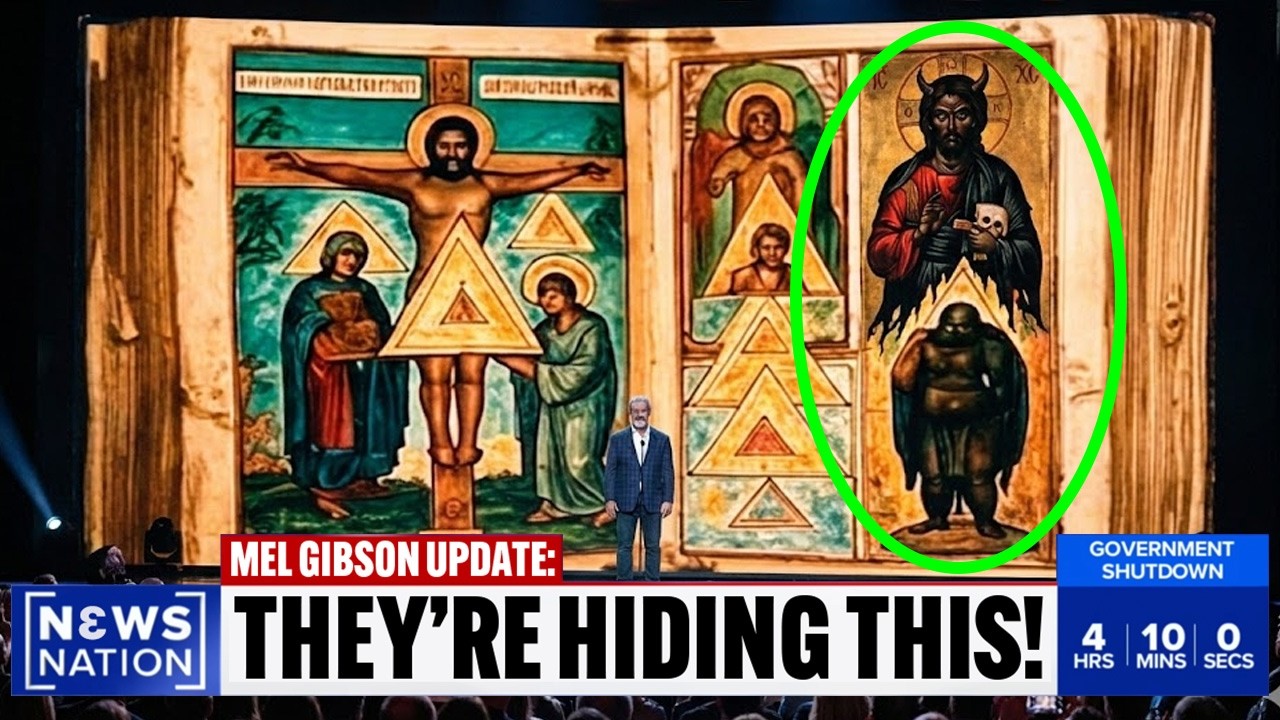
Somewhere in between, a YouTube channel uploaded a thumbnail with glowing eyes, lightning bolts, and the words: THE TRUTH THEY FEAR.
The problem isn’t that the Ethiopian canon exists.
It always has.
The problem is the way modern media packages ancient diversity as a conspiracy thriller.
And Mel Gibson, whether intentionally or not, has a knack for igniting that packaging.
The “Different Side” of Jesus — What Does That Even Mean?
Let’s slow down.
When people talk about a “different side” of Jesus in broader biblical traditions, they’re usually referring to emphasis, not idenтιтy.
Western Christianity often focuses heavily on themes like atonement, forgiveness, and individual salvation.
Apocalyptic literature — including texts preserved in the Ethiopian canon — tends to emphasize cosmic justice, divine judgment, and the ultimate defeat of evil forces.
That’s not a new Jesus.
That’s a different spotlight.
If anything, it highlights how early Christian theology existed within a vibrant Jewish apocalyptic tradition.
Jesus’ references to the “Son of Man” in the canonical Gospels already echo imagery found in books like Daniel and Enoch.
Scholars have discussed this for decades.
But scholarship rarely trends.
Fake Expert Corner (Because This Is a Tabloid, After All)
Dr.
Ezekiel Thunderstone, “Professor of Ancient Mysteries” (a man who definitely owns at least three tweed jackets), allegedly declared:
“The Ethiopian canon doesn’t rewrite Jesus.
It contextualizes him.
The drama comes from modern audiences ᴀssuming uniformity where history shows diversity.
”
Translation: Christianity was never a monolith.
Meanwhile, Sister Abeba Tesfaye (a fictional but dignified Ethiopian theologian in our tabloid imagination) calmly states:
“Our tradition has preserved these texts for centuries.
They were never hidden.
They were simply ours.”
That might be the most dramatic anti-climax in religious controversy history.
Why It Feels Explosive Anyway
Here’s the twist: Western audiences often ᴀssume that their version of the biblical canon is universal.
It’s not.
The Protestant Bible contains 66 books.
The Catholic Bible has 73.
The Ethiopian Orthodox canon includes even more.
None of these traditions accidentally misplaced the others’ texts under the couch cushions.

Canon formation was a long historical process shaped by theology, geography, and ecclesiastical authority.
When someone like Mel Gibson gestures toward a broader canon and says, “There’s more here,” it can feel destabilizing to people who equate familiarity with completeness.
But plurality is not the same as conspiracy.
Hollywood Meets Ancient Theology
Let’s be honest.
Part of the fascination here is the messenger.
Mel Gibson is not a quiet parish librarian.
He is a Hollywood figure known for dramatic storytelling and religious intensity.
When he talks about ancient scripture, it doesn’t sound like a graduate seminar.
It sounds like a trailer voiceover.
“In a world… where the truth was buried…”
And that tone shapes public perception.
If a university professor says, “The Ethiopian canon preserves apocalyptic literature that influenced early Christology,” it lands softly.
If a filmmaker says, “There’s a side of Jesus they never told you about,” it lands like a thunderclap.
Same content.
Different soundtrack.
The Ethiopian Perspective Gets Lost
Ironically, amid all the viral drama, the Ethiopian Orthodox Church itself often becomes background noise in the conversation.
For Ethiopian Christians, these texts are not shocking revelations.
They are part of a living tradition.
The global fascination sometimes treats their canon like an archaeological dig site rather than a continuous religious practice.
That says more about modern Western curiosity than about ancient secrecy.
The story isn’t “hidden Bible discovered.”
It’s “global Christianity is more diverse than you realized.”
The Apocalyptic Angle
Let’s talk about the real spice in this story: apocalyptic imagery.
Books like 1 Enoch contain vivid descriptions of fallen angels, heavenly journeys, divine judgment, and cosmic battles.
It’s dramatic.
It’s symbolic.
It’s intense.
And yes, it influenced early Christian thought.
When people hear that such imagery shaped early understandings of Jesus as the “Son of Man,” they sometimes leap to the conclusion that there’s a radically different Christology lurking in the shadows.
There isn’t.
The canonical Gospels already present Jesus within apocalyptic expectations.
The Ethiopian canon simply preserves more of the surrounding literary landscape.
It’s like discovering the extended director’s commentary.
Not a different movie — just more context.
Dramatic Twist: The “Hidden” Was Never Hidden

Here’s the part that deflates the conspiracy balloon.
The Ethiopian canon has been known to scholars for centuries.
Western academics have studied 1 Enoch extensively.
Portions of Enoch were even found among the ᴅᴇᴀᴅ Sea Scrolls, confirming its ancient Jewish origins.
This isn’t new information bursting out of a Vatican vault.
It’s longstanding scholarship suddenly repackaged for viral consumption.
Sometimes the scariest revelation isn’t secret knowledge.
It’s realizing how little we paid attention in history class.
Why People Want a “Different” Jesus
Let’s zoom out.
Stories about alternate biblical texts gain traction because people are hungry for complexity.
A “hidden side” suggests depth, mystery, untold layers.
It also taps into a cultural suspicion that insтιтutions conceal things.
So when someone implies that a broader canon shows something “they never told you,” it resonates emotionally.
Even if “they” is undefined.
Even if “never told you” really means “wasn’t part of your denomination’s reading list.
”
So… Is It Worse Than We Thought?
If you were expecting a scandalous alternate gospel where Jesus delivers secret cosmic pᴀsswords, you’ll be disappointed.
If you were hoping for proof that centuries of theology were one giant cover-up, you’ll need to recalibrate.
What the Ethiopian Bible reveals is not a different Jesus.
It reveals a wider early Jewish-Christian world than many Western believers are used to imagining.
It reveals that Christianity grew in multiple regions, with overlapping but distinct textual traditions.
And perhaps most dramatically of all, it reveals that history is complicated.
Final Word Before the Comment Section Explodes
Mel Gibson pointing to the Ethiopian Bible may feel explosive because it combines celebrity, religion, and mystery — three ingredients guaranteed to ignite headlines.
But beneath the noise lies something far less scandalous and far more interesting.
Ancient Christianity was diverse.
Canon formation was complex.
The Ethiopian Church preserved texts that others did not.
Scholars have studied them for generations.
The “side of Jesus we’ve never heard about” isn’t a new character.
It’s a reminder that faith traditions develop in conversation with culture, geography, and history.
And maybe the real shock isn’t what the Ethiopian Bible contains.
Maybe it’s realizing that the global story of Christianity has always been bigger than the version printed in your childhood pew.
Now excuse us while the internet argues about it for the next six months.


