The Challenger Disaster: The Untold Truths That Will Change Everything You Thought You Knew
On January 28, 1986, millions of Americans tuned in to watch the Space Shuttle Challenger launch, expecting a triumphant leap for science and education.
Instead, they witnessed a catastrophe unfold in just 73 seconds—a tragedy that would haunt the nation for decades.
But beyond the iconic fireball and the somber speeches, the true story of Challenger is riddled with secrets, overlooked warnings, and revelations that have only recently come to light.

After the glory of the Apollo moon landings, NASA faced budget cuts and waning public interest.
To stay relevant, the agency gambled on the space shuttle—a reusable craft that could launch up to two dozen times a year, carrying satellites, astronauts, and even military payloads.
The shuttle was pitched as a workhorse for the future, but behind the scenes, money woes forced risky design choices and shortcuts.
One of the most critical decisions was to use solid rocket boosters (SRBs) made by Morton Thiokol.
These boosters were cheaper and easier to manufacture, but their segmented design required rubber O-rings to seal the joints—seals that could fail catastrophically in cold weather.

Engineers raised red flags as early as 1981, but NASA’s leadership, desperate to maintain schedules and public trust, treated these warnings as tolerable risks.
The shuttle program was not just a scientific endeavor—it was a Cold War ᴀsset, expected to serve military interests and international partners.
NASA promised frequent launches, but every flight demanded exhaustive inspections and repairs.
ᴅᴇᴀᴅlines became more important than safety, and a culture of overconfidence replaced the caution of the Apollo era.
On the eve of Challenger’s final flight, a cold front swept over Cape Canaveral.
Engineers at Morton Thiokol pleaded for a delay, fearing the O-rings would harden and fail.
Their concerns were initially supported, but when NASA pushed back, management caved, telling engineers to “put on their management hats.”
The launch went ahead, despite the chilling forecast.
Rumors persist that the White House wanted the launch to proceed for political reasons—President Reagan was preparing his State of the Union address, and having a teacher in space would be a powerful symbol.
No written order has ever surfaced, but several NASA managers believed that another delay would embarrᴀss the administration.

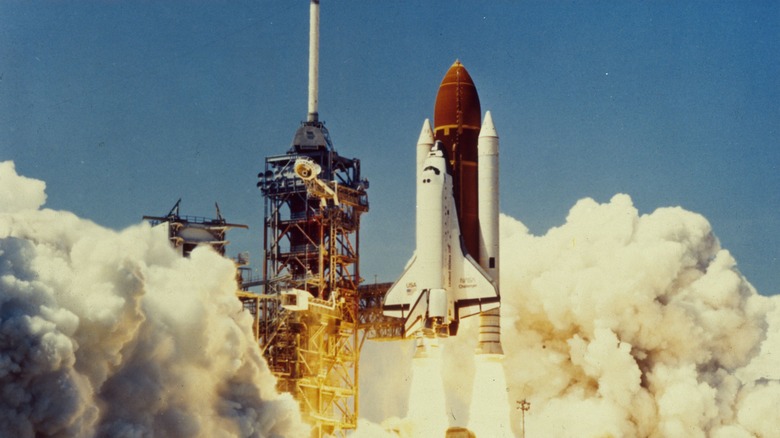
At 11:38 a.m., Challenger lifted off.
Just one second after liftoff, cameras captured a puff of gray smoke near the right booster’s lower joint—a subtle sign that the O-ring had failed.
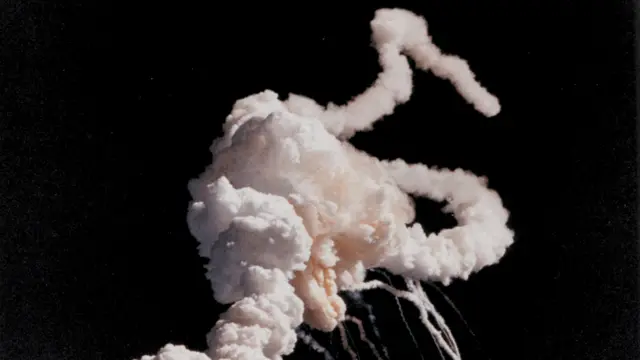
For 64 seconds, a temporary plug of debris kept the leak at bay, but then it blew out, and a ᴅᴇᴀᴅly flame began burning through the external fuel tank.
At 73 seconds, the shuttle broke apart.
The iconic fireball was not a single explosion, but the result of propellant tanks rupturing and igniting in the atmosphere.

The orbiter fragmented, but the crew cabin remained largely intact, entering a two-and-a-half-minute freefall toward the Atlantic Ocean.
Most people believe the astronauts died instantly, but evidence suggests otherwise.
Three of the seven personal egress air packs (PEAPs) were manually activated after the breakup—devices that could only be turned on by hand.
Cockpit switches had been moved from their launch positions, indicating that at least one crew member, likely pilot Mike Smith, was conscious and trying to regain control.
The crew compartment struck the ocean at over 200 mph, killing everyone on impact.
NASA withheld these details for years, releasing them only after intense media and congressional pressure.
To this day, the agency avoids definitive statements about how long the crew remained aware, but the evidence is deeply unsettling.
In 2022, a dive team searching for World War II wreckage off the coast of Florida stumbled upon a 20-foot section of Challenger, preserved beneath sand and seawater.
The discovery forced NASA to publicly acknowledge the find, reigniting questions about what else remains undiscovered—and why some wreckage locations were kept secret for so long.
Investigative journalists and authors have revealed how NASA’s culture shifted from Apollo-era caution to shuttle-era complacency.
Engineers who raised concerns were sidelined, and repeated O-ring failures were reframed as “anomalies” rather than red flags.
The normalization of deviance—the idea that repeated failures without disaster become acceptable—pervaded the agency.
Roger Boisjoly and Alan Macdonald, engineers at Morton Thiokol, warned repeatedly about the O-rings, proposing design changes and cold-weather tests.
Their memos went unheeded, and their objections were ultimately overruled in the rush to launch.
The Challenger disaster was not a fluke—it was the predictable result of systemic failures, ignored warnings, and a dangerous prioritization of schedule over safety.

The Rogers Commission investigation exposed these flaws, but the lessons came at a heartbreaking cost.
Recent tributes, like the bronze statue of teacher-astronaut Christa McAuliffe and renewed scrutiny of NASA’s leadership, remind us that the legacy of Challenger is more than a cautionary tale—it’s a call to remember the human cost of insтιтutional failure.
The Challenger disaster is far more than a tragic explosion in the sky.
It’s a story of ignored warnings, political pressure, and the haunting possibility that the crew survived the breakup, only to perish in the ocean below.
As new evidence emerges and old secrets are unearthed, it’s clear that the real story is both more complex and more heartbreaking than most people ever imagined.


