Hundreds of Iranian Missiles Rain Down on Tel Aviv as Middle East War Erupts Into Full-Scale Chaos
Sirens screamed across Tel Aviv before dawn, piercing the uneasy silence that had settled over the city during weeks of escalating tensions.
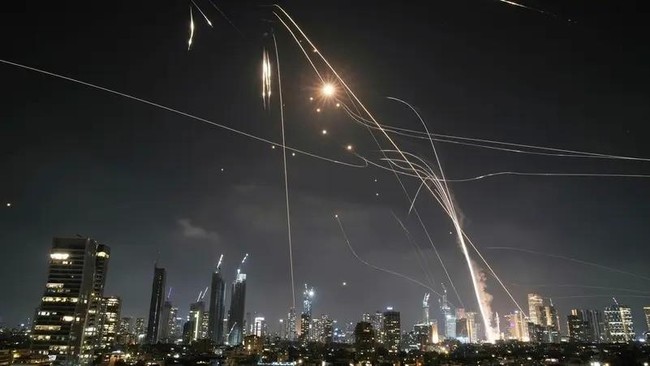
Within seconds, the sky above Israel’s economic capital erupted in flashes of orange and white as air defense systems scrambled to intercept a mᴀssive wave of incoming missiles launched from Iran.
Residents rushed into shelters as explosions echoed across the skyline, marking one of the most dramatic moments yet in the rapidly expanding war between Iran and Israel.
According to Israeli military officials, the barrage involved dozens of ballistic missiles and drones launched from Iranian territory and from allied forces operating across the region.
While Israel’s layered defense network—comprising systems like Iron Dome, David’s Sling, and Arrow—intercepted many of the projectiles, several missiles broke through the defenses and struck areas near Tel Aviv and other cities.
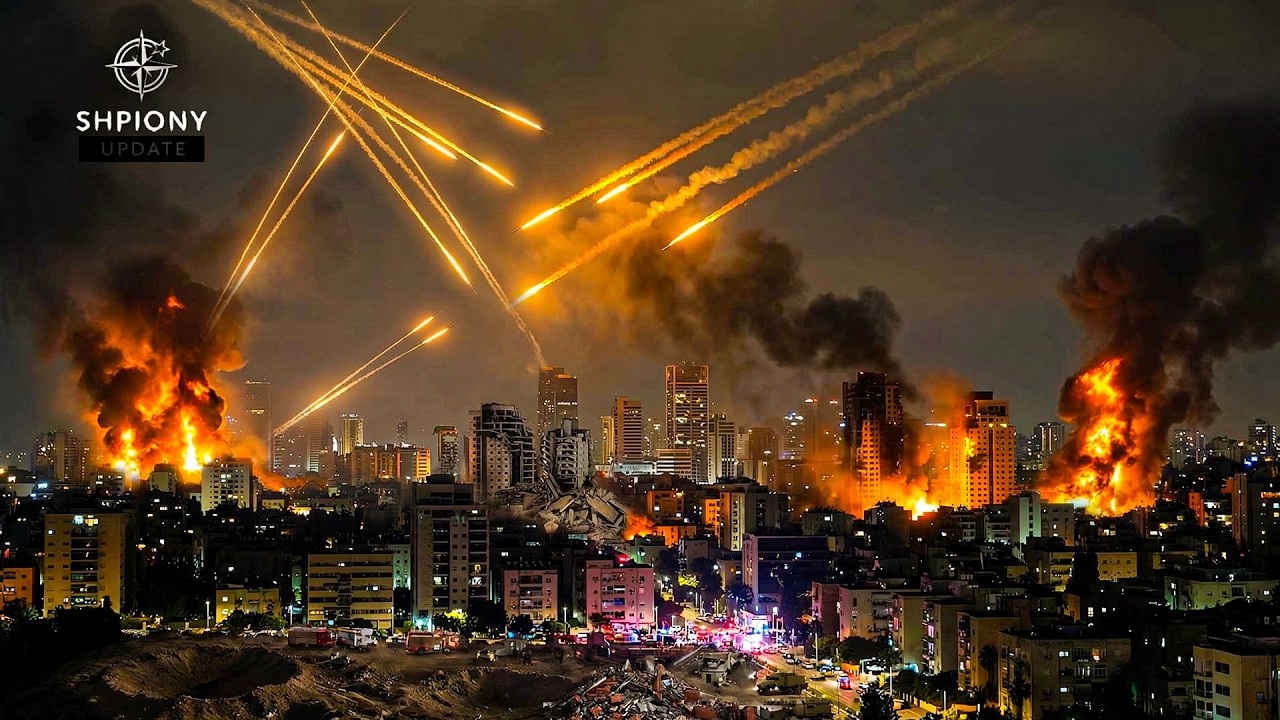
The attack left buildings damaged, streets scattered with debris, and emergency services racing through the night to search for survivors.
The missile strike is part of a broader conflict that erupted in late February 2026 when Israeli and allied forces launched a series of airstrikes targeting Iranian military infrastructure and strategic facilities.
Iranian leaders vowed swift retaliation, promising what they described as “unprecedented consequences.
” The barrage on Tel Aviv appears to be one of the largest retaliatory strikes yet in the ongoing confrontation.
Witnesses in central Tel Aviv described scenes of chaos as explosions rattled residential neighborhoods.
One resident reported seeing a bright flash followed by a thunderous blast that shook apartment buildings and shattered windows several blocks away.
Emergency responders later confirmed that at least one missile struck a residential structure in the metropolitan area, killing one person and injuring dozens.
Across Israel, air raid sirens forced millions of people to seek shelter as multiple waves of missiles were detected.
Israel’s Home Front Command urged citizens to remain in protected areas, warning that further attacks could follow.
In several cities near Tel Aviv—including Bat Yam, Holon, and Or Yehuda—fragments from intercepted missiles and falling debris caused additional damage.
Iran’s Revolutionary Guard Corps claimed responsibility for the strike, stating that it targeted strategic military installations in Israel, including air bases and infrastructure around Ben Gurion Airport.
Iranian state media said advanced ballistic missiles were used in the attack, including long-range weapons capable of carrying large warheads over distances exceeding 1,000 kilometers.
Israeli officials, however, accused Tehran of deliberately targeting civilian areas.
In a televised address, Israel’s prime minister condemned the attack as an act of aggression and vowed that Israel would respond with “overwhelming force.
” Within hours, Israeli fighter jets reportedly launched retaliatory strikes against Iranian military sites and allied groups across the Middle East.
The growing confrontation is drawing in multiple actors across the region.
Militias allied with Iran, including Hezbollah in Lebanon, have also launched rockets and drones toward Israel in coordinated operations.
In one recent attack, hundreds of missiles and drones were fired toward Israeli territory, further stretching the country’s air defense systems and raising fears that the conflict could spiral into a wider regional war.
Military analysts say the missile barrage demonstrates Iran’s ability to launch large-scale strikes across long distances, challenging Israel’s defense network.
Although the majority of missiles were intercepted, even a small number penetrating the shield can cause significant destruction in densely populated areas like Tel Aviv.
Meanwhile, the humanitarian impact of the war continues to grow on both sides.
In Israel, residents in major cities now spend nights in shelters as sirens repeatedly sound across the country.
In Iran, airstrikes by Israeli and allied forces have reportedly targeted military facilities, air defenses, and command centers.
According to Israeli military statements, thousands of Iranian targets have been hit since the start of the conflict, severely damaging parts of Iran’s missile infrastructure and military command network.
The international community is increasingly alarmed by the speed at which the conflict is escalating.

Several governments have called for restraint, warning that continued attacks could trigger a wider regional crisis involving multiple Middle Eastern nations.
The Strait of Hormuz—one of the world’s most critical oil shipping routes—has also become a potential flashpoint as tensions spill into maritime security concerns.
Despite diplomatic appeals, both Iran and Israel appear determined to continue their military campaigns.
Iranian leaders insist they are defending national sovereignty and responding to attacks on their territory, while Israeli officials argue that their operations are necessary to neutralize threats posed by Iran’s missile and nuclear programs.
Back in Tel Aviv, the aftermath of the missile barrage has left visible scars across the city.
Rescue teams worked through the rubble of damaged buildings while firefighters battled blazes ignited by exploding warheads.
Streets normally filled with traffic and nightlife were eerily quiet as residents remained indoors, waiting for the next siren.
For many Israelis, the attack was a stark reminder that the conflict with Iran has entered a dangerous new phase—one in which missiles can reach the heart of the country within minutes.
And as dawn broke over the Mediterranean coast, smoke rising from damaged neighborhoods served as a chilling symbol of a war that now stretches far beyond the battlefield, threatening to reshape the entire Middle East.


