Walls of Water and Howling Winds as Sicily Faces One of Its Harshest Storms 🌊
Italy woke up to a rapidly escalating weather emergency as a powerful cyclone pushed into the central Mediterranean, sending shockwaves of fear through coastal communities.
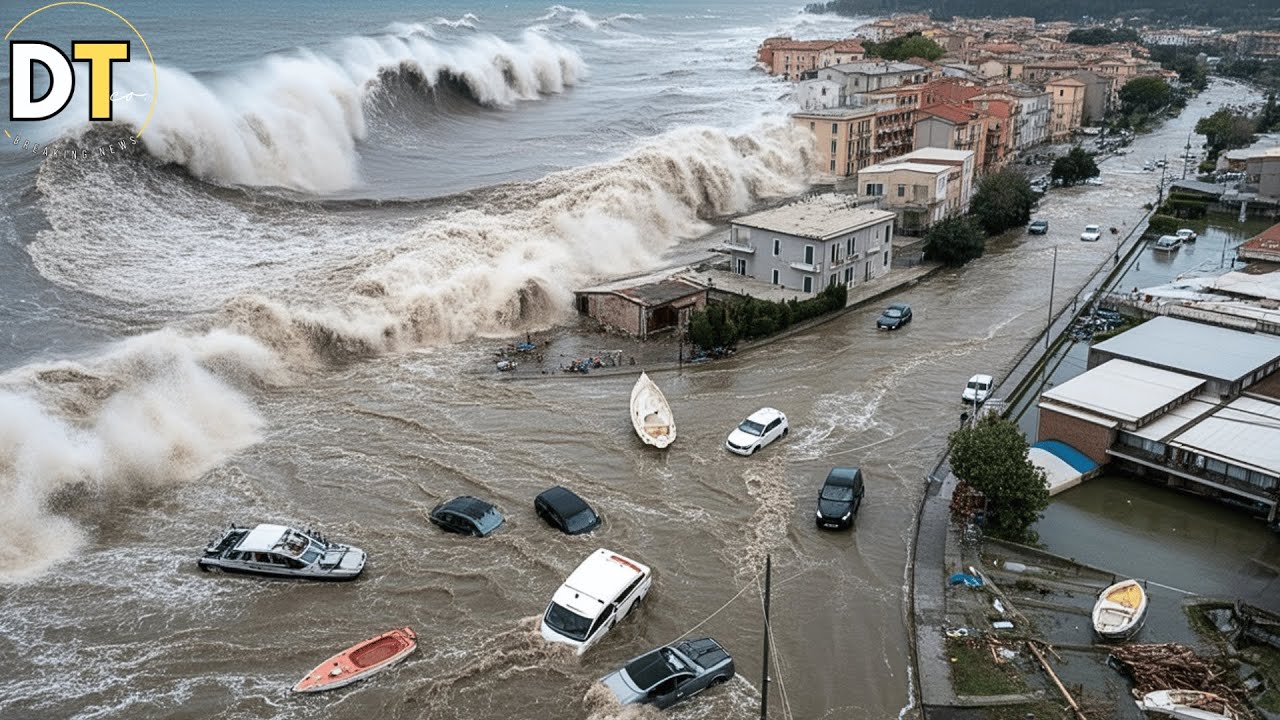
Along the southern edge of the country, the island of Sicily became the epicenter of chaos as towering waves, violent winds, and dangerous storm surges slammed into the coastline with little warning.
What began as a developing system at sea quickly transformed into a life-threatening event, leaving residents and authorities scrambling to respond.
By early morning, the Mediterranean had turned hostile.
Waves estimated to reach up to eight meters crashed relentlessly against ports, promenades, and sea walls.
Entire stretches of coastline disappeared beneath churning water, while winds tore through seaside towns with enough force to rip apart roofs, uproot trees, and send debris flying through narrow streets.
The roar of the sea drowned out sirens as emergency crews fought to keep up with rapidly worsening conditions.
Fishermen were among the first to witness the storm’s ferocity.
Boats moored in harbors were violently thrown against docks, some breaking free and smashing into one another.
In several coastal towns, harbors were temporarily shut down as authorities warned that remaining vessels risked being destroyed if they stayed in the water.
Footage shared by locals showed waves surging over breakwaters designed to withstand decades of storms, now overwhelmed by the sheer power of the sea.
As the cyclone intensified, storm surges began pushing seawater deep into low-lying areas.
Streets near the coast flooded within minutes, turning familiar roads into fast-moving rivers.
Cars were left partially submerged, shops were inundated, and ground-floor homes took the brunt of the invasion.
In some neighborhoods, residents rushed to higher floors carrying only essentials, unsure when or if the water would recede.
The wind proved just as destructive.
Gusts howled across the island, slamming shutters, snapping power lines, and cutting electricity to thousands of homes.
Inland areas were not spared, as heavy rain combined with wind to trigger landslides and falling trees.
Emergency services reported a surge in calls from people trapped by flooding or blocked roads, while firefighters worked nonstop to clear debris and rescue those in danger.
Meteorologists described the cyclone as unusually intense for the region, fueled by warm sea surface temperatures and unstable atmospheric conditions.
The Mediterranean, often perceived as calm compared to the world’s major oceans, showed its capacity for extreme violence.
Experts warned that such systems can escalate rapidly, leaving little time for preparation, especially in densely populated coastal zones.
Local governments moved quickly to issue red alerts across southern Italy.
Schools were closed, ferry services suspended, and residents urged to stay indoors.
In Sicily, authorities advised people to avoid coastal roads entirely, warning that waves could sweep vehicles into the sea without notice.
The message was clear: this was not a storm to watch from the shoreline.
Hospitals activated emergency protocols as power outages and transportation disruptions complicated access.
Medical staff prepared for injuries related to flooding, flying debris, and exposure.
In several towns, emergency shelters were opened to accommodate families forced to evacuate their homes.
Volunteers worked alongside civil protection teams, distributing blankets and food as the storm continued to rage outside.
As daylight faded, the full scale of the damage became harder to ᴀssess.
Darkness, rain, and wind limited visibility, but reports indicated significant destruction along exposed stretches of coast.
Seawalls were damaged, beaches were stripped away, and infrastructure suffered under constant ᴀssault.
Economically, the storm threatened tourism, fishing, and transport, vital lifelines for many Sicilian communities.
Across Italy, the event reignited debate over preparedness and climate resilience.
Scientists have long warned that warming seas can intensify storms, increasing the likelihood of extreme wave events and destructive surges.
What was unfolding in Sicily appeared to be a stark example of those predictions materializing in real time.
For residents, the experience was deeply unsettling.
Many described the sound of the storm as unlike anything they had heard before, a continuous thunder that shook buildings and nerves alike.
Social media filled with images of waves towering over coastal roads and water pouring into city centers, drawing attention from across Europe as people watched the situation unfold.
As the cyclone slowly moved eastward, forecasts suggested that dangerous conditions could persist for days.
Even after winds eased, authorities warned that rough seas and residual flooding would continue to pose serious risks.
Cleanup efforts would be slow and difficult, particularly in areas where infrastructure had been compromised or access remained blocked.
The storm’s aftermath is expected to leave lasting scars.
Beyond physical damage, the psychological impact on communities repeatedly exposed to extreme weather is growing.
Many residents expressed fear that events once considered rare are becoming disturbingly frequent, forcing them to rethink life along the coast.
What happened in Sicily serves as a dramatic reminder of nature’s power and unpredictability.
A single storm transformed the Mediterranean into a battlefield of wind and water, testing emergency systems and personal resilience alike.
As Italy begins to count the cost and repair the damage, one question lingers: how many more storms like this will the region face in the years ahead?
For now, attention remains fixed on the sea.
With waves still crashing and winds refusing to fully subside, Sicily waits, battered but alert, hoping the worst has pᴀssed while bracing for whatever the restless Mediterranean may unleash next.


