“Feminine Spirit of God?” – A Church Moment Ignites Fierce Debate
A recent church ceremony involving Pastor Jamal Bryant has sparked intense online debate after a statement referencing the “feminine spirit of God” quickly went viral.
What may have been intended as a symbolic or celebratory moment has instead become a lightning rod for criticism, confusion, and deeper theological discussion.
The moment occurred during a special presentation in which Bryant was honored with a ceremonial robe.
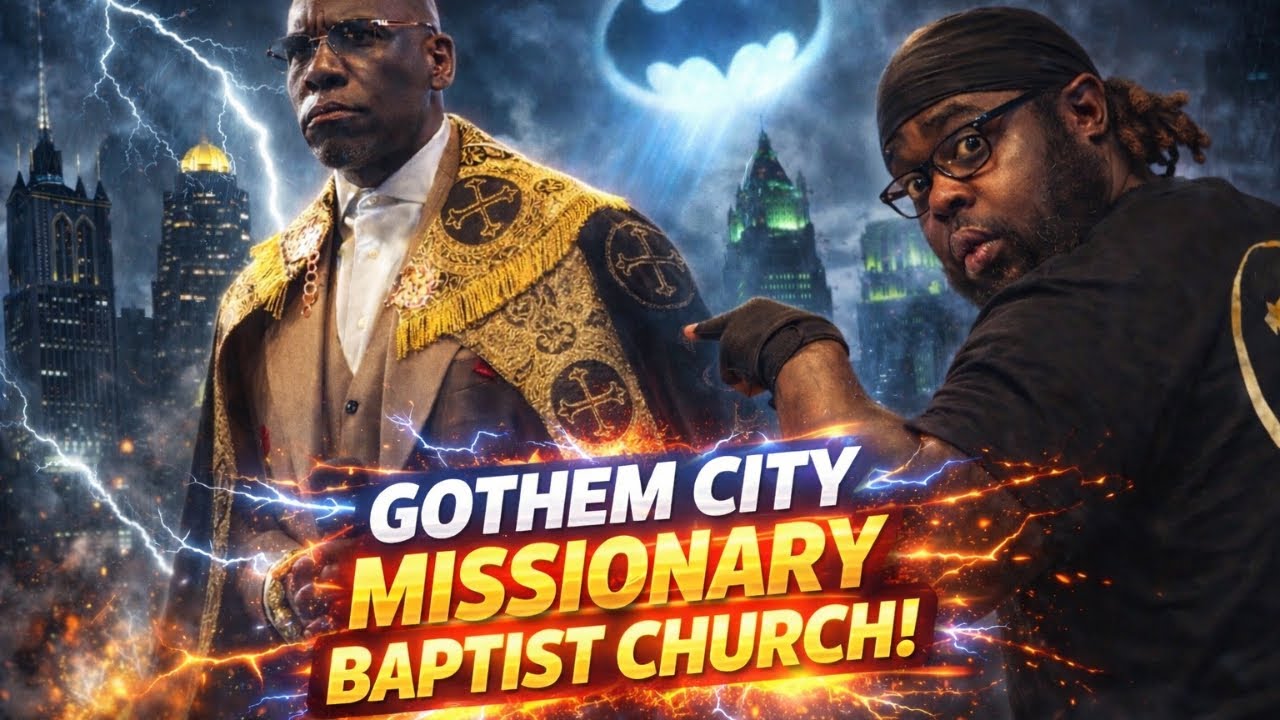
As part of the tribute, a speaker invoked the influence of women in his life—mentors, family members, and spiritual figures—framing their legacy as a form of “covering.”
The language then escalated to a phrase that caught many off guard: that he was being covered by the “feminine spirit of God.”
For some viewers, this wording crossed a significant theological boundary.
Critics were quick to respond, arguing that such language is not supported by traditional biblical teaching.
They pointed out that scripture consistently refers to God using specific terms and descriptions, and introducing new conceptual language—especially one as sensitive as gendered idenтιтy—can lead to confusion or misinterpretation among believers.

This reaction reflects a broader concern about doctrinal clarity.
For many, the issue is not simply about one phrase, but about maintaining consistency in how core beliefs are expressed.
When language shifts, even slightly, it can raise questions about what is being taught and how it aligns with established scripture.
However, others see the moment differently.
Supporters suggest that the phrase may have been intended as a metaphor rather than a literal theological claim.
In this interpretation, the reference to a “feminine spirit” is less about redefining God and more about acknowledging the nurturing, supportive, and influential roles that women have played in shaping spiritual lives and leadership.
From this perspective, the ceremony was meant to celebrate legacy, mentorship, and the often-overlooked contributions of women within the church.
Still, the controversy highlights how sensitive such discussions can be.
Language in religious contexts carries significant weight.
Words are not merely expressions—they shape belief, idenтιтy, and understanding.
When unfamiliar or unconventional terms are introduced, they can quickly become points of tension, especially in communities where doctrine is deeply valued.
Another aspect that fueled the reaction was the overall tone of the ceremony.
The combination of symbolic gestures, emotional delivery, and layered language created an atmosphere that some viewers found powerful, while others found concerning.
For critics, it raised questions about whether the focus had shifted away from foundational teachings toward more personalized or experiential expressions.
This tension is not new.
The modern church continues to navigate the balance between tradition and innovation.
As leaders seek to connect with diverse audiences, they often experiment with language, symbolism, and presentation.
While this can make messages more relatable, it also increases the risk of misunderstanding or controversy.
The strong reactions to this moment reflect a deeper divide within the Christian community.
On one side are those who prioritize strict adherence to traditional interpretations, emphasizing the importance of preserving doctrinal purity.
On the other are those who advocate for broader expressions of faith, allowing for metaphor, cultural context, and evolving language.
Both perspectives share a common concern: the integrity of the message.
Beyond the theological debate, the situation also underscores the growing influence of social media in shaping religious discourse.
A single moment—captured, clipped, and shared—can reach millions within hours, sparking conversations that extend far beyond the original audience.
In this environment, leaders face increased scrutiny, and every word carries amplified impact.
For believers, the controversy serves as an invitation to engage thoughtfully.
Rather than reacting solely to viral clips, it encourages deeper reflection—examining context, intent, and alignment with personal understanding of faith.
Ultimately, the debate surrounding this moment is about more than one phrase or one ceremony.
It is about how faith is communicated in a changing world.
It is about the tension between honoring tradition and embracing new expressions.
And it is about the responsibility that comes with speaking on matters that shape belief for millions.
As discussions continue, one thing remains clear: the conversation is far from over.


