Covered Up on the Red Planet? The Story Fueling Mars Conspiracy Theories
A new wave of speculation has erupted across social media platforms, propelled by a provocative claim: that a NASA team discovered living organisms beneath the surface of Mars—and then concealed the evidence from the public.

The allegation, amplified by viral videos and blog posts, has ignited fierce debate among space enthusiasts, skeptics, and scientists alike.
The core claim suggests that recent subsurface analysis conducted by NASA uncovered biological activity below the Martian regolith, only for the findings to be quietly classified.
As of now, there is no verified evidence supporting those accusations.
But the narrative has spread rapidly, tapping into a long history of fascination—and suspicion—surrounding space exploration.
The Red Planet has captivated humanity for generations.
From early telescope observations to robotic explorers crawling across alien terrain, Mars represents both a scientific frontier and a canvas for imagination.
In recent years, missions such as the Perseverance Rover have intensified the search for signs of ancient microbial life.

Perseverance, which landed in Jezero Crater in 2021, is equipped with sophisticated instruments designed to analyze rock chemistry and identify biosignatures—chemical or structural indicators that life may once have existed.
Its mission is not to detect active living organisms but to collect samples for eventual return to Earth.
The viral claim, however, shifts the narrative from ancient life to present-day biology.
According to online speculation, drilling operations penetrated deeper layers of Martian soil than publicly disclosed, revealing organic structures capable of metabolic activity.
Anonymous sources cited in blog posts allege that internal reports were circulated within NASA before being sealed under national security protocols.
NASA has made no announcement confirming any such discovery.
Experts in planetary science emphasize that discovering extant life on Mars would consтιтute one of the most profound scientific breakthroughs in history.
It would trigger immediate peer review, international collaboration, and global scientific scrutiny.
Concealing such a discovery would require coordinated silence across multiple insтιтutions and independent research bodies.
Dr.Lena Morales, a planetary geologist not affiliated with NASA, explains that Martian exploration operates under strict data-sharing frameworks.
“Instrument data from missions like Perseverance are processed, archived, and eventually made accessible to the scientific community,” she says.
“It’s difficult to imagine a scenario where living organisms are confirmed and no trace of that evidence reaches external researchers.
Yet skepticism toward official narratives is hardly new.
Throughout the Cold War, classified aerospace projects fueled rumors and mistrust.
Even after declassification of certain programs, the aura of secrecy surrounding advanced research persisted.
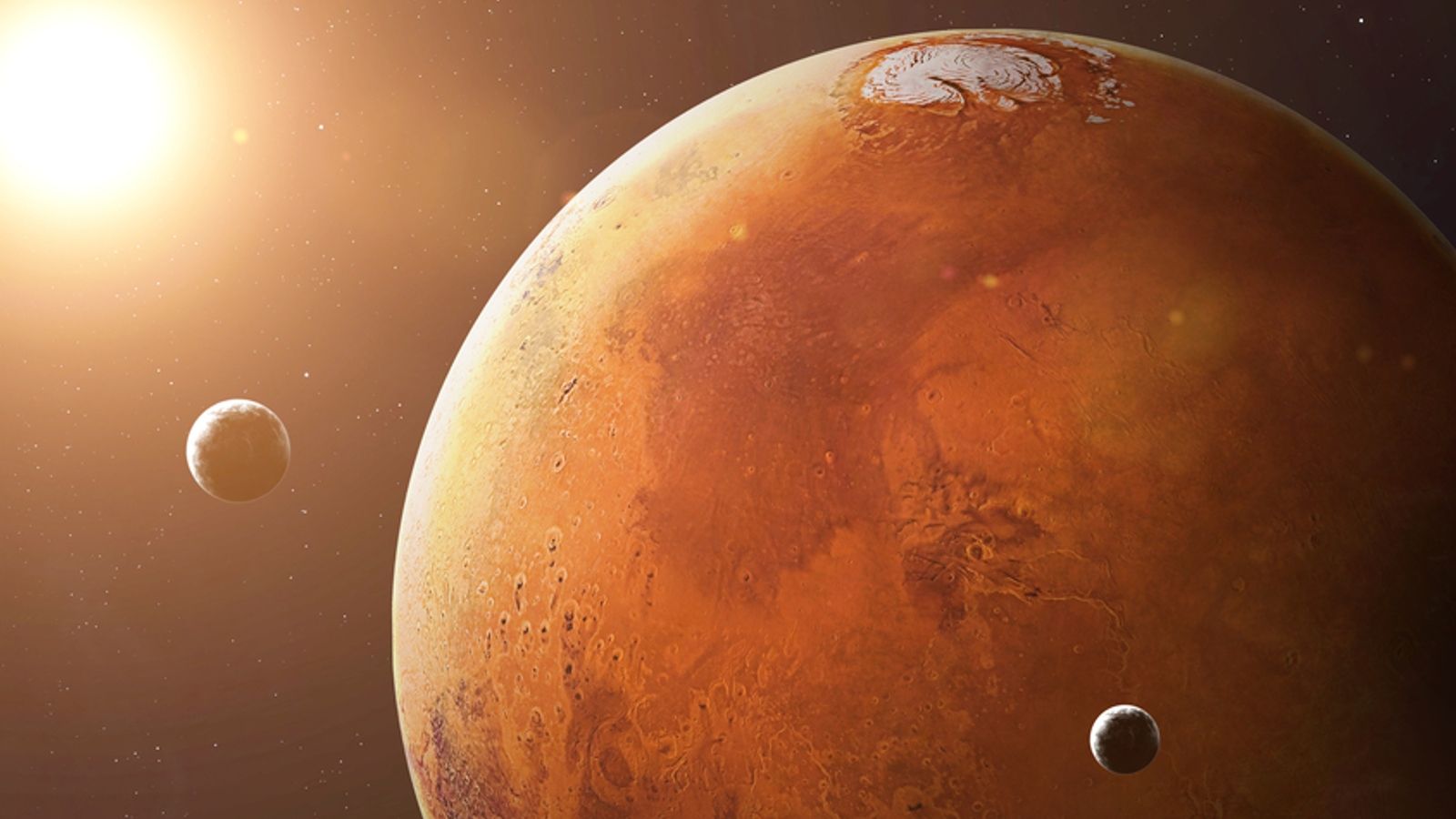
Mars itself has been a focal point of conspiracy culture for decades.
PH๏τographs of unusual rock formations have been interpreted as artificial structures.
Dust devils have been mistaken for engineered towers.
Shadows have sparked speculation of movement.
In 1996, NASA scientists announced the possible presence of fossilized microbial life within a Martian meteorite known as ALH84001.
The claim was met with excitement—and controversy.
Subsequent studies questioned the biological interpretation, illustrating how scientific conclusions evolve under scrutiny.
The current allegation hinges partly on technical misunderstandings.
Some online commentators reference methane fluctuations detected in the Martian atmosphere.
Methane can be produced by biological processes on Earth, but it can also arise from geological activity.
Scientists have not established a definitive source for Martian methane.
Another focal point involves subsurface radar data from orbiters such as Mars Express, which detected signals interpreted by some researchers as potential briny liquid water reservoirs beneath the south polar ice cap.
Even if confirmed, liquid water does not automatically imply life.
The viral narrative, however, compresses these incremental findings into a dramatic storyline: life discovered, truth suppressed.
Sociologists studying misinformation note that high-stakes scientific insтιтutions often become targets of secrecy narratives because they operate beyond everyday public visibility.
Complex technical explanations can be overshadowed by emotionally charged claims.
NASA’s public communications strategy emphasizes transparency, routinely livestreaming launches and publishing datasets.
Yet the sheer scale of its research portfolio can create informational gaps easily filled by speculation.
The possibility of life on Mars remains one of science’s most compelling questions.
Researchers focus primarily on ancient microbial life from a time when Mars possessed liquid water on its surface billions of years ago.
Evidence suggests the planet once hosted lakes and river deltas.
If microbial life ever arose there, it may have retreated underground as surface conditions deteriorated.
Subsurface habitats shielded from radiation could theoretically provide refuge.
This hypothesis drives ongoing mission design, but it remains unproven.
Astrobiologists caution that extraordinary claims require extraordinary evidence.
A verified discovery of living organisms would involve reproducible biochemical signatures, cellular structures observable under microscopy, and independent validation across laboratories.
No such evidence has been presented.
Meanwhile, public fascination with Mars continues to intensify, fueled partly by ambitions of private space companies aiming to send humans to the planet within decades.
The idea of life already existing there complicates ethical considerations about contamination and planetary protection.
The viral allegation has also sparked discussion about trust in insтιтutions.
In an era of rapid information exchange, narratives of concealment gain traction quickly.
Digital platforms reward emotionally compelling content, sometimes outpacing fact-checking processes.
Media literacy experts urge caution.
“Ask what the source is, whether multiple credible outlets have corroborated the claim, and whether primary evidence is accessible,” advises one communications scholar.
The allure of hidden knowledge is powerful.
The notion that humanity stands on the brink of discovering we are not alone—and that someone might be hiding that truth—touches a deep cultural nerve.
Yet scientific discovery rarely unfolds like a thriller.
It advances through incremental measurements, peer review, replication, and debate.
As of now, the evidence indicates that Mars remains a world of tantalizing possibility, not confirmed biology.
NASA’s ongoing Mars Sample Return campaign aims to bring carefully sealed Martian rock cores back to Earth for detailed analysis.
That process will involve international cooperation and years of scrutiny.
If life is ever found—past or present—it will likely emerge through that painstaking pathway, not through whispered reports of secret suppression.
Still, the viral claim reveals something about human imagination.
Mars symbolizes frontier, mystery, and the ultimate question of whether we are alone in the universe.
The tension between curiosity and suspicion ensures that stories of hidden life will continue to circulate.
For now, the Red Planet remains silent.
And until verifiable data says otherwise, the search continues in laboratories and rover tracks—not in the shadows of a cover-up.


