MH370 Search Resumes: New Technology Targets Final Resting Place After 10 Years of Silence
More than a decade after Malaysia Airlines Flight MH370 vanished without a trace, a new search effort is preparing to resume, reigniting global attention on one of aviation’s most haunting mysteries.
The announcement has sent waves through the international community, bringing renewed hope to families, investigators, and aviation experts who have spent years searching for answers that have remained frustratingly out of reach.
MH370 disappeared on March 8, 2014, while en route from Kuala Lumpur to Beijing, carrying 239 people on board.
Within hours, what should have been a routine overnight flight turned into an unprecedented crisis, as the aircraft’s transponder was switched off and it veered dramatically off its planned course.

Military radar later showed the plane turning westward, crossing back over Malaysia, and heading into the vast, unforgiving expanse of the southern Indian Ocean.
Despite one of the largest and most expensive search operations in aviation history, the aircraft has never been found.
Now, with advances in technology and renewed determination, authorities and private partners are preparing to once again scour the ocean floor in hopes of solving the mystery once and for all.
Sources familiar with the effort indicate that the new search will focus on areas that were previously overlooked or deemed too difficult to explore with earlier equipment.
These regions lie deep beneath the ocean’s surface, where extreme pressure, rugged terrain, and unpredictable conditions have long challenged even the most sophisticated search tools.
However, recent breakthroughs in underwater robotics, sonar mapping, and data analysis have opened new possibilities.
Autonomous underwater vehicles are now capable of scanning vast stretches of seabed with unprecedented precision, capturing high-resolution images that could reveal debris fields or wreckage previously missed.
Investigators are also revisiting satellite data and flight path simulations, incorporating years of additional research to refine their understanding of where MH370 may have ended its journey.
One of the most compelling theories continues to center on a remote corridor in the southern Indian Ocean, often referred to as the “seventh arc.”
This arc represents the final satellite handshake between the aircraft and an Inmarsat satellite, a faint digital trace that has become one of the most crucial clues in the entire investigation.
Yet even this clue has been subject to debate.
Different models and interpretations have produced varying search zones, leading to disagreements among experts about where efforts should be concentrated.
The new search aims to reconcile these differences by applying more advanced analytical techniques and integrating data that was not fully understood at the time of the initial investigation.
For the families of those on board, the renewed search is both a source of hope and a painful reminder of years spent in uncertainty.
Many have continued to demand accountability, transparency, and a sustained commitment to finding the truth.
Some have expressed cautious optimism, while others remain skeptical, having witnessed previous search efforts end without answers.
The emotional toll has been immense, with loved ones caught in a prolonged state of limbo, unable to find closure.
Officials involved in the new effort have acknowledged this burden, emphasizing that the search is not only about solving a technical puzzle but also about providing long-overdue answers to grieving families.
At the same time, the mystery of MH370 has continued to fuel speculation and controversy.
Theories have ranged from mechanical failure and pilot intervention to more complex scenarios involving deliberate actions or unforeseen events.
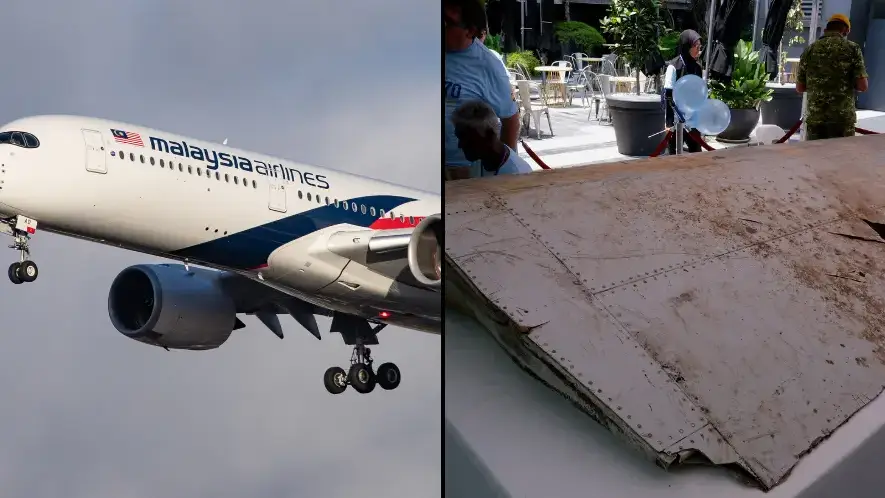
Fragments of debris believed to be from the aircraft have washed ashore on islands along the western Indian Ocean, offering confirmation that the plane did indeed end up in that remote region.
However, these fragments have done little to pinpoint the exact crash site.
Without the main wreckage, critical questions remain unanswered.
What caused the sudden deviation from the flight path?
Why did communication systems go silent?
What happened in the final moments before the aircraft disappeared from radar?
The upcoming search represents perhaps the best chance in years to address these questions.
It also reflects a broader shift in how such investigations are conducted, with increased collaboration between governments, private companies, and independent researchers.

Some reports suggest that performance-based agreements may be in place, meaning that private firms could be compensated only if significant discoveries are made.
This approach underscores both the high stakes and the lingering uncertainty surrounding the mission.
Experts caution that even with modern technology, the search will be extraordinarily challenging.
The southern Indian Ocean remains one of the most remote and least explored regions on Earth, with depths reaching several kilometers and conditions that can change rapidly.
Yet the determination to continue searching speaks to the enduring impact of MH370 on global aviation.
The disappearance prompted sweeping changes in aircraft tracking and safety protocols, including efforts to ensure that commercial flights can be monitored in real time, even over remote oceanic regions.
Still, the absence of definitive answers continues to cast a long shadow.
Each new development rekindles public interest, drawing attention back to a case that has become a symbol of both technological limits and human resilience.
As preparations for the renewed search move forward, there is a sense that the world may be approaching a निर्णающий moment.
Either the mystery will finally yield to persistence and innovation, or it will deepen, reinforcing the enigma that has defined MH370 for more than a decade.
For now, all eyes are once again on the vast expanse of the Indian Ocean.
Somewhere beneath its surface, answers may still be waiting.
And as the search resumes, so too does the hope that this chapter of aviation history can finally be brought to a close.


