Beneath the calm surface of the Pacific Ocean lies a realm so extreme that, for much of modern history, scientists believed life there to be impossible.
It is a place where sunlight never reaches, where temperatures hover near freezing, and where pressure grows so immense that it can deform steel.
For decades, this environment was classified as biologically barren.
Recent discoveries, however, have forced science to reconsider everything it thought it knew about life on Earth.
Deep within the Mariana Trench, the deepest known location on the planet, researchers have identified a previously unknown life form thriving under conditions once ᴀssumed to be lethal to complex biological structures.
This organism does not merely endure the abyss.
It is fully adapted to it, shaped by millions of years of isolation, pressure, and darkness.

Its existence suggests that the deep ocean is not a ᴅᴇᴀᴅ zone but a vast, hidden ecosystem still largely beyond human understanding.
The Mariana Trench stretches across the western Pacific Ocean, east of the Philippines, forming a crescent shaped scar in the ocean floor more than two thousand kilometers long.
At its deepest point, known as the Challenger Deep, the trench plunges nearly eleven kilometers below sea level.
If the tallest mountain on Earth were placed at its bottom, its peak would remain submerged far beneath the ocean surface.
The first hints of this colossal underwater feature emerged in the late nineteenth century.
At that time, much of the world ocean remained unmapped.
During a British research expedition, sailors lowered a weighted measuring line into what appeared to be ordinary open water.
The line continued descending far beyond expectations.
Three kilometers pᴀssed, then four, then five.
When it finally reached the seabed, the results revealed a chasm unlike anything previously recorded.
Humanity had discovered the deepest fracture in the Earth crust.
Understanding how such an abyss formed requires viewing the planet as a dynamic system.
The surface of Earth is divided into mᴀssive tectonic plates that float atop the semi molten mantle below.
Oceanic crust is thinner and denser than continental crust, and it is constantly being recycled.
Along the margins of the Pacific Ocean, immense plates slowly converge.
When one plate meets another, the denser oceanic plate bends downward and slides beneath its neighbor in a process known as subduction.
This geological mechanism creates deep ocean trenches, powerful seismic activity, and long chains of volcanoes.
The Mariana Trench marks one such boundary, where the Pacific Plate descends beneath the Philippine Plate.
Over millions of years, this relentless movement carved a trench of staggering depth, shaping one of the most extreme environments on the planet.
For scientists, the greatest challenge in studying this region is pressure.
At depths of several kilometers, water pressure exceeds atmospheric pressure by hundreds of times.
At the bottom of the trench, the pressure is more than a thousand times greater than at sea level.
This force acts in all directions, crushing voids, compressing molecules, and threatening to destroy conventional equipment.
Only a handful of human made vessels have ever reached these depths.
In 1960, a manned submersible descended into the trench, carrying two explorers into complete darkness.
During the descent, a loud cracking sound signaled structural damage.
Despite the risk, the mission continued, marking the first time humans reached the deepest known point on Earth.
After that journey, decades pᴀssed before another human returned to the abyss.
While space exploration advanced rapidly, the depths of the oceans remained largely unexplored.
To understand life in the trench, one must imagine a gradual descent through the ocean layers.
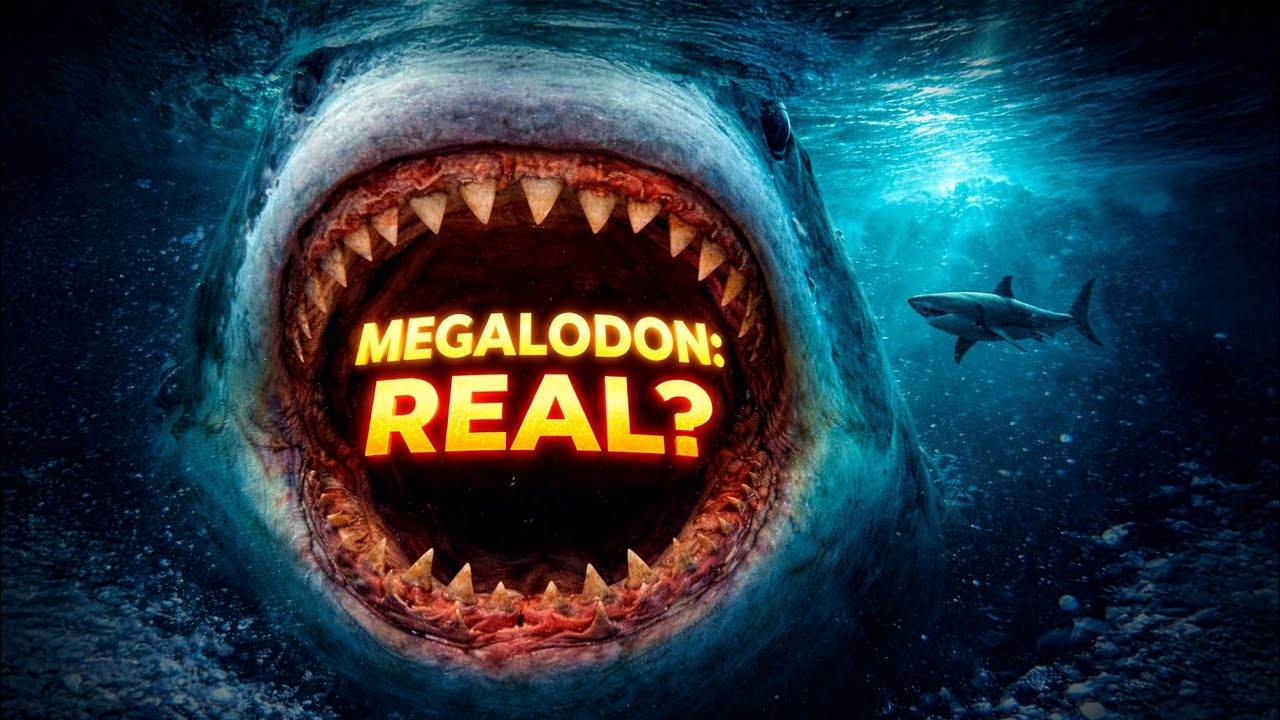
At the surface, sunlight fuels a thriving ecosystem dominated by microscopic organisms that generate a significant portion of the oxygen used by life on Earth.
As depth increases, light fades and conditions change.
In the twilight zone, faint traces of sunlight still penetrate, but many organisms produce their own illumination.
Bioluminescence becomes essential for hunting, communication, and defense.
The water glows with flashes of blue and green as living creatures adapt to diminishing light.
Below one kilometer, sunlight disappears entirely.
This is the realm of permanent darkness.
Temperatures drop sharply, and food becomes scarce.
Life here evolves strange adaptations.
Some creatures develop oversized eyes to detect faint glimmers of light, while others abandon vision altogether.
Bodies become transparent, flexible, and energy efficient.
Teeth grow long and needle shaped, jaws hinge wider, and metabolism slows.
Beyond six kilometers lies the hadal zone, named after the underworld of ancient mythology.
This environment is among the most hostile known to science.
The seabed is blanketed with fine sediment formed from the remains of organisms drifting down from above over countless centuries.
Life exists, but it appears fragile, pale, and otherworldly.
Among the residents are giant amphipods, soft bodied sea cucumbers, translucent shrimp, and worm like creatures lacking rigid skeletons.
Some fish species discovered here appear almost gelatinous, their tissues adapted to withstand pressure rather than resist it.
Their bones are reduced, their muscles loose, and their movements slow.
One of the most astonishing discoveries in this zone involves single celled organisms known as xenophyophores.
These creatures, though composed of a single cell, can grow to sizes comparable to a human hand or larger.
In shallow environments, such structures would collapse, but in the crushing pressure of the deep sea, they maintain their form.
They blur the line between microscopic and macroscopic life.
The recent discovery of a new organism in the Mariana Trench has intensified scientific interest.
Found at depths once believed incapable of supporting complex life, this species shows clear signs of long term evolution in isolation.
Its cellular structures are uniquely adapted to extreme pressure, cold, and darkness.
This suggests it did not drift down accidentally from shallower waters but evolved entirely within the abyss.
This finding raises profound questions.
If such organisms exist, what else might remain undiscovered? The trench has been explored less thoroughly than the surface of the Moon.
Only a tiny fraction of its vast area has been observed directly.
It is possible that larger, slower moving, or rarer organisms have simply never crossed the narrow field of view of human instruments.
The implications extend beyond biology.
Discoveries in the deep ocean could reshape understanding of evolution, adaptation, and the limits of life.
They may inform medical research by revealing new biochemical processes.
They may alter geological models by showing how ecosystems interact with the Earth crust under extreme conditions.
They may even influence the search for life beyond Earth, as similar environments exist beneath the icy shells of distant moons.
Despite remarkable technological advances, humanity still knows more about distant planets than about the deepest regions of its own oceans.
Space probes can reach the outer solar system, yet the ocean floor remains largely uncharted.
Each expedition into the Mariana Trench carries the potential to reveal forms of life never before imagined.
As exploration continues, the abyss challenges ᴀssumptions about what it means to be alive.
In the darkness beneath kilometers of water, life persists without light, without warmth, and under pressures that would destroy most known organisms.
These discoveries suggest that life is more resilient, adaptable, and mysterious than previously believed.
One day, as technology improves and curiosity endures, the hidden world of the deep ocean may finally come into focus.
When that happens, the Mariana Trench may reveal not just new species, but new perspectives on life itself, reminding humanity that even on a well studied planet, vast unknowns still lie beneath the surface.


