Meghan Markle Pregnancy Rumors: What’s Fact and What’s Fiction?
Meghan Markle, a figure who has captivated global attention since her marriage to Prince Harry, remains under relentless public scrutiny.
Every outfit, gesture, and public appearance is dissected for hidden meanings, and pregnancy rumors have become a recurring theme in this intense spotlight.
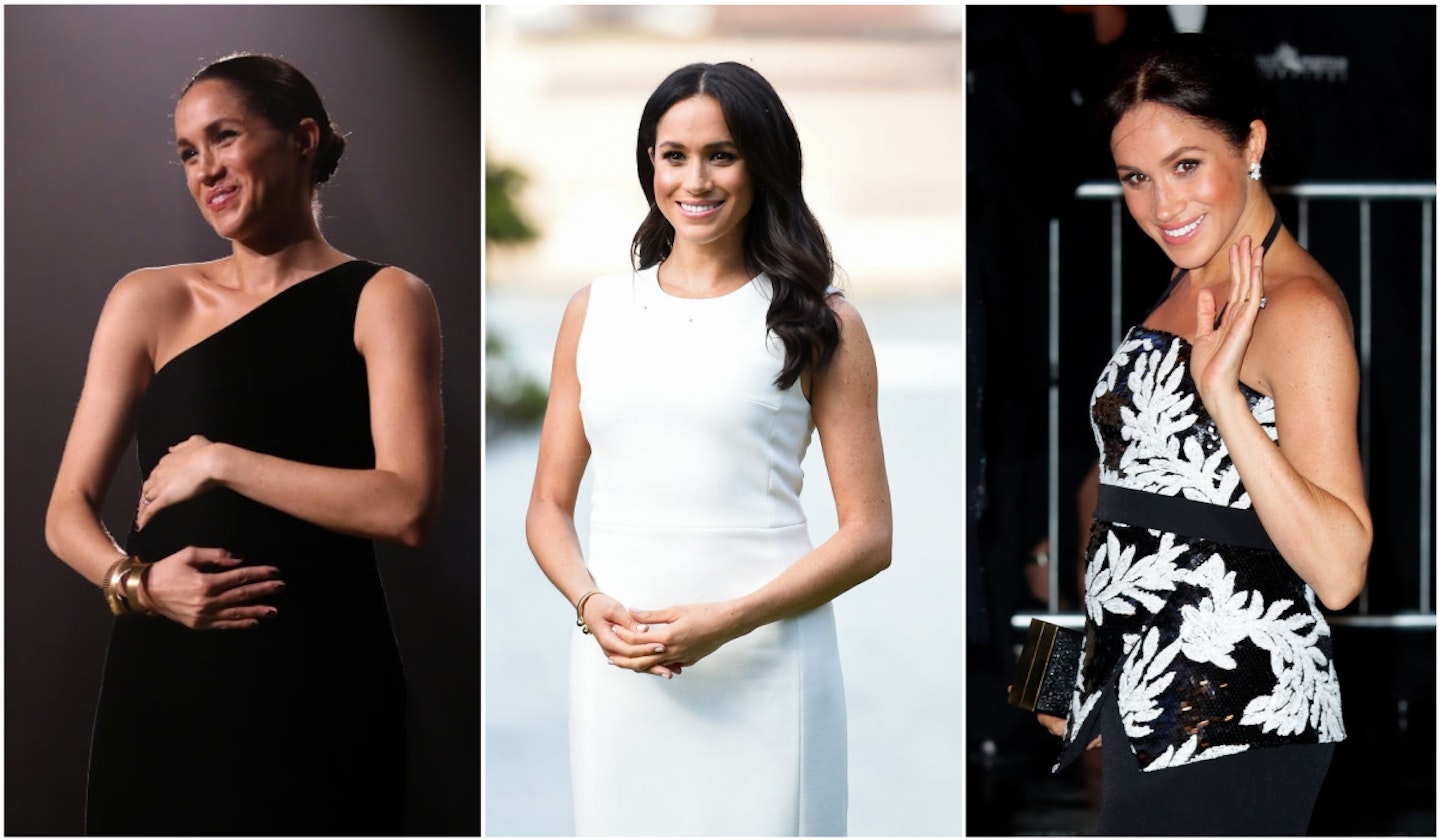
These rumors often emerge from pH๏τos where fans and commentators analyze her clothing, posture, or body language, interpreting subtle cues as signs of pregnancy.

However, such interpretations are notoriously unreliable and often lead to false conclusions.
Historically, Meghan’s pregnancies with her children Archie and Lilibet were heavily covered and scrutinized by the media, leaving a lasting legacy of invasive speculation.
Despite this, there has been no official announcement or confirmation from Meghan, Prince Harry, or their representatives regarding a new pregnancy.
No posts on their social media, no statements from their publicists, and no credible insider reports have surfaced to substantiate the claims.
This lack of confirmation is critical.
In matters as personal and significant as pregnancy, official announcements are the standard way such news is shared.
Without it, all other chatter remains rumor and speculation.
Yet, in today’s digital age, the line between verified information and conjecture often blurs, especially when clicks and views drive content creation.
Part of why these rumors gain traction is Meghan’s public style.
She favors elegant, flowing outfits that prioritize comfort, which some interpret as attempts to conceal a pregnancy.
Additionally, Meghan and Harry’s preference for privacy fuels speculation; silence is often misread as secrecy.
But choosing not to address every rumor is a conscious decision to protect personal boundaries and mental health, especially given Meghan’s past openness about the toll of media scrutiny.
The role of social media cannot be overstated.
Platforms prioritize engagement, and nothing captivates audiences like mystery or controversy.
Videos тιтled “Meghan Markle Pregnant?” garner far more views than straightforward denials or neutral reports.

Algorithms amplify these stories regardless of their veracity, creating an echo chamber where repeated claims gain the illusion of truth.
Moreover, the public’s fascination with the British royal family adds another dimension.
Although Meghan and Harry have stepped back from senior royal duties, they remain entwined with royal narratives.
Any potential pregnancy is not just a personal event but a public spectacle, inviting speculation about its implications for тιтles, family dynamics, and public perception.
However, such speculation can be invasive and insensitive.
Meghan has previously shared her experiences with miscarriage, underscoring the emotional complexity behind pregnancy rumors.
Casual public conjecture overlooks these realities, trivializing deeply personal struggles.
The pattern of rumor generation is predictable: a pH๏τo surfaces, enthusiasts zoom in and highlight supposed “clues,” entertainment channels react, and the story snowballs.
The original source often disappears, leaving a tangled web of ᴀssumptions presented as fact.
Meghan and Harry’s relatively reserved public presence leaves gaps that imagination readily fills.

Importantly, these rumors reflect broader societal issues.
Female public figures frequently endure intense scrutiny over their bodies and reproductive choices, a phenomenon Meghan’s experience epitomizes.
Pregnancy rumors are part of a larger pattern of invasive commentary that often disregards privacy and emotional well-being.
Meghan and Harry’s approach has been to control their narrative carefully, sharing major life updates on their terms through official channels.
This strategy further suggests that any genuine pregnancy announcement would come directly from them, not through leaks or blurry pH๏τos.

The ongoing fascination also reveals how audiences consume celebrity news.
Emotional investment in Meghan and Harry’s story means many are eager for updates, often projecting hopes or criticisms onto rumors.
This cycle perpetuates misinformation, blurring lines between curiosity and intrusion.
Ultimately, the current pregnancy rumors remain unconfirmed and unsupported by any credible evidence.
No official statements or reliable sources have emerged, placing these claims firmly in the realm of speculation.

This case highlights the importance of critical media consumption—distinguishing verified facts from viral conjecture.
As the digital conversation continues, the real story is not about Meghan’s pregnancy status but about how quickly ᴀssumptions can overshadow truth and how private lives become public property in the age of social media.
Until Meghan and Harry choose to share personal news themselves, all such rumors remain just that—rumors.