“Underwater and Cut Off: How Historic Floods Drowned an Entire Turkish City”
What began as steady rainfall over the Mediterranean coast quickly turned into a nightmare that no one in Mersin was prepared for.
By nightfall, the city was no longer recognizable.
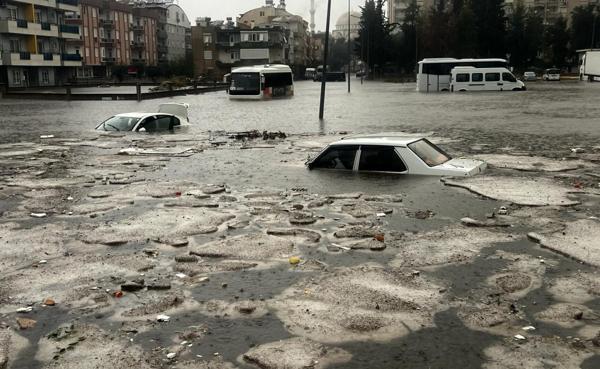
Streets vanished beneath fast-moving water, cars floated like abandoned toys, and entire neighborhoods transformed into rivers as historic floods overwhelmed southern Turkey, trapping families inside their homes overnight with nowhere to run.
Residents say the water rose with terrifying speed.
Within minutes, ground floors were submerged.
Electricity failed.
Phone signals flickered.
Those who looked outside their windows saw headlights disappear beneath the surface and heard the sound of water smashing against doors and walls.
For many, escape was impossible.
Roads that once connected districts became channels of violent current, cutting off access for emergency crews and leaving thousands isolated in darkness.
By midnight, parts of Mersin resembled a drowned city.
Social media filled with frantic videos showing people wading through chest-high water, clinging to balconies, or calling out for help as floodwaters poured through stairwells.
Families huddled on upper floors, listening to the roar below, uncertain if their buildings would hold.
Parents tried to calm children as rain continued to hammer the rooftops, each downpour fueling the fear that the worst was still coming.
Authorities confirmed that the rainfall exceeded anything recorded in decades.
Drainage systems collapsed almost immediately under the volume, sending torrents back onto the streets.
In low-lying areas, water surged with such force that it ripped manhole covers from the ground and swept debris through residential zones.
Vehicles were piled against storefronts.
Shop windows shattered.
Entire blocks lost power simultaneously, plunging neighborhoods into silence broken only by sirens and rushing water.
Emergency services raced against time, but rescue efforts were severely hampered.
Boats replaced ambulances.
Firefighters and volunteers navigated submerged streets using flashlights, searching for trapped residents who had been signaling from windows and rooftops for hours.
In some cases, rescues were delayed because currents were too strong to approach safely.
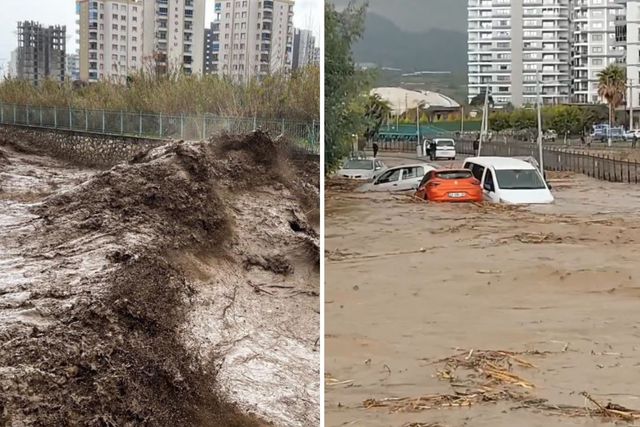
Officials acknowledged that many families spent the entire night stranded, waiting in fear as floodwaters surrounded them.
Hospitals in the region activated emergency protocols as injured residents began to arrive, some suffering from hypothermia, others from cuts and fractures sustained while attempting to escape.
Doctors described scenes of exhaustion and shock as families arrived soaked, clutching whatever belongings they could save.
Meanwhile, authorities urged residents to stay indoors and avoid floodwaters, warning that contamination and hidden hazards posed serious risks.
As dawn broke, the scale of destruction became clear.
Mud-covered streets were littered with debris.
Cars lay overturned or stacked against one another.
Businesses stood ruined, their interiors destroyed by water and silt.
In some districts, the water still hadn’t receded, leaving residents trapped even after the rain eased.
The smell of fuel, sewage, and soaked concrete hung in the air.
Meteorologists confirmed that the flooding was the result of an intense storm system stalled over the region, dumping extraordinary amounts of rain in a short period of time.
Experts warned that climate instability is increasing the frequency of such extreme events, particularly along coastal cities like Mersin, where urban development and inadequate drainage amplify the damage.
What once would have been considered a “once-in-a-century” flood is now becoming disturbingly familiar.

Government officials declared a local state of emergency, pledging immediate aid and damage ᴀssessments.
Temporary shelters were opened for displaced families, many of whom returned to find their homes uninhabitable.
For some, everything they owned was lost overnight.
PH๏τos emerging from the city showed residents standing silently in front of ruined apartments, staring at the wreckage left behind by the water.
Anger soon followed shock.
Residents questioned whether enough had been done to prepare the city for extreme weather, pointing to blocked drainage channels and unchecked construction in flood-prone areas.
Calls for accountability echoed across social platforms as citizens demanded answers and long-term solutions, not just emergency responses after disaster strikes.
Yet amid the devastation, stories of resilience emerged.
Neighbors rescued neighbors using ropes and improvised rafts.
Shop owners opened their doors to shelter strangers.
Volunteers arrived from surrounding regions to ᴀssist with cleanup and aid distribution.
In the face of disaster, the city’s spirit refused to be washed away.
As recovery begins, Mersin faces a long and painful road ahead.
Infrastructure must be repaired, homes rebuilt, and lives put back together piece by piece.
But for those who endured the night trapped by rising water, the memory will linger far longer than the mud on the streets.
They will remember the sound of the flood, the fear of not knowing if help would come, and the moment they realized their city had turned into something unrecognizable.
Mersin survived the flood, but it has been forever changed.
And as waters slowly recede, one question remains hauntingly clear: was this a rare catastrophe—or a warning of what lies ahead?


