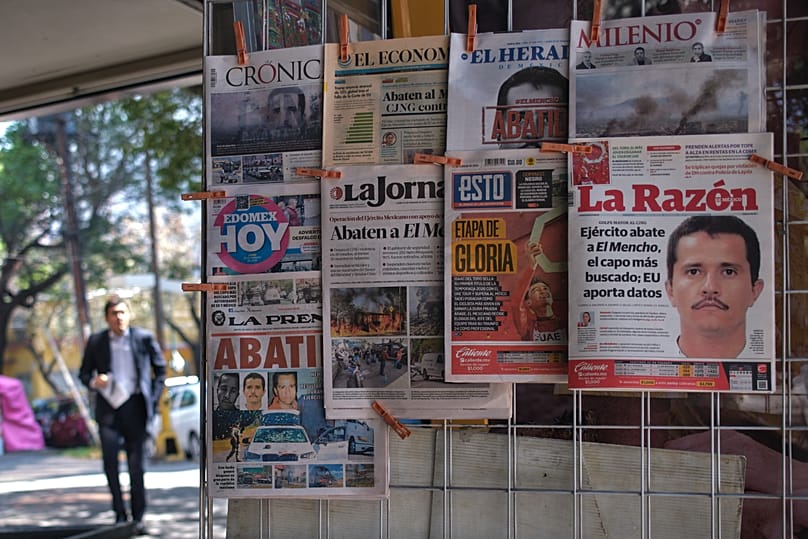
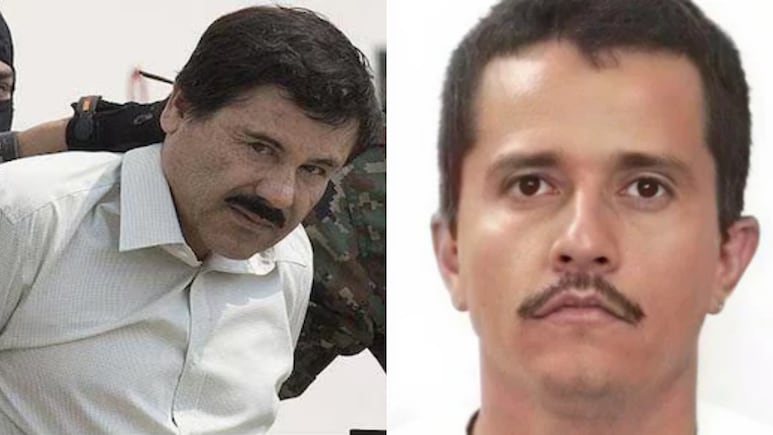
Mexico awoke to explosive headlines after its military confirmed the death of Nemesio Rubén Oseguera Cervantes, widely known as “El Mencho,” the powerful leader of the Jalisco New Generation Cartel (CJNG). The operation that ended his life unfolded before sunrise in the mountain town of Tapalpa, roughly two hours southwest of Guadalajara in Jalisco state. What began as a targeted military mission quickly escalated into one of the most intense confrontations between federal forces and organized crime in recent years.
According to Mexico’s Ministry of National Defense, troops moved in on a fortified location believed to be housing the cartel leader. Almost immediately, they came under heavy gunfire. The firefight was fierce and sustained, underscoring both the preparation of the security forces and the firepower controlled by CJNG. By the time the shooting subsided, four individuals were ᴅᴇᴀᴅ at the scene. Three others—including Oseguera—were gravely wounded and later died while being transported by air to Mexico City.

The scale of the weapons recovered offered a stark reminder of the cartel’s capabilities. Authorities reported seizing armored vehicles, rocket launchers, and high-powered firearms typically ᴀssociated with military-grade arsenals rather than criminal networks. Three Mexican soldiers were also wounded during the exchange, a detail that highlights the intensity of the confrontation.
For years, El Mencho had stood at the center of one of the world’s most aggressive and rapidly expanding drug organizations. Under his leadership, CJNG became synonymous with both operational sophistication and extreme violence. The cartel’s footprint extended far beyond Mexico’s borders, particularly into the United States, where authorities linked it to the trafficking of mᴀssive quanтιтies of fentanyl and other synthetic drugs.
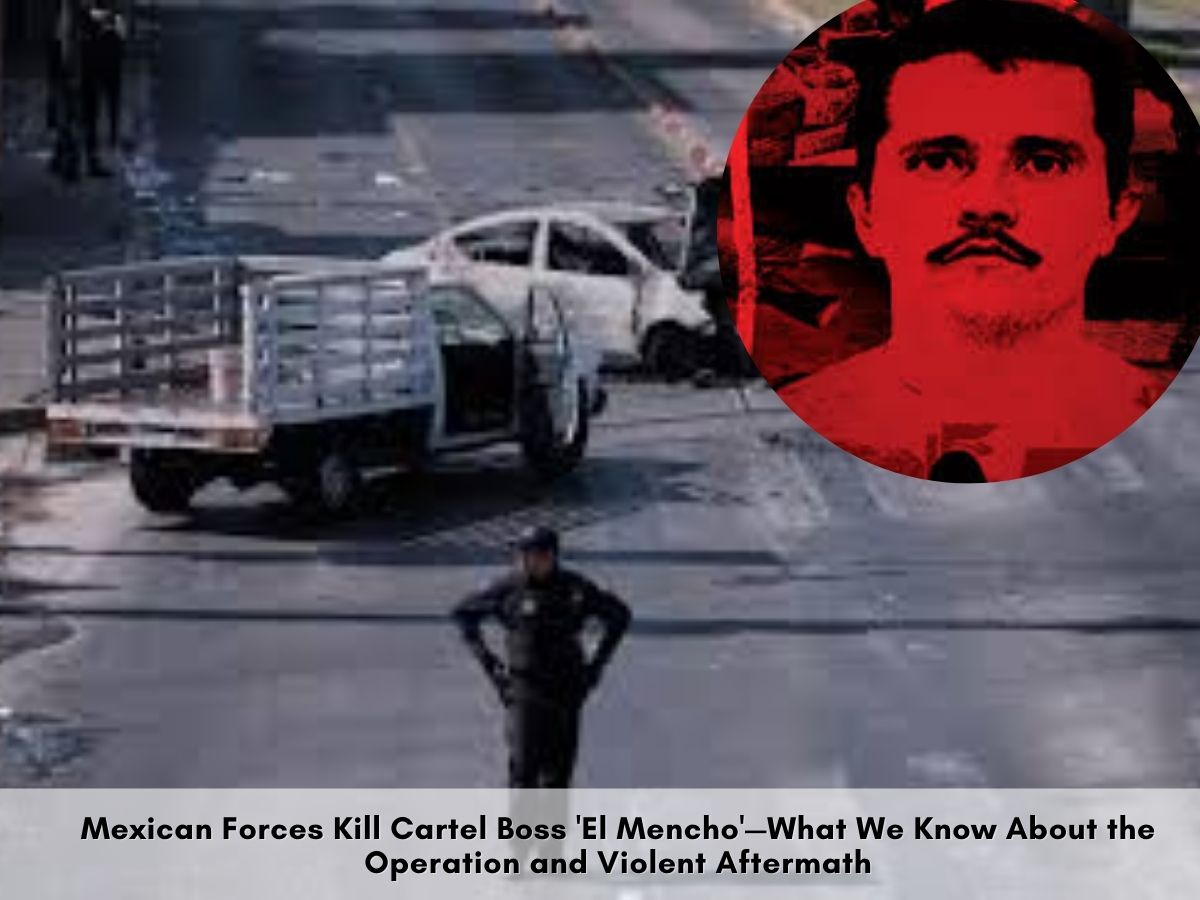
The United States had placed a $15 million bounty on his head, ranking him among the most wanted fugitives globally. American law enforcement agencies accused CJNG of playing a significant role in fueling the opioid crisis, with fentanyl shipments moving through elaborate cross-border networks. His elimination was therefore not just a national milestone for Mexico, but a moment of strategic importance for Washington as well.
Yet any sense of victory was quickly overshadowed by what followed.
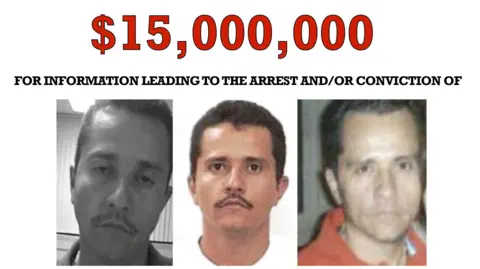
Within hours of the raid, retaliation erupted across Jalisco. In the coastal resort city of Puerto Vallarta, more than ten vehicles were set ablaze. Highways were blocked with burning trucks, cutting off key transportation routes. In Guadalajara, Mexico’s second-largest city, armed individuals reportedly erected roadblocks and vandalized commercial establishments. Several Oxxo convenience stores were torched or damaged, sending columns of smoke into the sky.
The violence extended into areas heavily frequented by tourists. Thick plumes of smoke rose along the coastline, and scenes of chaos circulated rapidly across social media platforms. For residents and visitors alike, the images were alarming—vehicles engulfed in flames, streets eerily deserted, and emergency sirens echoing through urban corridors.

State authorities responded by activating a statewide “Code Red,” a high-alert security protocol designed to mobilize law enforcement and emergency services. Schools were closed across multiple municipalities. Public transportation services were suspended in several regions. Mᴀss events were canceled as officials attempted to minimize civilian exposure to potential violence.
The disruption quickly reached the aviation sector. Air Canada announced the suspension of flights to Puerto Vallarta, citing security concerns amid the unrest. Other airlines monitored the situation closely as uncertainty gripped one of Mexico’s most popular tourist destinations.

International concern mounted rapidly. The Embᴀssy of India in Mexico issued an advisory urging Indian nationals in Jalisco and other affected states to shelter in place, avoid areas near security operations, minimize travel, and remain in close contact with family members. Similar advisories were echoed by other diplomatic missions, reflecting fears that the unrest could escalate further.
From Washington, the White House released a statement confirming that the United States had shared critical intelligence with Mexican authorities ahead of the operation. The acknowledgment signaled a high level of bilateral coordination in targeting one of the hemisphere’s most powerful criminal figures. Officials described the development as a major blow to organized crime and a significant step in combating cross-border drug trafficking.
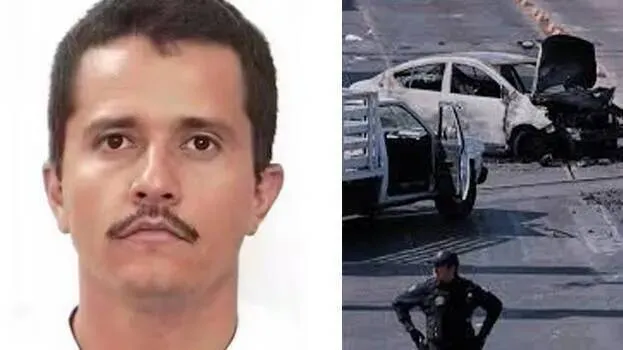
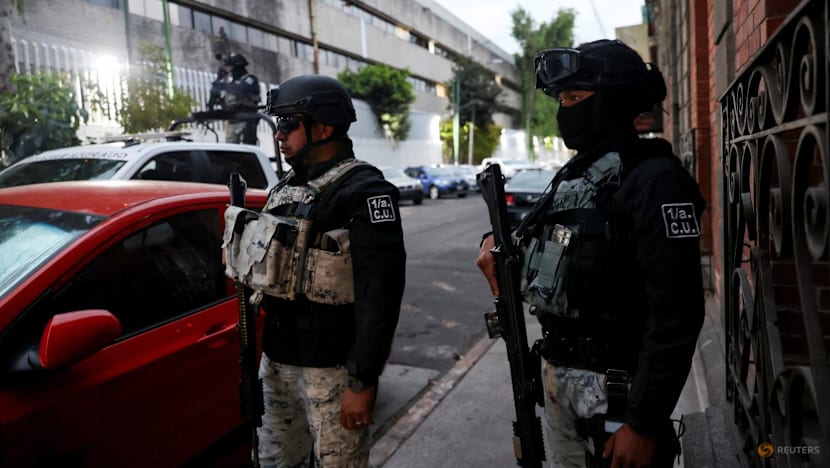
However, even as governments emphasized cooperation and strategic success, the immediate reality inside Jalisco remained tense. Armed patrols continued sweeping through affected areas. Governor Pablo Lemus Navarro urged residents to remain indoors while security forces worked to stabilize the situation. Authorities insisted that the violence was contained and that order would soon be restored, but the scale of retaliation revealed the cartel’s capacity for rapid mobilization.
The killing of a cartel leader often carries unpredictable consequences. CJNG, unlike smaller criminal groups, operates through a complex hierarchy of regional commanders, financial operatives, and enforcement units. While the removal of its top figure marks a symbolic and operational blow, the organization itself does not disappear overnight. Analysts have long warned that power vacuums can lead to internal struggles or intensified conflicts with rival cartels seeking to capitalize on instability.

In the case of CJNG, the stakes are particularly high. The cartel has built a reputation for boldness and advanced weaponry, frequently engaging security forces directly rather than avoiding confrontation. Its influence stretches across strategic trafficking corridors, including ports, border crossings, and industrial hubs. The infrastructure supporting its operations—financial channels, recruitment networks, and international partnerships—remains intact unless systematically dismantled.
For ordinary citizens in Jalisco, the events have reinforced an uncomfortable truth: victories against organized crime can carry immediate and painful repercussions. Businesses closed their doors as a precaution. Parents kept children at home. Workers delayed commutes. The sudden halt of daily life underscored the fragile balance between enforcement success and community stability.
Tourism, a vital economic engine for coastal cities like Puerto Vallarta, faces renewed uncertainty. Images of burning vehicles and blocked highways can reverberate globally, influencing travel decisions and investor confidence. The swift suspension of international flights illustrates how security events can ripple through sectors far removed from the battlefield.
Despite the turmoil, Mexican authorities have characterized the operation as the most significant blow yet against the country’s most powerful cartel. They argue that removing a leader of this magnitude disrupts command structures and sends a message that impunity has limits. Supporters of the strategy contend that sustained pressure on high-level targets weakens long-term operational capacity.
Critics, however, caution that without parallel efforts addressing corruption, local governance vulnerabilities, and the socioeconomic factors that enable cartel recruitment, such operations may only yield temporary gains. The demand driving drug production and trafficking—particularly for synthetic opioids—continues to generate enormous profits, incentivizing rapid replacement of fallen leaders.
As night fell across Jalisco following the raid, patrol vehicles remained stationed at major intersections. Helicopters circled overhead. Residents monitored official updates and social media feeds for signs of further unrest. The tension was palpable, a reminder that the aftermath of a single operation can reverberate far beyond its immediate objective.
El Mencho’s death closes a significant chapter in Mexico’s battle against organized crime. His name had become synonymous with the rise of a cartel that combined ruthless violence with expansive global reach. Yet the broader war against drug trafficking organizations remains unresolved.
The streets may quiet in the coming days, and flights may resume. Schools will reopen, and commerce will gradually return. But the structural challenges underlying Mexico’s long struggle with cartel power persist. As authorities ᴀssess the damage and reinforce security, one reality stands out: removing the head of an empire does not instantly dismantle the empire itself.
Mexico now faces the delicate task of preventing further escalation while capitalizing on what officials call a historic victory. Whether this moment marks a turning point or simply another volatile chapter will depend on what happens next—on the streets, in the corridors of power, and across the borders that continue to shape this enduring conflict.


