Fire Over Tel Aviv: Iran’s Heavy Ballistic Barrage Pushes Region to the Brink
A new and terrifying phase of the Iran–Israel conflict has unfolded, as Iran reportedly launched one of its most powerful ballistic missiles—the Khorramshahr-4—toward major Israeli cities including Tel Aviv and Haifa, triggering widespread panic, destruction, and a surge of global alarm over the rapidly escalating war.
The strikes, described by regional observers as among the most intense yet, came in the early hours before dawn, when air raid sirens pierced the silence across central and northern Israel.
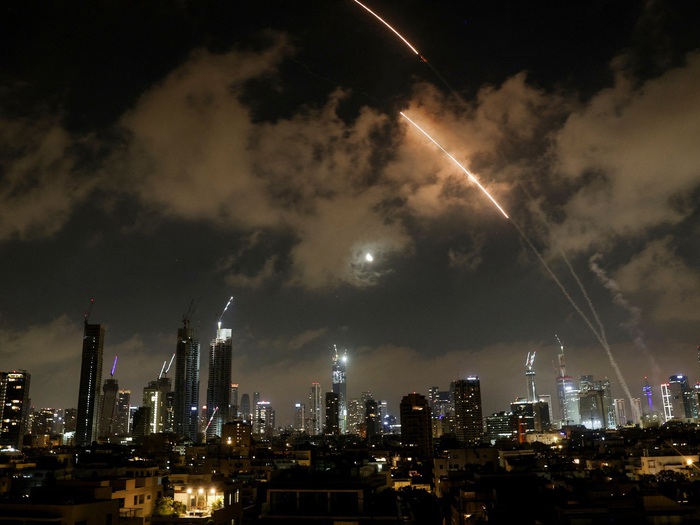
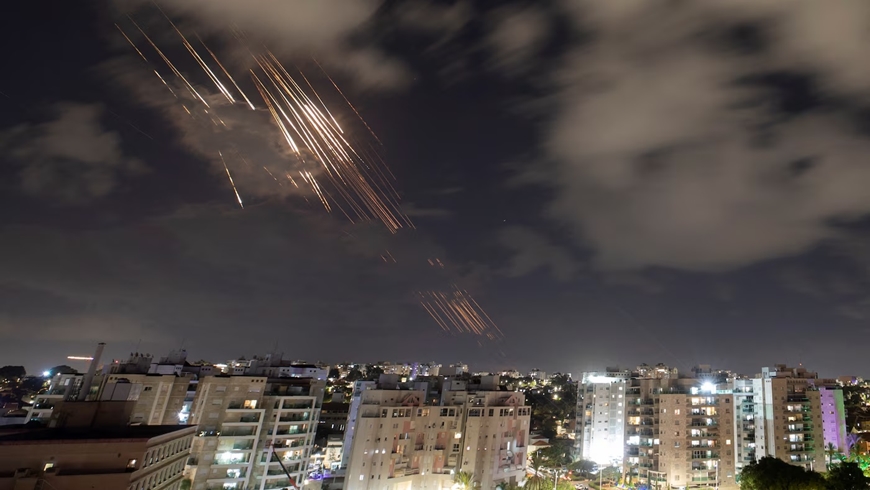
Within moments, explosions lit up the skyline as incoming missiles streaked across the sky, some intercepted mid-air, others breaking through layers of air defense and slamming into urban and strategic areas.
According to Iranian sources, the Khorramshahr-4 missile—one of the heaviest in its arsenal—was deployed in a coordinated barrage targeting what Tehran described as “critical military and infrastructure points” deep inside Israeli territory.
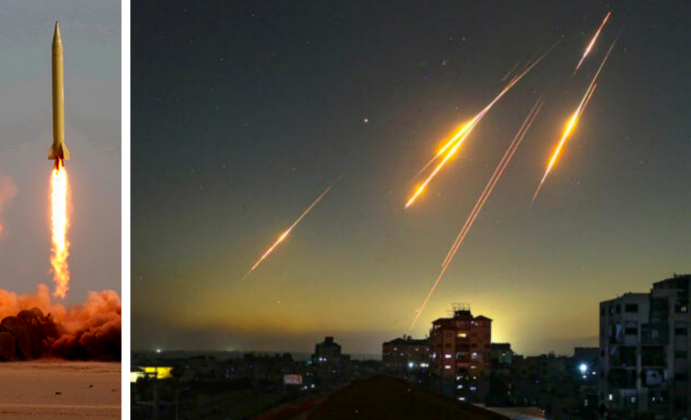
The missile is believed to have a range of up to 2,000 kilometers and can carry a warhead weighing over one ton, making it one of the most destructive conventional weapons in Iran’s inventory.
Israeli authorities confirmed multiple impact sites across the Tel Aviv metropolitan area and in the northern port city of Haifa.
Fires were reported near industrial zones, while emergency responders rushed to residential neighborhoods where buildings had been damaged by the blasts.
In Haifa, reports indicated that key energy infrastructure, including facilities near the port, had been affected, raising fears of wider economic and environmental consequences.
Witnesses described scenes of chaos as civilians fled into shelters, some caught in traffic as warning systems activated only moments before impact.
“The ground shook like an earthquake,” one resident said, recounting how windows shattered and alarms echoed through the streets.
Emergency services worked through the night, pulling injured civilians from debris and battling fires that spread rapidly through damaged structures.
Iran’s Islamic Revolutionary Guard Corps (IRGC) claimed that the missiles had penetrated multiple layers of Israel’s air defense systems, including the much-publicized Iron Dome network.
Tehran described the operation as part of a broader retaliatory campaign following Israeli and U.S. strikes on Iranian territory, signaling that the attacks were not isolated but part of an ongoing military strategy.
Israeli officials, however, pushed back against claims of defense failure, stating that the majority of incoming projectiles had been successfully intercepted.
Military sources emphasized that while some missiles did impact populated areas, the country’s multi-layered defense systems had significantly reduced the scale of damage.
Still, even a small percentage of missiles getting through has proven devastating.
This latest barrage underscores a critical reality of modern warfare: no defense system is completely impenetrable.
With hundreds of missiles launched in waves over recent days, even a high interception rate leaves room for catastrophic consequences when powerful warheads strike densely populated cities.
The psychological impact has been immediate and profound.
Across Israel, civilians have been forced into a state of constant alert, with repeated sirens disrupting daily life and pushing millions into shelters.
Schools have been closed, flights disrupted, and businesses temporarily shut down as authorities attempt to manage both the physical and emotional toll of sustained missile attacks.
Meanwhile, the broader war continues to expand.
The missile strikes on Tel Aviv and Haifa are part of a larger regional confrontation that now stretches far beyond the borders of Israel and Iran.
According to reports, Iranian missiles and drones have targeted multiple locations across the Middle East, including U.S. bases and strategic infrastructure in Gulf countries, while Israeli forces continue to carry out airstrikes deep inside Iranian territory.
The scale of the conflict has raised fears of a wider regional war that could draw in additional actors, including allied militias and global powers with military presence in the region.
Energy markets have already begun reacting.
Haifa’s role as a key industrial and energy hub makes it a particularly sensitive target, and any sustained disruption could have ripple effects across global oil and shipping networks.
Combined with rising tensions in the Strait of Hormuz—another critical chokepoint for global energy supplies—the situation has heightened concerns about economic instability worldwide.
Diplomatic efforts to de-escalate the crisis have so far struggled to gain traction.
International leaders have called for restraint, but the pace and intensity of military operations suggest that neither side is prepared to step back.
Iran has vowed to continue its retaliatory strikes, while Israel has indicated that it will expand its military campaign until it neutralizes what it sees as existential threats.
On the ground, however, it is civilians who bear the brunt of the violence.
Hospitals are treating waves of injured, emergency services are stretched thin, and families are left to cope with the uncertainty of what might come next.
In both Israel and across the region, the human cost of the conflict continues to rise with each pᴀssing day.
Analysts warn that the introduction of heavier, more advanced weapons like the Khorramshahr-4 marks a dangerous escalation in both capability and intent.
Unlike earlier exchanges, which often involved limited strikes, the current phase of the conflict is characterized by sustained, high-intensity attacks designed to overwhelm defenses and inflict maximum impact.
This shift increases the risk of miscalculation and further escalation, potentially pushing the region closer to a full-scale war.
For now, the skies over Tel Aviv and Haifa remain tense, with defense systems on high alert and residents bracing for what may come next.
As the conflict enters this new and more dangerous stage, one question looms over the region and the world: how much further can this escalation go before it becomes impossible to contain?


