From Cartel Corridors to American Streets: Major Drug Ring Dismantled in SWAT Raids
In a coordinated series of pre-dawn raids that stretched across multiple American cities, federal agents and tactical units swept in on what authorities describe as a sophisticated drug distribution network allegedly tied to the Mexican cartel known as Jalisco New Generation Cartel.
By the end of the operation, 55 suspected dealers were in custody and approximately $20 million worth of cocaine had been seized—an enforcement action officials are calling a decisive blow against an entrenched trafficking corridor.
The operation was led by the Federal Bureau of Investigation in collaboration with regional SWAT teams and federal narcotics task forces.
Authorities say months of surveillance, wire intercepts, and undercover work culminated in simultaneous takedowns designed to prevent suspects from warning one another as agents closed in.
Shortly before sunrise, armored vehicles rolled into residential neighborhoods and industrial districts believed to serve as staging grounds for distribution.
Tactical officers breached doors under court-authorized warrants, securing suspects and sweeping properties for evidence.
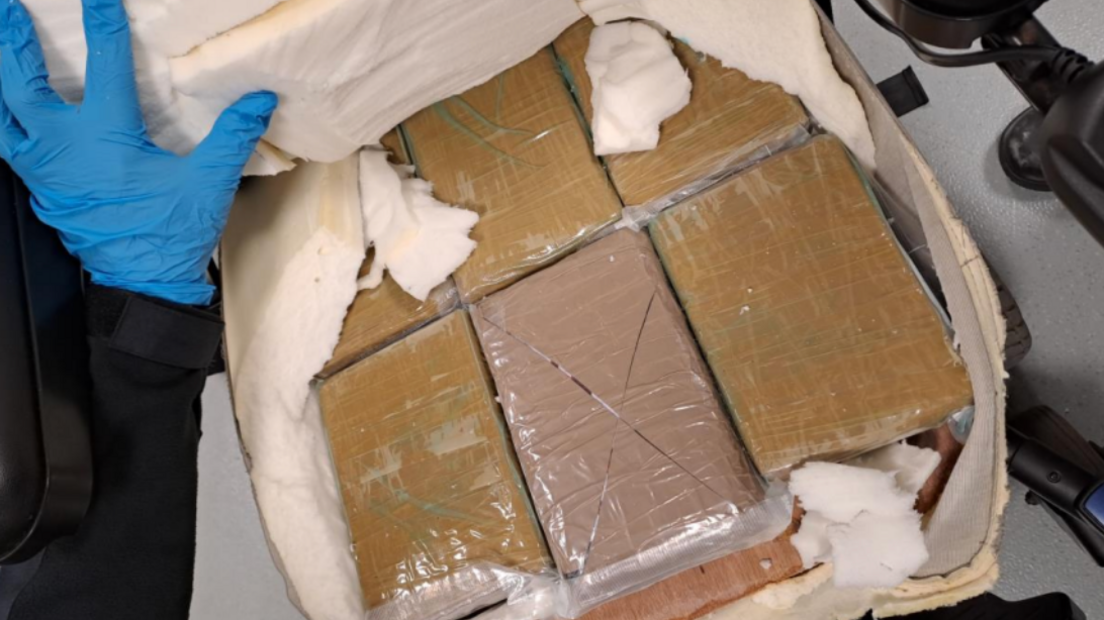
In several locations, law enforcement officials reported discovering hidden compartments behind false walls and beneath floorboards—storage spaces allegedly used to conceal kilogram packages of cocaine awaiting delivery.
According to federal affidavits, investigators began tracking the network after identifying unusual shipment patterns connected to commercial freight routes.
What appeared at first to be isolated narcotics seizures gradually revealed a broader web of distribution hubs operating under a centralized command structure.
Prosecutors allege that the organization relied on coded language, encrypted messaging platforms, and rotating stash houses to evade detection.
Authorities claim the seized cocaine—estimated at roughly $20 million in street value—was intended for distribution across multiple states.
The operation, officials say, targeted mid-level coordinators responsible for moving product from border entry points to urban markets.
By striking multiple nodes of the network at once, investigators aimed to disrupt the supply chain rather than merely arrest individual street-level dealers.
During a press briefing, officials displayed evidence recovered in the raids: stacks of тιԍнтly wrapped packages bearing distinct markings, high-powered firearms, bundles of cash, and digital devices believed to contain transaction records.
Law enforcement sources stated that forensic analysis of the electronics could lead to additional arrests as investigators map connections further up the alleged hierarchy.

Residents in several neighborhoods described a tense but orderly scene as officers executed warrants.
“It happened so fast,” one neighbor said, recounting how flashing lights illuminated the block before dawn.
“One minute everything was quiet. The next, there were officers everywhere.”
Authorities emphasized that the operations were conducted with safety protocols in place and that no civilians were injured during the arrests.
Prosecutors allege the network operated with logistical precision.
Couriers allegedly transported cocaine concealed in legitimate cargo shipments, while regional distributors managed smaller cells responsible for breaking down bulk quanтιтies into retail-ready amounts.
Financial investigators are now tracing proceeds believed to have been funneled through shell companies and layered bank transfers in an effort to disguise illicit profits.
The alleged link to the Jalisco New Generation Cartel underscores the transnational dimension of the case.
Law enforcement experts note that cartels often rely on decentralized cells within the United States to minimize exposure.
By compartmentalizing roles—transport, storage, distribution—the organization reduces the risk that a single arrest will unravel the entire network.
Officials argue that this week’s coordinated strike sought to counter that strategy by acting across multiple locations simultaneously.
Legal proceedings are expected to begin swiftly, with defendants facing charges that include conspiracy to distribute controlled substances, possession with intent to distribute, and firearms violations.
Federal prosecutors indicated that several suspects may also face enhanced penalties due to alleged leadership roles within the organization.
Criminal justice analysts caution that large-scale drug seizures, while impactful, represent one chapter in a broader struggle against narcotics trafficking.
Supply chains often adapt quickly, shifting routes or recruiting new participants.
Nevertheless, authorities ᴀssert that removing 55 alleged dealers and seizing millions in product significantly disrupts market stability, at least in the short term.
Public health advocates echoed that sentiment, emphasizing that reducing the flow of cocaine and other illicit substances into communities can mitigate ᴀssociated violence and addiction.
They also stressed the importance of coupling enforcement with prevention and treatment initiatives to address underlying demand.
As investigators continue reviewing seized materials, additional indictments remain possible.
Officials declined to specify whether higher-ranking cartel figures are targets of the ongoing probe but confirmed that the investigation remains active and international coordination is underway.
The scale and precision of the operation reflect evolving enforcement tactics.
By integrating financial intelligence, digital forensics, and coordinated tactical responses, authorities aim to dismantle infrastructure rather than simply intercept shipments.
“This was not just about the drugs we seized today,” one official remarked.

“It was about cutting off the arteries that keep these networks alive.”
By nightfall, the properties raided earlier in the day stood quiet, their doors sealed with evidence tape.
Courtrooms prepared for initial appearances as prosecutors compiled documentation to support detention hearings.
The alleged traffickers, once operating under layers of secrecy, now face the weight of federal charges.
Whether the takedown delivers lasting disruption remains to be seen.
Criminal organizations are adaptive, and market dynamics are complex.
Yet for now, law enforcement officials characterize the operation as a significant victory—a coordinated strike aimed at weakening a powerful trafficking network and signaling that even well-entrenched systems are vulnerable to sustained investigative pressure.
The headlines capture the drama: 55 arrested, $20 million seized, a cartel-linked pipeline interrupted.
But beyond the numbers lies a deeper narrative of intelligence work, tactical execution, and the ongoing contest between organized crime and those tasked with dismantling it.


