Mount Etna’s Eruption Sparks Fears Beyond Lava: Could a Flank Collapse Trigger a Mediterranean Tsunami?
Mount Etna, Europe’s most active volcano, has erupted countless times throughout history. But its latest outburst has drawn urgent attention from geologists—not because of its lava fountains or ash plumes, but because of what is happening beneath the surface.
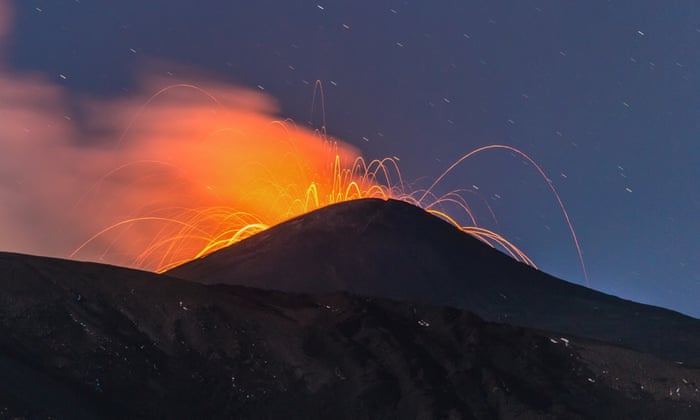
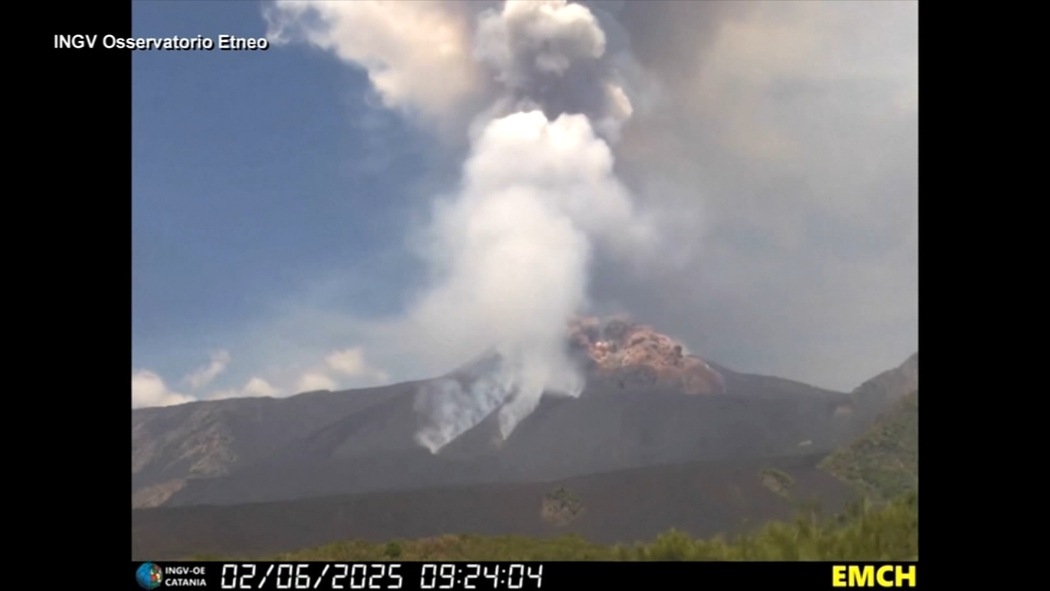
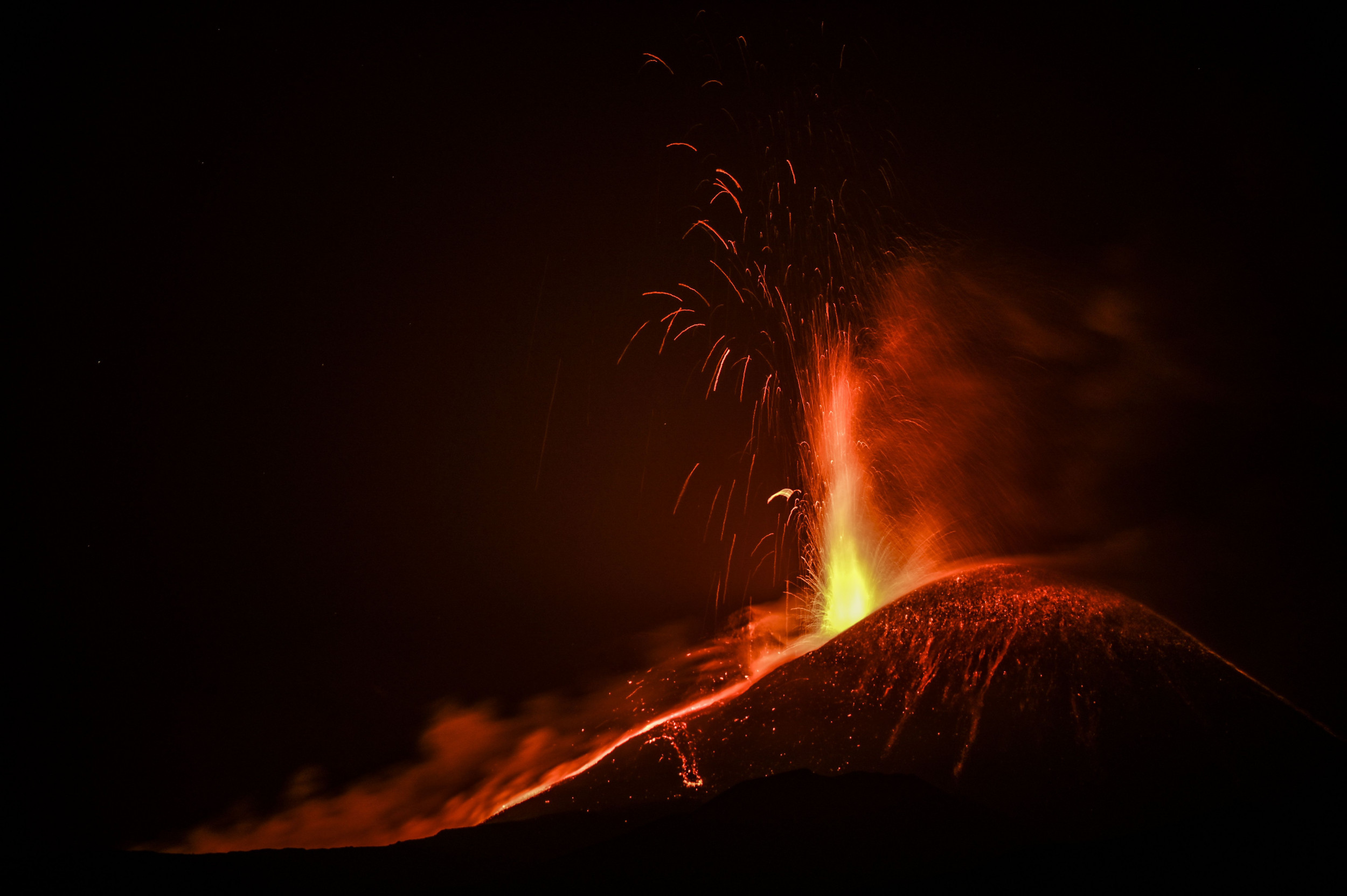
The eruption began abruptly, without the gradual buildup scientists typically observe. Ash and incandescent rock blasted skyward as monitoring stations recorded rapid pressure release deep inside the volcano. Seismic sensors detected tremors migrating laterally rather than rising vertically through central conduits—a key deviation from Etna’s usual eruptive behavior.
That detail immediately raised alarms.
Data revealed that tremor pathways were following older fracture zones instead of established magma channels. Gas measurements showed sharp spikes in sulfur dioxide relative to carbon dioxide—often a signal of rapid decompression at depth. Infrasound arrays detected irregular pressure pulses, suggesting unstable internal dynamics.
Even more concerning was the uneven lava output. Vents opened asymmetrically, with energy directed toward the volcano’s southeastern flank—the side that slopes down toward the Ionian Sea. Thermal imaging confirmed abnormal heat spreading across this coastal-facing section within minutes.
While aviation alerts were issued due to drifting ash, volcanologists were focused elsewhere: the mountain itself was moving.
Mount Etna’s southeastern flank has long been known to creep slowly toward the sea. Under normal conditions, this movement measures only millimeters per year. But during this eruption, GPS and laser instruments detected acceleration to centimeters within days.
Tilt meters recorded subtle rotational motion, indicating that the mᴀss was not merely sliding—it was beginning to pivot outward. Offshore sonar surveys detected fresh sediment disturbances aligned with the unstable slope above. Seismic clusters beneath the flank suggested internal weakening rather than simple surface erosion.
Scientists concluded that eruptive vibrations, rainfall, and deep magma movement may have reduced friction along clay-rich layers buried within the volcano. Once weakened, such layers can allow gravity to take over rapidly—and without much additional warning.
The eruption, it seemed, was only the trigger.
Further analysis revealed fresh magma intrusions spreading laterally beneath the unstable flank. Instead of rising vertically and releasing pressure through eruption, magma was forcing its way into cracks and weak structural zones.
Pressure readings spiked. Gas emissions increased along lower slopes. Geochemical sampling detected elevated helium-3 concentrations—a tracer linked to deeper mantle sources, confirming that the intrusions were being fed from significant depth.
This type of intrusion can destabilize rather than relieve a volcano. Each new injection widens fractures, reducing internal cohesion. Borehole strain meters detected expansion in areas once considered stable. Experts warned that large sections of the mountain could begin behaving less like solid rock and more like a fractured, shifting mᴀss.
Etna was no longer simply erupting. It was losing structural integrity.
Geologists quickly compared real-time data to evidence of ancient flank collapses preserved offshore. The Ionian seabed contains mᴀssive debris fields—proof that large portions of Etna collapsed into the sea thousands of years ago.
In similar global events, such as at Anak Krakatau in 2018 and Ritter Island in 1888, catastrophic flank collapses followed short periods of accelerated deformation. In those cases, visible eruptions were not the primary destructive force. The devastation came when entire sections of volcanic slopes suddenly gave way.
Historical timelines show that once acceleration begins, failure windows can compress dramatically—from years to mere days or weeks.
The greatest concern lies where rock meets water.
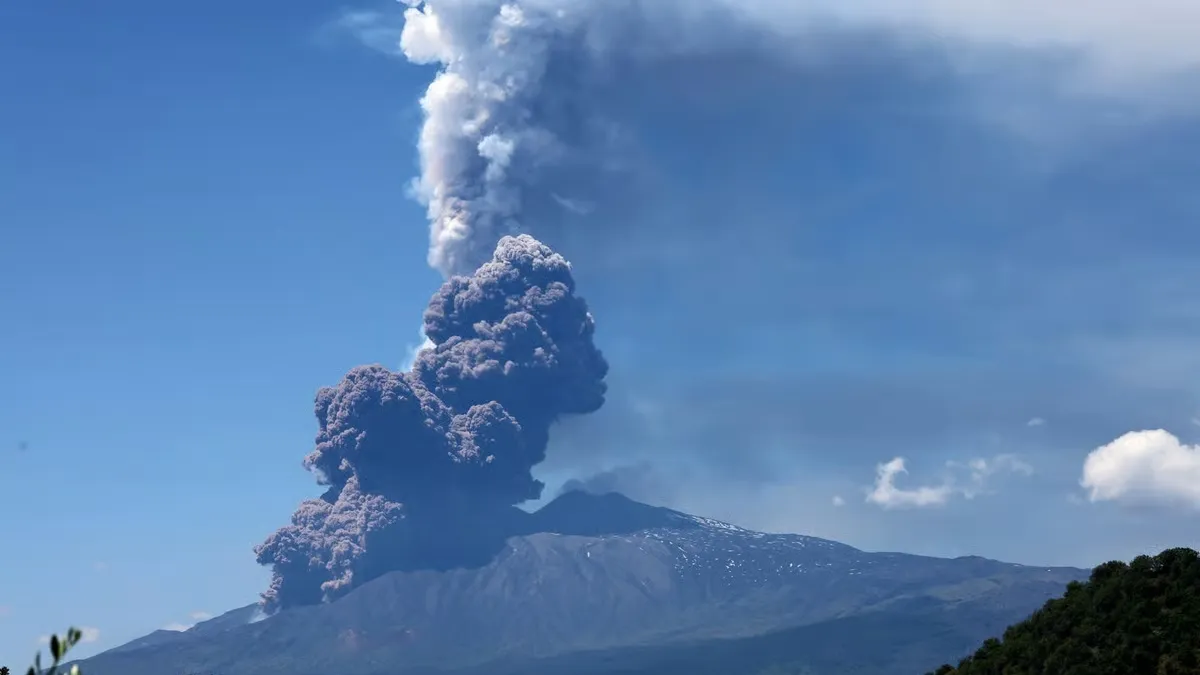
If a substantial portion of Etna’s southeastern flank were to slide into the Ionian Sea, it could displace enormous volumes of water almost instantly. Unlike earthquakes, which generate tsunamis through fault movement, underwater landslides convert gravitational energy directly into vertical water displacement. This process can produce highly efficient—and dangerously fast—tsunami generation.
Bathymetric mapping reveals that the seafloor near Etna drops off steeply, a geometry that favors rapid wave formation. The shallow continental shelf near Sicily could compress incoming waves, amplifying their height along the coast.
Even a partial collapse could generate waves larger than most recorded in modern Mediterranean history.
Advanced modeling using updated deformation data suggests that, in worst-case scenarios, waves could strike Sicily’s eastern coastline within minutes. Some projections show complex interference patterns caused by reflections off basin walls, leading to unpredictable amplification in narrow bays and harbors.

Unlike earthquake-triggered tsunamis, warning times in this scenario could be extremely short—sometimes nearly simultaneous with detection. Evacuation windows might be measured in minutes rather than hours.
The Mediterranean’s enclosed basin could also carry secondary waves outward. Southern Italy, Malta, parts of Greece, and even segments of the North African coast could experience delayed but significant impacts depending on collapse size and wave dynamics.
Authorities have reviewed evacuation plans, but logistical challenges complicate response. Coastal roads overlap with landslide-prone zones. Dense populations and nighttime scenarios reduce reaction time. Some rural communities lack real-time warning infrastructure.
Scientists stress that no single signal guarantees collapse. Instead, it is the convergence of factors that narrows the probability window: accelerated flank movement, lateral magma intrusion, gas anomalies, and coastal deformation.
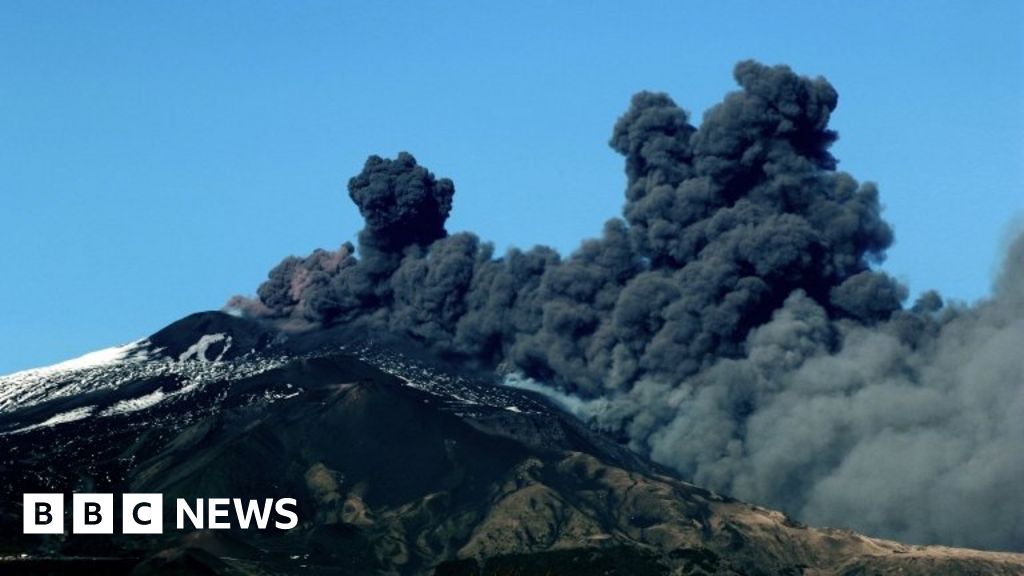
Risk analysts describe such systems as nonlinear. When thresholds are crossed, small additional inputs can trigger disproportionate outcomes. A minor seismic shift could, under the right conditions, tip the balance.
Importantly, experts caution against panic. Etna has endured countless eruptive cycles, and monitoring networks are among the most advanced in the world. However, they acknowledge that the volcano may have entered a phase where structural instability—not explosive eruption—poses the most significant threat.
The lesson from geological history is sobering: when volcanic flanks fail, the consequences can unfold faster than human systems are designed to respond.
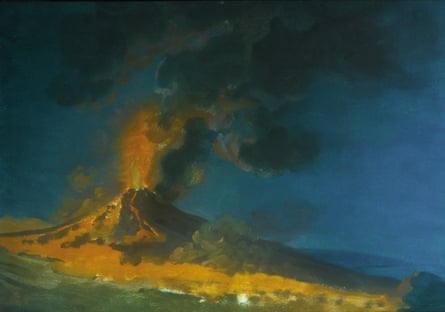
For now, scientists continue to monitor deformation, gas output, seismicity, and offshore pressure changes in real time. The situation remains dynamic.
Mount Etna has always commanded respect. But this moment serves as a reminder that sometimes the greatest volcanic danger is not the fire above—it is the silent shift beneath.


