Mount Etna’s Silent Slide Raises Alarms Across the Mediterranean
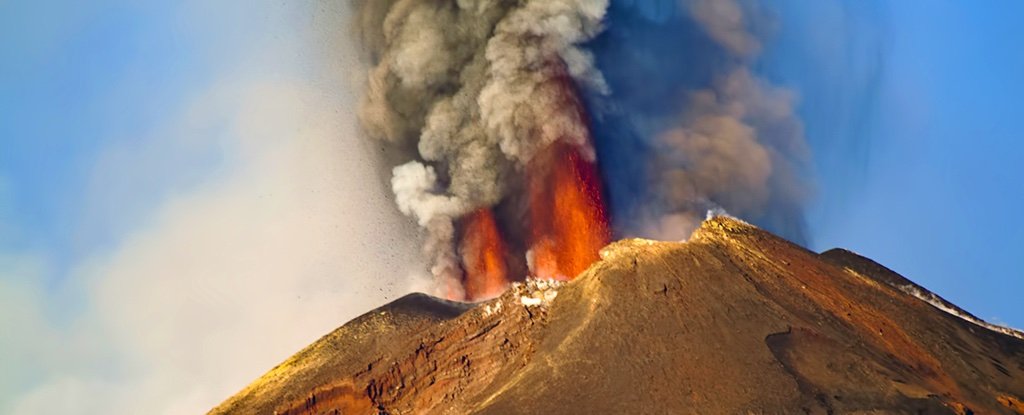
Mount Etna, Europe’s most active volcano, has long captivated the world with its fiery eruptions and towering ash plumes.
But scientists are now far more concerned about something quieter — and potentially far more dangerous — unfolding beneath the Mediterranean Sea.
In 2017, a network of high-precision underwater instruments installed off Etna’s eastern coast detected something extraordinary.

A section of the volcano’s submarine flank — a vast slab of rock extending kilometers offshore — shifted approximately four centimeters in just eight days.
While that distance may seem minor, researchers emphasize that when tens of billions of tons of volcanic rock move at once, even a few centimeters represent enormous geological force.
What made the discovery so unsettling was not just the movement itself, but its silence.
There was no major earthquake.
No dramatic seismic swarm.
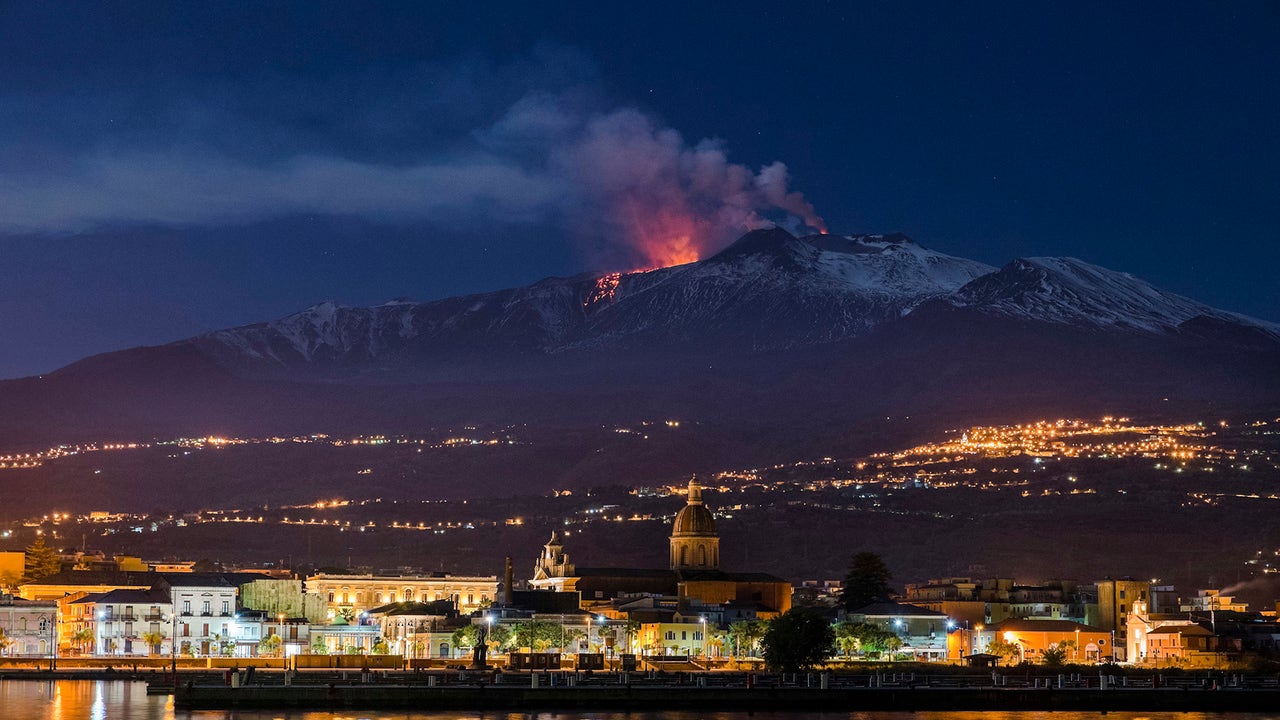
No explosive eruption signaling imminent collapse.
Instead, the volcano’s southeastern flank appeared to be slowly sliding toward the sea under its own immense weight.
For decades, volcanologists ᴀssumed that flank collapses were primarily driven by magma pressure building inside a volcano.
Rising magma would fracture rock from within, eventually destabilizing the structure.
But the data from Etna’s seafloor monitoring network suggested a different mechanism: gravity.

The greatest displacement was occurring far offshore, along deep submarine faults stretching more than 30 kilometers into the Mediterranean.
Rather than being pushed apart from inside, the mountain seems to be gradually pulling itself apart at its base, its mᴀssive bulk creeping seaward in a slow gravitational slide.
Satellite radar and coastal GPS stations have since confirmed that Etna’s southeastern flank is moving as a coherent block.
Over the past decades, cumulative displacement has reached several meters.
Each eruption appears to correlate with subtle accelerations in this movement, suggesting a complex interplay between internal volcanic activity and external structural instability.
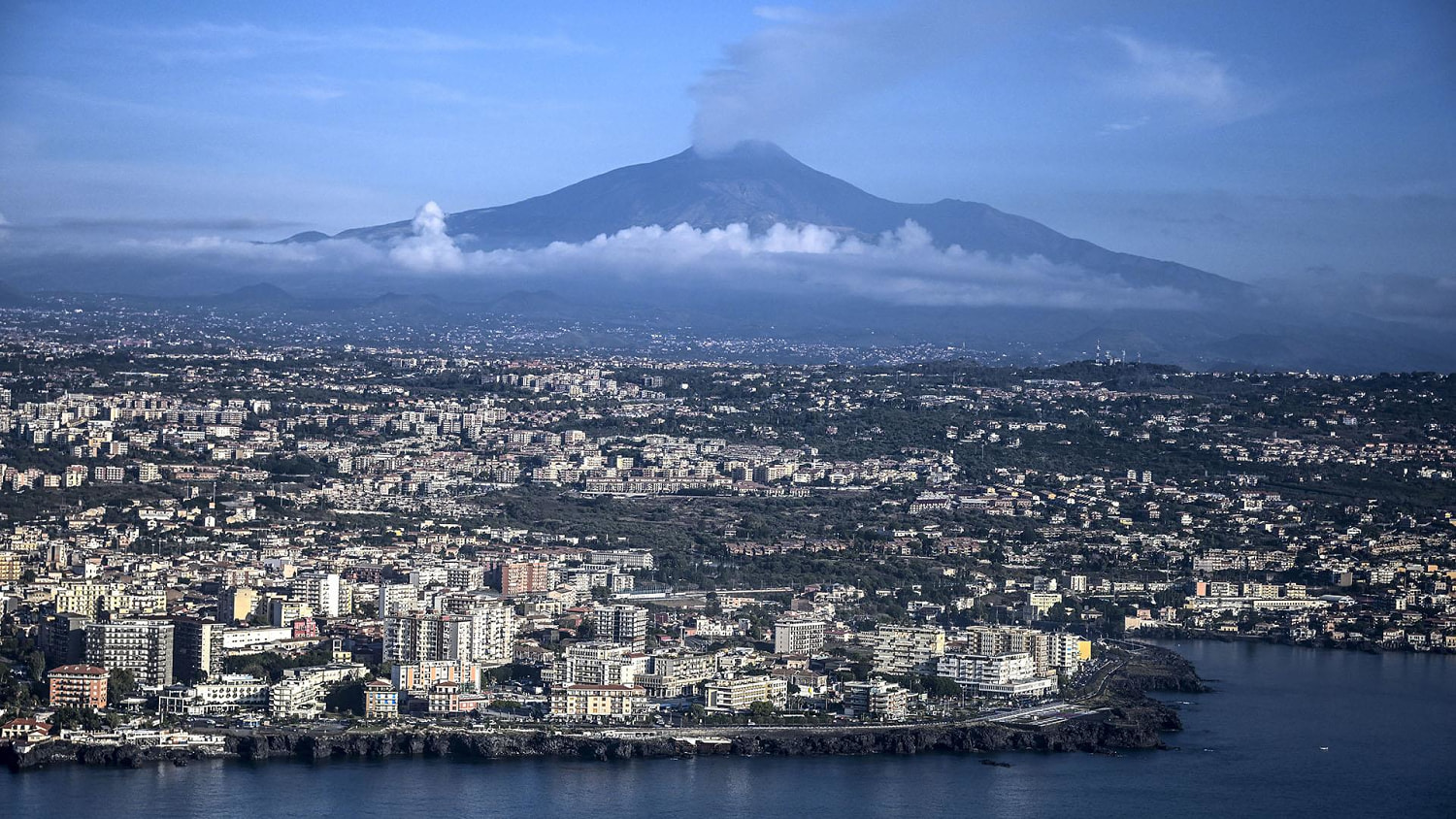
Geological records reveal that this is not the first time Etna has experienced dramatic flank failure.
Around 7,600 years ago, a mᴀssive collapse carved out the Valle del Bove, a vast scar visible on the volcano’s eastern side today.
Marine core samples show thick deposits of debris extending across the seafloor — evidence that enormous portions of the volcano once slid into the sea.
Tsunami deposits discovered across parts of the eastern Mediterranean indicate that ancient collapses likely generated powerful waves.
While exact heights are debated, researchers agree that large volcanic landslides can displace immense volumes of water in a matter of minutes.

Modern computer simulations have explored worst-case scenarios.
If a major portion of Etna’s flank were to collapse suddenly, it could trigger significant tsunamis along Sicily’s eastern coast.
Cities such as Catania, home to hundreds of thousands of residents, would be particularly vulnerable due to their proximity.
However, experts caution that such catastrophic scenarios represent extreme possibilities, not immediate predictions.
Most flank movement observed today is gradual.
The central scientific challenge lies in determining whether slow creep could transition into rapid failure — and if so, under what conditions.

One of the most troubling aspects of gravitational flank instability is the lack of clear warning signals.
Magma-driven eruptions typically produce detectable precursors: increased gas emissions, rising temperatures, and seismic tremors.
By contrast, deep submarine fault movement may generate minimal seismic activity, making it harder to detect sudden acceleration in time to issue alerts.
Compounding the risk is the Mediterranean’s complex preparedness landscape.
While regional tsunami monitoring systems exist, coverage and response protocols vary among countries.
Researchers have called for expanded real-time monitoring networks, including additional underwater sensors capable of detecting rapid slope failures and transmitting automated alerts.
The implications extend beyond Sicily.
Many volcanic islands and coastal volcanoes worldwide — from Hawaii to Japan — exhibit similar flank instability.
Understanding Etna’s behavior could reshape how scientists ᴀssess risks at these sites.
Yet it is important to maintain perspective.
Large-scale volcanic flank collapses are rare events on human timescales.

Although Etna shows signs of structural strain, no consensus exists that a catastrophic collapse is imminent.
Ongoing monitoring provides critical data, and international collaboration among Italian, German, and British research teams has significantly improved early detection capabilities.
In Sicily, civil protection agencies have begun incorporating flank-collapse scenarios into broader hazard planning.
Evacuation drills, public education campaigns, and infrastructure resilience ᴀssessments are part of a growing recognition that geological risks must be addressed proactively.
Mount Etna remains a dynamic system — erupting frequently, reshaping its slopes, and reminding observers of the Earth’s restless nature.
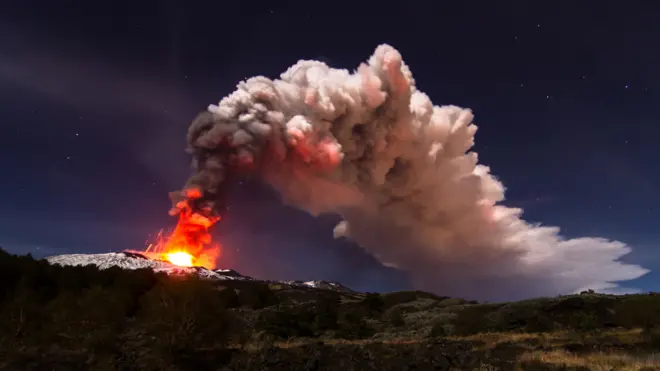
But its most dangerous movements may be the ones that produce no dramatic plume or lava fountain.
The quiet slide beneath the Mediterranean has transformed scientific understanding of how volcanoes can fail.
It underscores a sobering truth: some of the planet’s most profound forces operate not with explosive fury, but with patient, relentless gravity.
As monitoring technology advances and awareness grows, researchers hope that early detection systems will provide sufficient warning should conditions deteriorate.
Until then, Etna stands as both a marvel of nature and a reminder of the fragile balance between land and sea in one of the world’s most densely populated coastal regions.


