Kabul Inferno: ᴅᴇᴀᴅly Airstrike on Hospital Sparks Global Outrage and Fear of Wider War
A horrifying scene of destruction has emerged from Kabul after a mᴀssive airstrike reduced a major hospital to rubble, leaving hundreds feared ᴅᴇᴀᴅ and triggering a wave of global outrage that is rapidly escalating tensions across an already volatile region.
The attack, which struck late in the evening, tore through the Omid addiction treatment hospital—one of the largest medical facilities of its kind in Afghanistan—at a time when thousands of patients were inside.
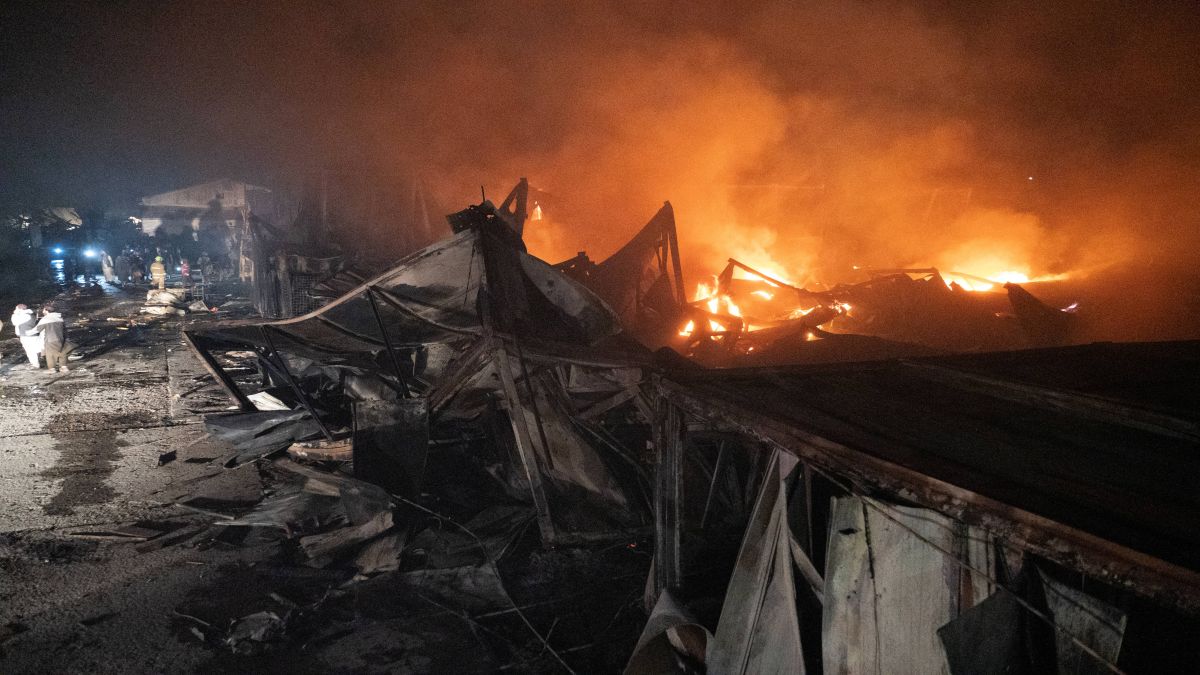
Witnesses describe a deafening explosion followed by towering flames and collapsing structures, turning what should have been a place of recovery into a scene of unimaginable devastation.
Within minutes, chaos engulfed the area.
Survivors stumbled through smoke-filled corridors as parts of the building caved in around them.
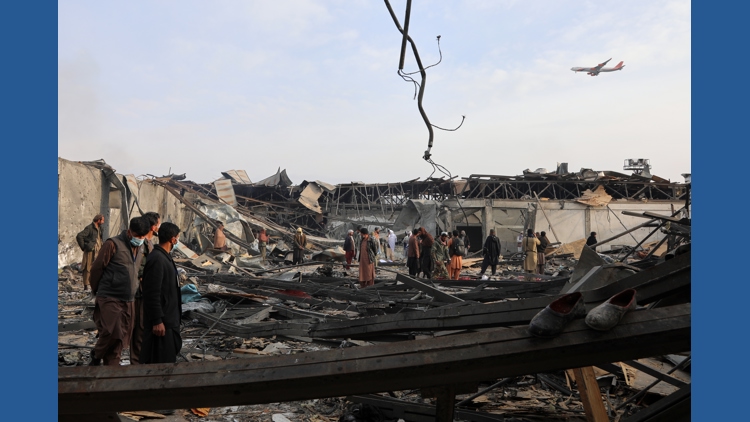
Rescue workers, many arriving without adequate equipment, began pulling victims from beneath twisted metal and shattered concrete.
Some were alive, barely breathing.
Others did not survive the night.
Afghan officials have accused Pakistan of carrying out the airstrike, claiming that more than 400 people were killed and at least 250 injured in what they described as one of the ᴅᴇᴀᴅliest attacks on civilian infrastructure in recent history.
Pakistan, however, has strongly denied targeting a hospital, insisting that its military operations were aimed at terrorist infrastructure and militant strongholds.
Officials in Islamabad argued that any civilian casualties may have been the result of secondary explosions, suggesting the presence of weapons or ammunition near the strike zone.
The conflicting narratives have only deepened the sense of uncertainty surrounding the incident, but the scale of destruction is undeniable.
Eyewitnesses describe entire sections of the hospital flattened, with fires burning for hours after the initial blast.
Ambulances rushed back and forth through debris-strewn streets, their sirens cutting through the night as medical teams struggled to cope with the overwhelming number of casualties.
Inside what remained of the facility, scenes of desperation unfolded.
Patients who had been undergoing treatment were trapped beneath rubble, calling out for help as rescuers raced against time.
Doctors and nurses, many injured themselves, continued working under extreme conditions, treating the wounded with limited supplies.
The hospital, which reportedly housed thousands of patients, was considered a critical part of Afghanistan’s fragile healthcare system.
Its destruction not only represents a mᴀssive loss of life but also a devastating blow to medical infrastructure in a country already struggling with years of conflict and instability.

As images and videos of the aftermath began circulating online, the world reacted with shock.
Governments and international organizations quickly called for investigations and urged restraint, warning that the incident could mark a dangerous turning point in the escalating conflict between Pakistan and Afghanistan.
The United Nations and other global bodies emphasized the need to protect civilian infrastructure, particularly hospitals, which are safeguarded under international law.
The airstrike comes amid a rapidly deteriorating security situation along the Afghanistan–Pakistan border, where clashes have intensified in recent weeks.
Both sides have accused each other of harboring militant groups and violating sovereignty, fueling a cycle of retaliation that now threatens to spiral out of control.
Analysts warn that this latest incident could push the conflict into a new and far more dangerous phase.
What was once a series of cross-border skirmishes is now evolving into a broader confrontation with potentially far-reaching consequences.
Regional powers are watching closely, concerned that continued escalation could destabilize South Asia and beyond.
)
There are also growing fears that the conflict could intersect with wider geopolitical tensions, drawing in additional actors and complicating efforts to contain the violence.
On the ground in Kabul, however, the focus remains on survival.
Families are searching for missing loved ones, hospitals are overwhelmed with the injured, and rescue teams continue to sift through the ruins in hopes of finding survivors.
The smell of smoke still lingers in the air, a grim reminder of the destruction that unfolded in a matter of minutes.
For many, the question is not just who is responsible—but what comes next.
If the accusations and counter-accusations continue without resolution, the risk of further escalation remains high.
Each new strike, each new retaliation, brings the region closer to a broader conflict that could engulf multiple nations.
As night falls again over Kabul, the city remains on edge.
The echoes of the explosion may have faded, but the consequences are only beginning to unfold.


