ICE vs.People of Minnesota: Community Resists Trump’s Militarized Crackdown – Special Report
Tensions are rising in Minneapolis as a series of reported federal immigration enforcement actions collide with community resistance, legal challenges, and growing national political stakes.
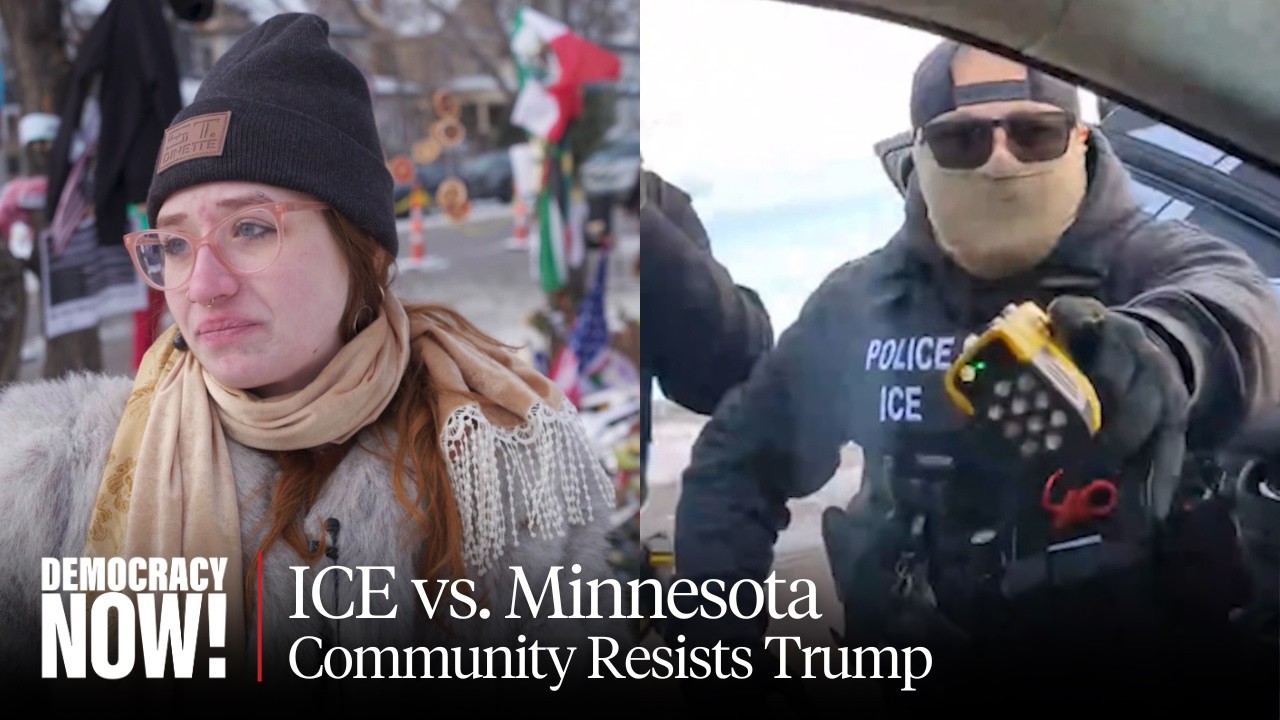
A special field report from Democracy Now! describes a city where early morning operations, neighborhood confrontations, and allegations of excessive force have created an atmosphere residents call volatile and deeply unsettling.
According to individuals interviewed in the report, some residents and volunteer legal observers say they were caught up in enforcement activity while attempting to document or monitor operations involving U.S.
Immigration and Customs Enforcement.
One community member described agents breaking vehicle windows and forcibly removing occupants, allegations that have not yet been fully addressed in public statements from federal authorities.
Such claims, if substantiated, would raise significant legal and civil rights questions, especially regarding the role of observers during law enforcement actions.
The emotional center of the story involves the reported death of a local woman earlier in the month during an encounter linked by community members to federal agents.

Her name has circulated widely among activists, and vigils and protests have followed.
The report states that friends and family are demanding an independent investigation, while critics argue the circumstances must be reviewed through official legal processes before conclusions are drawn.
The situation has become a rallying point, symbolizing what some see as escalating force in immigration enforcement.
Indigenous voices have also entered the conversation.
Chase Iron Eyes, an attorney ᴀssociated with the Oglala Sioux community, told reporters that detaining Native Americans under immigration authority presents complex legal issues, describing it as contradictory to established legal principles.
His comments highlight how federal enforcement intersects with tribal sovereignty, citizenship status, and long-standing legal frameworks.
Meanwhile, the political backdrop adds further intensity.
The report notes that the Pentagon has placed a number of troops on standby for potential deployment, a move tied to broader federal preparedness policies rather than a confirmed action on the ground.
Discussions about invoking the Insurrection Act have circulated in political commentary, though such steps involve high legal thresholds and have not been formally implemented in this context.
At the same time, reports indicate federal scrutiny has extended toward state and city leadership.
Tim Walz and Jacob Frey have reportedly faced legal and political pressure related to policy disagreements over immigration enforcement and local cooperation with federal authorities.
These developments reflect a broader national debate over the balance of power between local jurisdictions and federal immigration agencies.
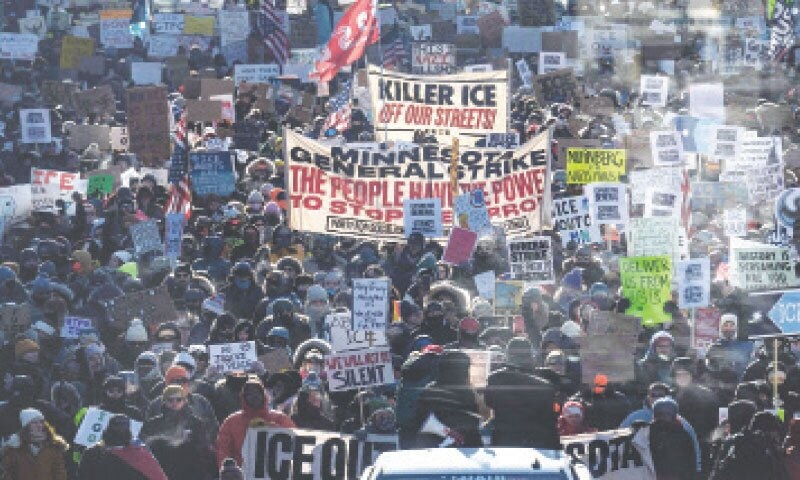
On the ground, the atmosphere is described as tense but organized.

Community groups have established communication networks to share information about enforcement activity, while legal aid organizations are advising residents on their rights.
Protests have remained largely focused on accountability and transparency, though emotions run high.
For many participants, the issue goes beyond a single incident, touching on idenтιтy, belonging, and trust in insтιтutions.
Law enforcement officials typically emphasize that immigration operations target specific legal violations and are conducted under federal authority.
Civil rights advocates counter that the impact on families and neighborhoods can be profound, especially when actions are perceived as aggressive.
The gap between those perspectives fuels ongoing confrontation, both in public discourse and in the streets.
The role of media has also become central.
Independent journalists and observers say documenting events is essential for transparency, while authorities sometimes view such presence as interference.
Courts have long weighed these tensions, balancing press freedom and public oversight against operational security.
As the situation develops, legal processes are likely to shape what happens next.
Allegations of misconduct, if formally filed, could lead to investigations and court review.
Political leaders may face hearings, lawsuits, or negotiations over policy boundaries.
The involvement of national defense readiness adds another layer, though actual troop deployment would require clear legal justification.
For residents, the story is not abstract.
It unfolds outside homes, in neighborhoods, and across community networks.
Each new report, each rumor, and each official statement shifts the mood.
What remains constant is a sense that Minneapolis has become a focal point in a wider struggle over immigration, authority, and civil liberties.
The outcome remains uncertain.
Courts, policymakers, and investigators will play decisive roles, but so will public perception and civic engagement.
In the meantime, the city stands in a moment of strain, watched closely by the rest of the country as questions of power, rights, and accountability move from headlines into lived reality.


