Jim Carrey Reveals Why Will Smith Is Quietly Rejected by Hollywood
For more than thirty years, Will Smith represented something almost mythical in Hollywood: reliability.
He was the rare superstar who combined box office power, family-friendly appeal, and a carefully maintained image of positivity.
Studios trusted him.

Audiences adored him.
Executives considered him nearly risk-free.
Then, on one unforgettable night in 2022, that carefully built empire cracked—publicly, violently, and irreversibly.
The Oscars slap was not just an incident.
It was a rupture.
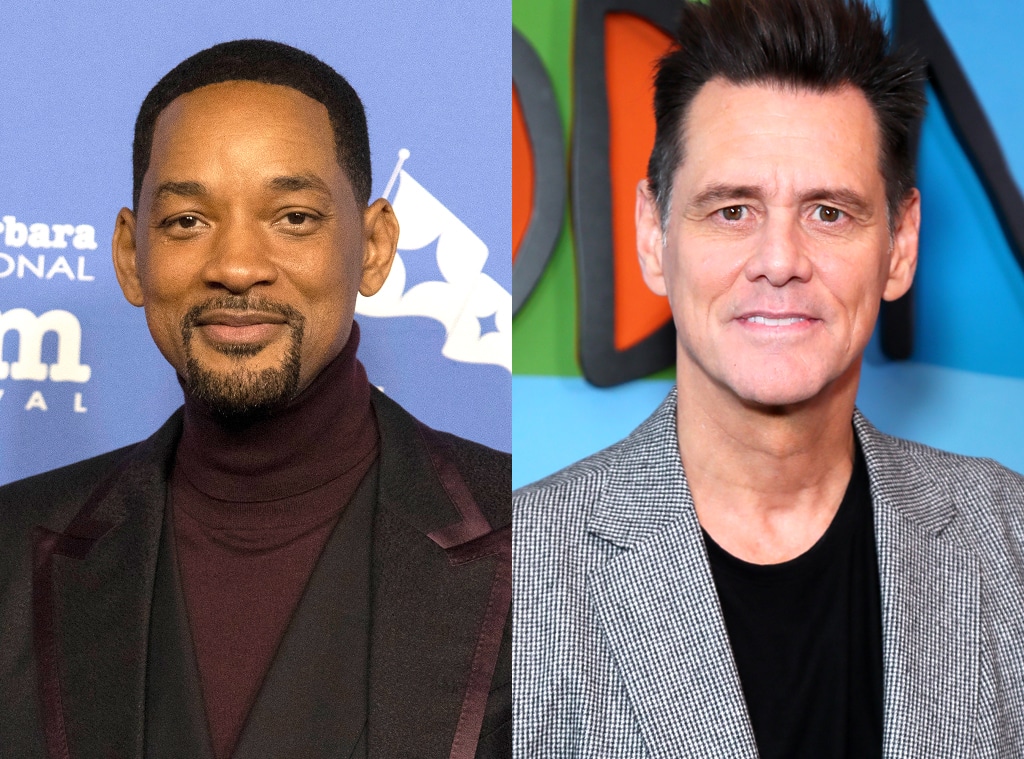
When Will Smith walked onto the stage and struck Chris Rock in front of millions of viewers, the shock rippled far beyond the Dolby Theatre.
What stunned many observers even more was what followed: moments later, Will was given a standing ovation and accepted his Oscar as if the rules of decorum had momentarily ceased to exist.
To some, that applause symbolized forgiveness.
To others, it signaled something far more troubling—a moral numbness at the heart of Hollywood itself.
Jim Carrey was one of the few who voiced that discomfort immediately.

He called Hollywood “spineless,” accusing the industry of applauding behavior it would never tolerate from lesser figures.
In doing so, Carrey did more than criticize Will Smith.
He exposed the fragile, unspoken contract that governs power in Hollywood.
Before that night, Will Smith had been everything the system wanted.
From his early rise as the Fresh Prince to his run of blockbusters—Independence Day, Men in Black, Bad Boys—he was the ultimate global star.

His movies crossed racial and cultural lines, earning billions worldwide.
Studios didn’t just see talent; they saw predictability.
Will Smith meant profits, smooth press tours, and minimal controversy.
Equally important was his personal image.
For years, Will cultivated the persona of a devoted husband, loving father, and motivational figure.

His speeches about discipline, positivity, and self-improvement circulated endlessly online.
For young audiences, especially young people of color, he embodied the promise that success and integrity could coexist.
But Hollywood’s affection was never unconditional.
The truth is, the industry does not demand perfection—it demands control.
Stars are allowed flaws, even scandals, as long as those flaws remain contained, managed, and invisible during official moments.
The Oscars represent the pinnacle of that control.

They are not just an awards show; they are a ritual of order, hierarchy, and image discipline.
Will Smith broke that order.
By reacting emotionally on the most formal stage in entertainment, he violated an unwritten rule: no matter how personal the pain, you never make it public in a way that disrupts the system.
In Hollywood’s eyes, the slap was not merely an act of violence—it was unpredictability made visible.
And unpredictability is the greatest sin in an industry built on risk management.
The damage did not end there.

Will’s acceptance speech, emotional and tearful, failed to include an apology to Chris Rock.
That omission mattered.
It suggested to many insiders that Will did not fully submit to the ritual of accountability Hollywood expects after public missteps.
Soon after, the Academy’s ten-year ban sent a clear message: you may be celebrated, but you are no longer trusted.
Yet the Oscars incident did not happen in isolation.

For years before the slap, Will Smith’s carefully curated image had already begun to fray.
The public unraveling of his marriage on Red Table Talk transformed deeply personal pain into entertainment.
What shocked audiences was not only Jada Pinkett Smith’s revelations, but Will’s visible vulnerability.
The man once admired for strength suddenly became a meme—a symbol of emotional exposure in a culture that still punishes men, especially powerful men, for showing it.
Hollywood noticed.

At the same time, his box office dominance was weakening.
Films like After Earth, Collateral Beauty, and Gemini Man failed to meet expectations.
Studios began whispering about creative overreach, about Will’s increasing control over scripts and messaging.
The image of the easygoing, cooperative star was replaced by something more complicated: a powerful figure whose personal philosophy increasingly shaped projects, sometimes at the expense of storytelling.
Then came the slap—an explosion that confirmed every fear executives quietly held.

Hollywood did not respond with outrage.
It responded with silence.
There were no public blacklists, no dramatic condemnations.
Instead, invitations stopped coming.
Projects stalled.
Meetings disappeared.
In Hollywood, this quiet withdrawal is the clearest signal of all.

The system protects itself first.
When a star becomes ᴀssociated with emotional volatility, public backlash, and uncontrollable narratives, distance becomes policy.
Jim Carrey’s blunt criticism cut so deeply because it acknowledged what others would not say: Hollywood had applauded the behavior in the moment, then punished it afterward.
That contradiction reveals how power truly works.
The applause was reflex.
The exclusion was strategy.
Today, Hollywood does not “hate” Will Smith.
It fears uncertainty.
His talent remains unquestioned.
His legacy is intact.
But trust—the invisible currency of the industry—has been damaged.

Will Smith’s story is not about one mistake.
It is about what happens when authenticity collides with an industry that values control above all else.
And it raises an uncomfortable question: in a system that demands silence, what is the true cost of showing your humanity on the world’s biggest stage?


